



Hungary
• 1907
- 1996
Biography
Etienne Hajdu (Franco-Hungarian 1907-1996).
Etienne Hajdu was born in Romania to Hungarian parents. He trained in decorative arts in Budapest and then moved to Paris in 1927. He studied under Bourdelle at the Grande Chaumière, then joined Niclausse's studio at the École des Arts Décoratifs.
In 1929, he was moved by a Fernand Léger exhibition and fell in admiration for Brancusi. He became friends with the painters Vieira da Silva and Arpad Szenes.
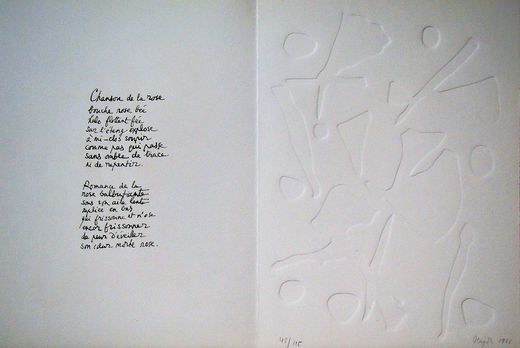
Beginning in 1956, Hajdu "sculpted" paper, creating "stamps," shapes carved into the embossed paper, creating a light shadow in the white of the page. In 1965, he adapted this process to ceramics for the Manufacture nationale de Sèvres. He was awarded the Grand Prix National de Sculpture in 1965.
Abstraction appeared in Hajdu's work as early as 1932-1934, but it was in the 1950s that he developed his distinctive style.
Hajdu created sculptures, bas-reliefs, and high-reliefs in wood, marble and onyx, bronze and lead, aluminum and copper, as well as "stamps" on paper.

Discover the movements linked to Étienne Hajdu
Discover similar artists
Nataliia Krykun
Austria

René Galassi
France

Raphaël Terrier
France
Mapie BelGary
France
Victoria Shani
Switzerland
Discover our selections of works by artists
Need help finding your favorite? Consult our selection pages made for you.