On the Poetics in Dialogue of Manuel Martí Moreno and Pedro Rodríguez Garrido
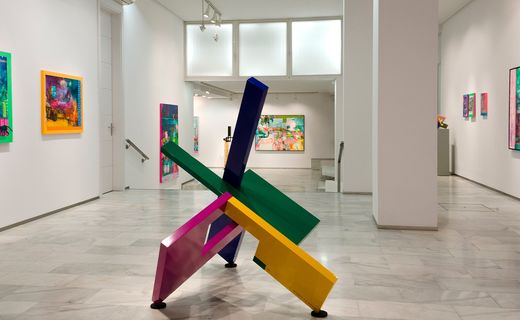
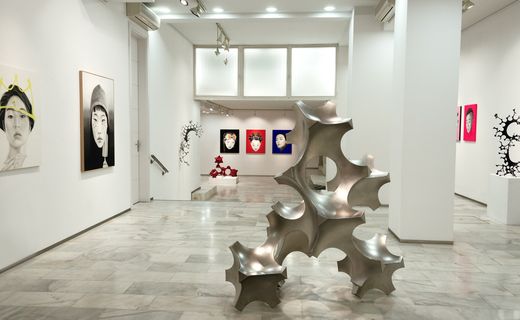
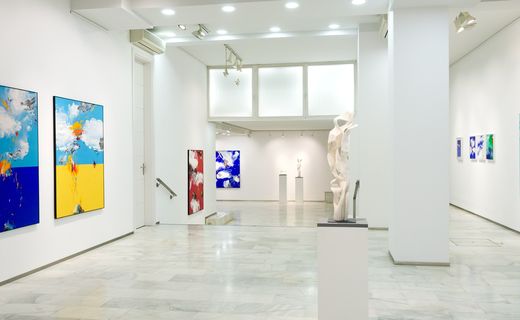
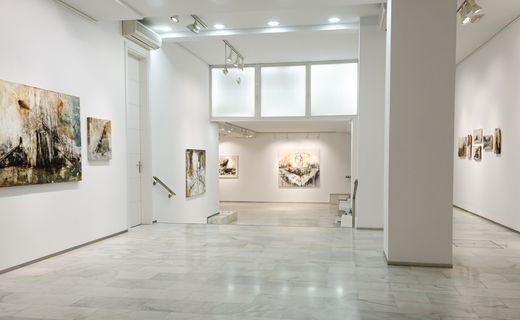
The exhibition Resonancias brings together the works of Manuel Martí Moreno (Valencia, 1979) and Pedro Rodríguez Garrido (Huelva, 1971) as part of the Diálogos program at Galería BAT Alberto Cornejo, active since 2016. In this edition, sculpture and painting are not presented as opposing languages, but as sensitive strategies that, rather than aiming to represent the world, propose another way of engaging with it, more evocative, more physical, slower, more attentive. The artists do not intend for us to decode a hidden message but rather to inhabit the temporality of the work freely, engaging with its unique rhythm and internal logic, allowing aesthetic emotion to unfold along unexpected paths.
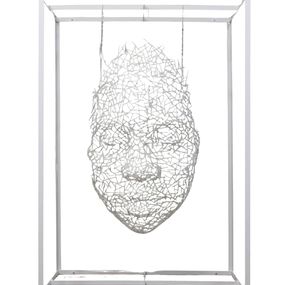
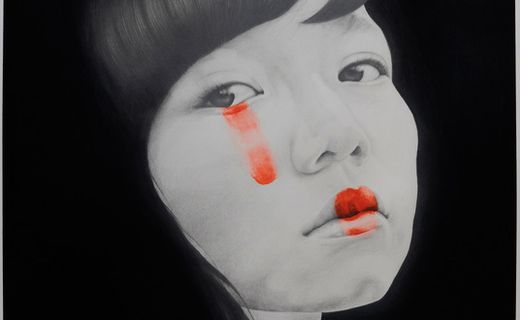
Martí Moreno’s sculptural work opens up multiple interpretive pathways, though always from a shared perspective: a critical gaze on the human body and the face as a symbolic site of identity. This concern is expressed through a poetics of the fragment, crafted from industrial materials and repurposed objects (nuts, corrugated rods, wire mesh, fiberglass, polyester resin, among others) that evoke assembly, tension, and precariousness. This approach is not merely formal—it alludes to the human subject as a complex, fragmented, and incomplete entity, constantly in the process of reconstruction. In dialogue with sculptural tradition, but departing from its classical ideal of unity, Martí Moreno invites reflection through matter itself: an inquiry into the human condition in its inevitable impermanence.
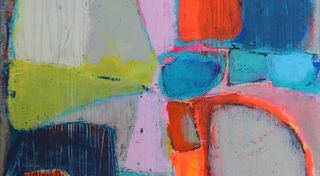
In contrast—though not in opposition—Pedro Rodríguez Garrido presents a painting practice that weaves together gesture, memory, and surface. His shift from figuration—especially urban landscapes—towards abstraction has not erased the narrative dimension, but has instead nuanced it through symbolism and lyricism. His is a practice marked by the biographical and the cultural: following a stay in South Korea, his work incorporates fragments of the hangul alphabet and elements of Asian imagery, interwoven with resources from historical avant-gardes and abstract expressionism. This crossing of languages and tonalities—between the intimate and the historical, the written and the pictorial, the Eastern and the Western—transforms the surface into an affective topography, where color and material shape a memory in transformation. Rather than illustrating an experience, the work embodies and reorders it as an interior image: unstable, open, radically subjective.
Far from literalism, both artists’ practices avoid settling into closed formulations and instead open spaces of indeterminacy, where the viewer does not consume an image but becomes involved in a process of doubt and discovery. In this context, art emerges as a form of non-propositional thought, capable of giving shape to what language cannot reach. The title of the exhibition, Resonancias ("Resonances"), names precisely this type of effect: that which occurs when a work, without resorting to narrative, manages to tune into the experience of the beholder. The pieces gathered here do not engage in dialogue through superficial affinity, but through friction, echo, and contrast. Sculpture and painting meet in a shared question: How can art, through its materiality, continue to serve as a means of thinking and experiencing the intangible aspects of existence?
Text by Carlos Delgado Mayordomo
Read more