




France
• 1951
François Decq is now trying to find a balance between acquired geometric rigor and (perhaps) the resurgence of his first loves for Gestural Abstraction.
Biography
Born in Paris in 1951. Lives and works in the south of France.
Discover abstract art as you leave adolescence.
A chance visit to the Museum of Modern Art in Paris would prove to be a revelation, and would be the origin of a lifelong passion. "During a period when I could hardly imagine my future adult life, artists such as Pierre Soulages, Hans Hartung, or Franz Kline were the heroes of my youth."
1975 > 1983
After a few years of informal abstract research, influenced by American Action Painting and French gestural abstraction of the 1950s, François Decq took a path ultimately opposite to that of the artists to whom he owes the birth of his passion for abstract art.
1984 > 1991
On the contrary, it is through a constructed, geometric and almost minimalist art that he will find a personal language, thus responding to an intimate need to construct each element of the painting with analysis and distance, as if to detach it from its immediate instinctive components.
"It took me about ten years of research to free myself from my initial admirations. These opened the way for me, but they were not my path."
He was supported in this for many years by the Galerie Alexandre de la Salle (St-Paul de Vence), a major center of geometric abstraction, which dedicated several solo exhibitions to him.
During these years, François Decq's works alternated between image and object, or attempted to achieve their fusion when he became close to the MADI group.
MADI
At this time, François Decq's parallel work in sculpture encountered the formal principles of the MADI movement; this resulted in an important series of object paintings, freed from their frame.
From 1984 to 2000, he participated in several exhibitions of the group, alongside its founder, Carmelo Arden Quinn.
Participation which will remain occasional, as followed by other experiences which will no longer be in line with the spirit of the movement.
1992 > 2002
A second period, known as "Fragments," reveals an interweaving of oblique planes, which find their balance within the more classical format of the painting. Here, we still find the concern for an elaborate, precise, and highly "premeditated" construction, enriched by a play of shadows, giving these flat structures an illusion of relief and tangible reality.
In this second period, the construction of the work responds to a new rule; it is no longer the authority of the forms themselves that conditions the architecture of the painting, but the frame itself, which contains and orders a multitude of fragmented forms, keeping them from chaos.

François Decq
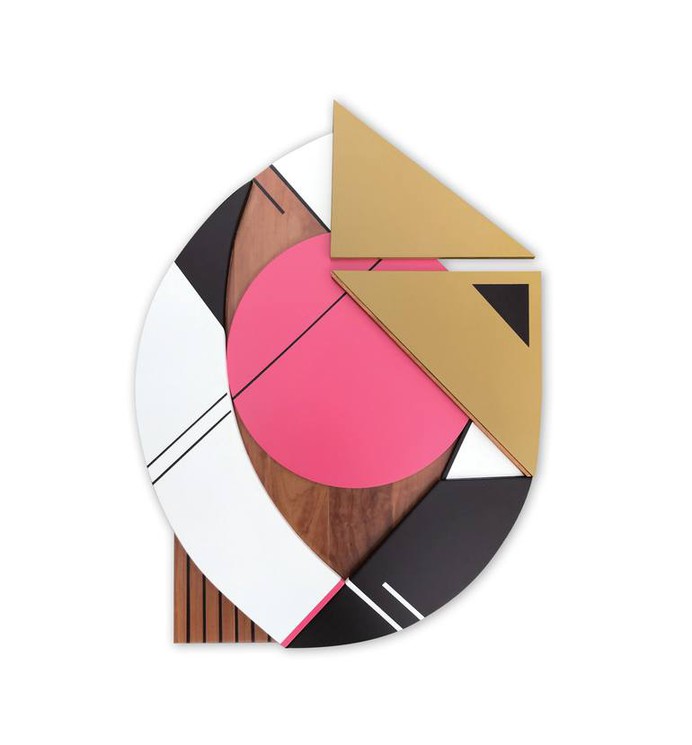
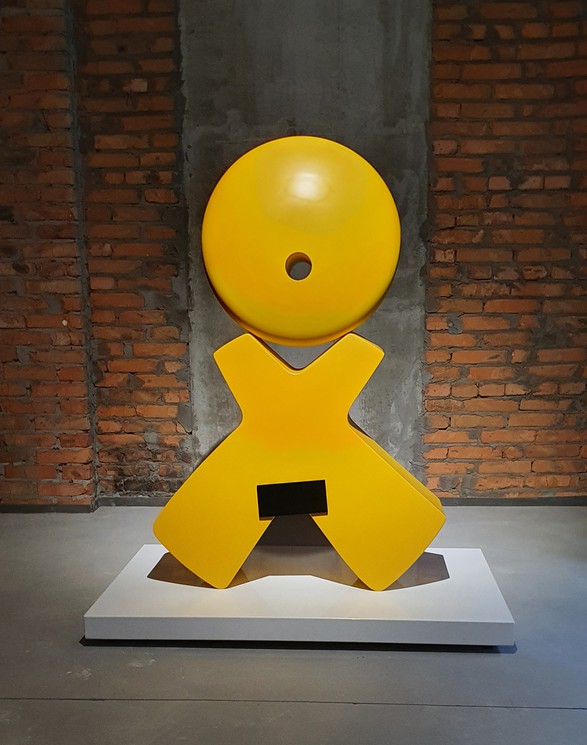
Sculpture . 164 x 59 x 8 cm Sculpture . 64.6 x 23.2 x 3.1 inch
€980
Discover the movements linked to François Decq
Jean Feinberg

Josée Catalo

Scott Troxel
Jean-Luc Maniouloux
Yevgen Prymachenko
Christine Colin

Gianni Chiriatti
