



Portrait Photography for Sale
In the 1830s, Nièpce discovered the process for setting images onto pewter plates. In 1833, upon Nièpce's death, Louis Daguerre and François Arago continued his experiments and invented the daguerreotype, a process which created a printed image on a silver plate that had been exposed to light. Photography was born.
Similarly to how portrait painting had dominated artistic output in previous centuries, portrait photography was to become the pillar of the Second French Empire's photographic industry. Lenses with a shorter focal length, which enabled reduced exposure times, gradually appear on the market. The required equipment was expensive and difficult to handle. Some photographers, called daguerreotypists, decided to open their own photography studios to make a profit from their endeavours. The daguerreotype process was temperamental, and photographers had to take their pictures with great precision and attention to detail. They welcomed many people into their studios and customers choose how they wished to be photographed from catalogue of poses. Originally only accessible to the bourgeoisie, lower prices resulting from the growing number of studios eventually attracted a wider customer base. This phenomenon infuriated the poet Charles Baudelaire who was frustrated by the sense of narcissism sparked by the daguerreotypists.
Despite his protests, the egotistical trend only grew with the emergence of 'carte de visite' portraits (small photographs, the size of today's business cards). These were the brainchild of Adolphe Eugène Disdéri came up with the idea of producing portraits akin to visiting cards in 1859. He printed eight portraits in a variety of poses onto a single plate and once developed they could be cut up into eight distinct “visiting cards". Very popular with the bourgeoisie, they highlighted the sitters' social status. 'Carte de visite' portraits featuring celebrities were also sold to customers, who could subsequently add them to their albums.
The photographer Nadar was one of the first to demonstrate a conscious artistic approach to producing these portraits. He emphasised facial expressions and ensured the sitter was comfortable and at ease before taking the photograph. He photographed the era's greatest thinkers and artists, including Honoré de Balzac, George Sand, and Victor Hugo. He even managed to reconcile Baudelaire with portraiture.
At the end of the 19th century, the art of photography started to enter the mainstream, with the arrival of the Kodak company. The use of the camera, and the taking of portraits, became everyday occurrences. A century later, it was the invention of the digital camera which challenged the status quo. Whereas before alterations could only be made to photographs when they were being taken or developed, with the digital camera editing became easier, quicker and more convenient. Digital photography has given photographers much more freedom when it comes to editing and new methods and techniques are constantly being explored.
Some of the photographers who have left their mark on the last century include: Cindy Sherman, who excelled in self-portraits, Annie Leibovitz, who captured celebrities, the wacky duo, Pierre and Gilles, as well as Diane Arbus, Irving Penn, Richard Avedon, Helmut Newton and Bettina Rheims.
So, do portraits help us to learn more about each other, to remember, to invent, to act, or to reconnect with ourselves? Find out on Artsper, by exploring the works of Formento & Formento, Naomi Vona, Ahmed Bennani, Chou Ching Hui, Samuel Cueto, Brno del Zou, Ren Hang, Markus + Indrani, Jerome Liebling as well as Annina Roescheisen.
Save your search and find it in your favorites
Save your search to find it quickly
Saved search
Your search is accessible from the favorites tab > My favorite searches
Unsaved search
A problem occurred


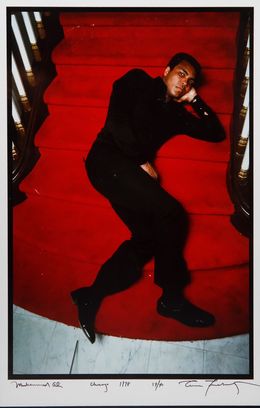
Annie Leibovitz
Photography - 42.5 x 27.5 x 1 cm Photography - 16.7 x 10.8 x 0.4 inch
Price upon request





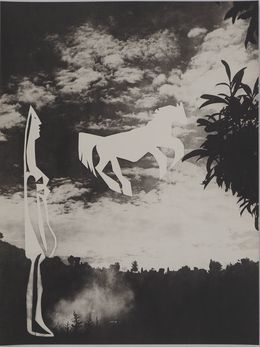
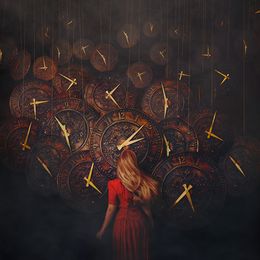


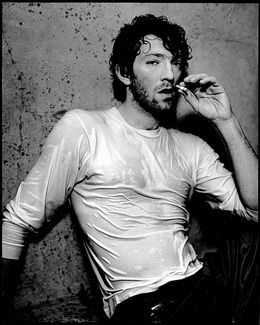
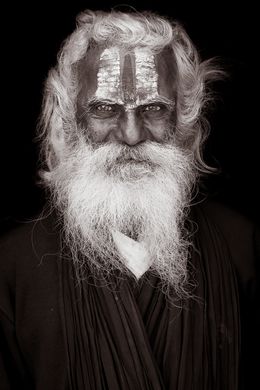





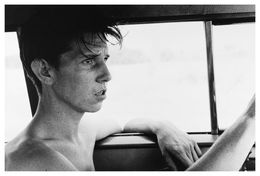
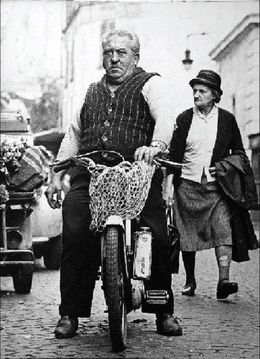
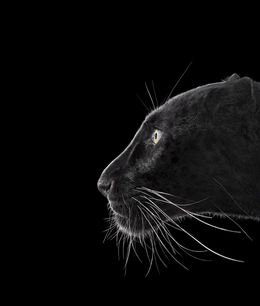
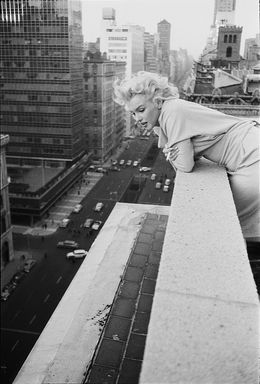














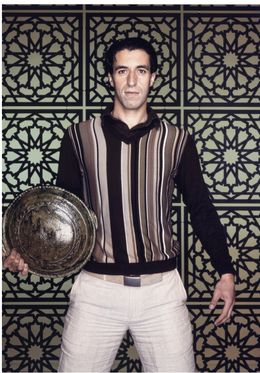


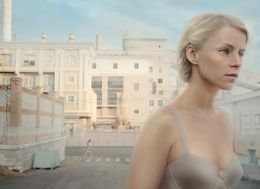


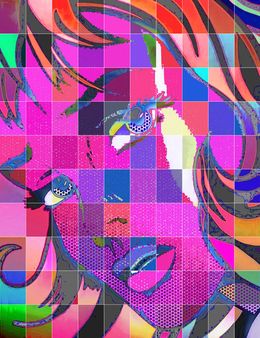
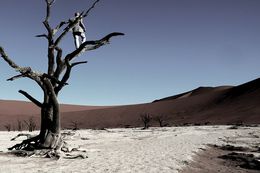


Discover the styles & movements
Discover the selection of our experts




Need help with Portrait Photography ?
What makes a portrait photograph?
A portrait photograph can be a photograph of a person's head and shoulders, but it can also be of an animal or of a different section of the subject's body such as their feet. Portrait photographs in art often tell or hint something about its subject to the viewer, such as an aspect of their personality, but still contain an element of mystery.
What are the three major types of portrait photography?
The three major types of portrait photography are posed portraits, candid or anonymous portraits, and conceptual portraits. The last type, conceptual or creative portraits, can be experimental and abstract, and may not represent an image close to a traditional portrait.
What are the six styles of portrait photography?
The six main types of portrait photography are fine art portraits, traditional portraits (for example posed portraits taken at school), lifestyle portraits, group portraits, street portraits and glamour portraits.
What is a portrait in photography?
A portrait in photography is an image that captures the likeness, personality, and mood of a person or group, often focusing on the face. It aims to convey the subject’s identity and emotions through composition, lighting, and expression.
What is the rule of 3 in portrait?
The rule of 3 in portrait refers to dividing the image into three equal vertical or horizontal sections, placing key elements—like the subject’s eyes—along these lines or their intersections to create a balanced and visually appealing composition.
What are the three types of portraits?
The three main types of portraits are traditional (depicting the subject realistically), candid (capturing spontaneous moments), and conceptual (expressing an idea or theme through the subject). Each type offers a unique artistic approach.
How to make a photo a portrait?
To convert a photo to a portrait, use editing software like Photoshop or a mobile app to crop the image to a vertical format (usually 4:5 or 3:4). This format will enhance the artwork on Artsper and make it easier to view.