





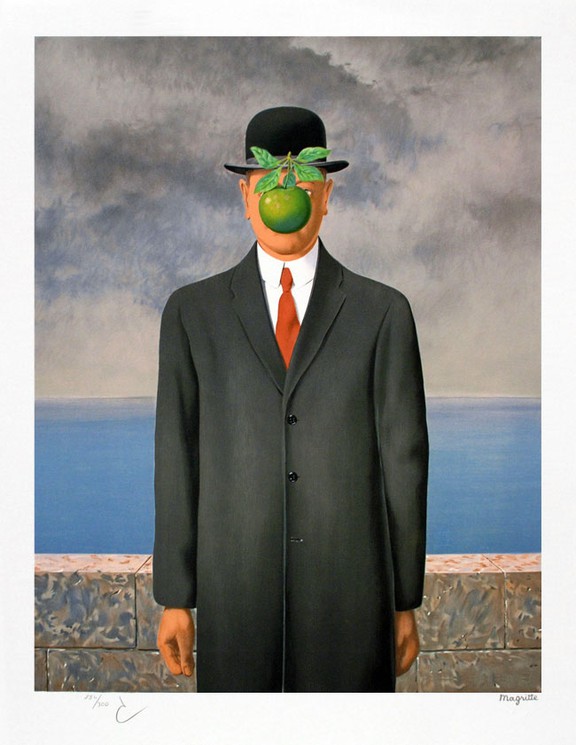
Abstract artworks
Abstract art was born at the beginning of the 20th century, more specifically between 1911 and 1917 with the work of four influential painters: Frantisek Kupka, Vassily Kandinsky, Kasimir Malevich and Piet Mondrian . Although each of these artists formulated their own vision of abstract art, a shared historical context explains the concurrent emergence of this artistic movement.
The scientific discoveries of the early 20th century completely revolutionized man's perception of the world. These artists, who were literary and cultured men, were well aware of scientific progress. As Paul Valéry put it, "in the last twenty years neither matter nor space nor time has been what it was from time immemorial". People needed a new language to both express and to comprehend this "new world". These four artists demonstrated a keen interest in the esoteric and occult, which explains why the abstract is presented as a research of another type of truth, a way to elevate one's mind and soul towards new horizons, uncovering the deepest mysteries of humankind. The realm of music truly fascinated these artists; they identified with it and, several of them, especially Kandinsky, used it as inspiration. Music is the epitome of the imponderable and the intangible; it suggests meanings while escaping from reality at the same time.
The influence of artistic movements such as Fauvism and also served as references for the development of the abstract's aesthetic research. Abstraction did not attempt to represent the visible world, but rather to become a "visual language". However, it is essential to bear in mind that each of these four painters took a different path, and that they independently formulated their conception of abstract art.
Abstract art wanted to display an "abstract image," a non-figurative representation, outside of reality. They wanted to create art that was self-sufficient, that could look to itself to find the resources needed to support its existence. Abstract creation often required the artists to unleash their consciousness, to break free of instinctive visual associations. This approach produced powerful artworks which, although free of any literal meaning, retained the ability to provoke strong sensations and feelings in the viewer. The triumph of color, of subjectivity and the lack of conventions, foreshadowed the advent of an art that was liberated and free of any restrictive conventions. Abstract art manifestos laid the foundations of its aesthetic. Kandinsky's letters to the music composer Schönberg demonstrated the porous nature of the genres at a time where serial music was emerging. Both music and painting followed a path of growing “dissonance within the arts". These abstract artworks can demand collector to approach them in a particular. Although the interplay of shapes and colours in abstract art make it a visually accessible style, it is also important to reflect on the works more deeply. They invite the viewer to escape from reality, to consider things according to the prism of the absolute, of essence and absence. They might encourage viewers to adopt a new outlook on the world, where everything is astonishing and where our consciousness is constantly wonderstruck by the world around us.
“Art does not reproduce the visible; it makes visible." - Paul Klee
Choose your preferences
The best
of art, online
SIGN IN - REGISTER
or
Professional vendor?
Access my gallery space
Forgot your password?
No worries, enter you email address and we'll send you a link to reset your password.
Return
An email has been sent. It contains a link you must click to reset your password.
If you don't get an email check your spam folder or try again.
Return
If you don't get an email check your spam folder or try again.
Image search
Upload an image and discover similar artworks available on Artsper