Black and White Photography

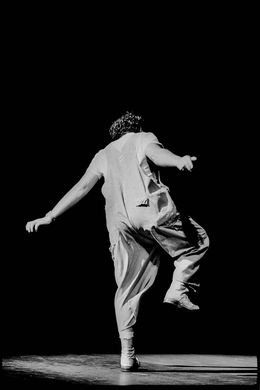
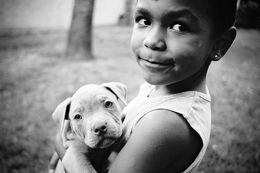
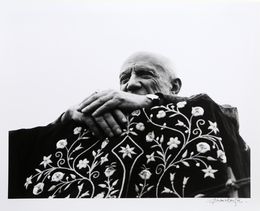
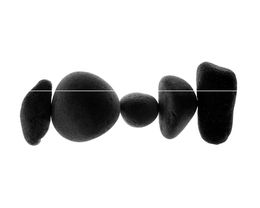
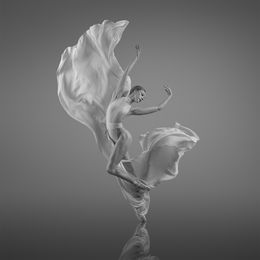
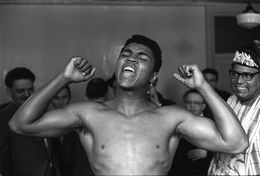
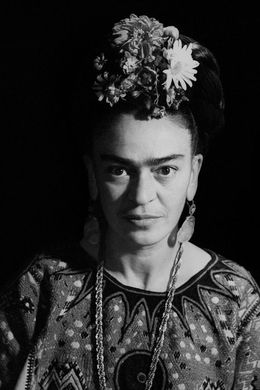
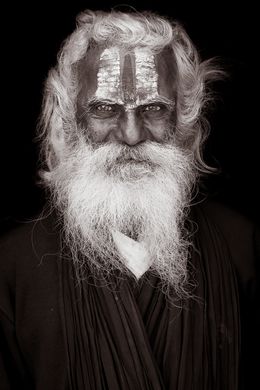
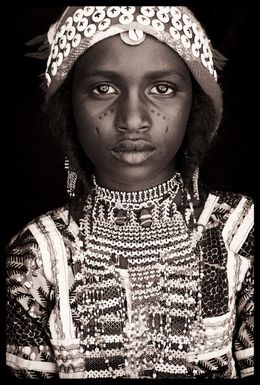
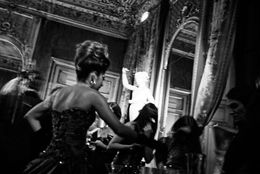
Black and white photography is a timeless technique that continues to captivate modern audiences, though it was once the only form of photography available. It is often associated with historical moments, vintage aesthetics, and a nostalgic feel, making it a powerful medium for capturing timeless imagery.

The origins of black and white photography date back to the 1830s when Joseph Nicéphore Niépce discovered how to print images onto metal plates. Following his death in 1833, Louis Daguerre, alongside François Arago, developed the daguerreotype—a process in which an image was created on a silver plate by exposure to light. This breakthrough invention laid the foundation for the photography we know today.

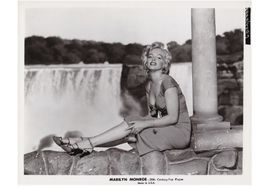
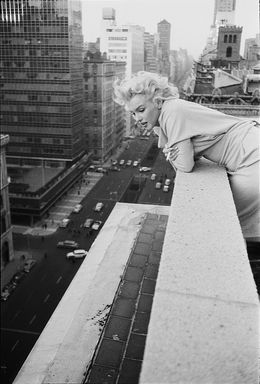
In its early stages, black and white photography was used primarily for research, but it quickly gained popularity. The advent of daguerreotype studios brought photography to the public, and black and white portraits became common, immortalizing the upper middle classes and eventually capturing all walks of life. Portraits of celebrities also became a key focus for photographers, a tradition carried on by Jean-Loup Sieff almost a century after the invention of photography.

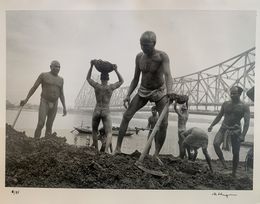
While the first colored photographs appeared as early as 1860, it wasn't until the 20th century that the technique gained widespread use. During this time, many celebrated photographers emerged, contributing to the art of photography. Street photography, in particular, became a prominent style, with iconic photographers like Robert Doisneau, Brassaï, and Henri Cartier-Bresson capturing the urban landscapes and candid moments of the era. Their ability to freeze fleeting moments in black and white has made their work iconic, evoking a sense of nostalgia and emotion that transports us to the past.

In the United States, the humanist photographer Walker Evans played a key role in shaping black and white photography. He captured everyday life in modern America, whether in the bustling New York subway or the rural highways of the Deep South. Robert Frank followed in his footsteps, capturing raw, emotional portraits of the American people, marked by his unique photographic style and composition.

However, black and white photography isn't limited to everyday scenes—it can also elevate landscapes, as demonstrated by photographers like Kasra. His use of long exposure in black and white creates soft, ethereal effects that convey the passage of time in an extraordinary way. Photographers like Michael Kenna and Ricky Cohete also excel in this genre, capturing breathtaking black and white landscapes.

The contrast between black and white in photography is often used to enhance visual impact. Black, representing darkness or melancholy, and white, symbolizing light and hope, work together to accentuate form and contrast in a sophisticated and elegant manner. This combination directs the viewer's focus to the subject matter, creating powerful imagery that speaks to emotions.

Black and white photography often evokes nostalgia, embedding a sense of timelessness in each image. Its ability to capture moments frozen in time makes it a unique and enduring artistic choice.

At Artsper, we invite you to explore this captivating art form with a curated selection of works from renowned photographers such as Brno Del Zou, Yevgeniy Repiashenko, Emmanuelle Barbaras, Bert Stern, Alexander Benz, and Hervé Gloaguen. These artists showcase the power and beauty of black and white photography, offering a glimpse into moments of history and emotion through their lens.

Read more
Photography, Kashi, John Kenny

John Kenny

Photography - 67 x 45 x 2 cm Photography - 26.4 x 17.7 x 0.8 inch

€1,389

Photography, Cloud, Amrita Bilimoria

Amrita Bilimoria

Photography - 45.7 x 45.7 x 0.5 cm Photography - 18 x 18 x 0.2 inch

€1,625

Photography, Ray Charles, Philippe Gras

Philippe Gras

Photography - 60 x 60 x 0.3 cm Photography - 23.6 x 23.6 x 0.1 inch

€950

Photography, La Chute, Franck Pourcel

Franck Pourcel

Photography - 24 x 30 cm Photography - 9.4 x 11.8 inch

€500

Photography, Anthurium Hat, Mark Arbeit

Mark Arbeit

Photography - 40.7 x 50.8 cm Photography - 16 x 20 inch

€1,986

Photography, Family, Ali Buhamad

Ali Buhamad

Photography - 40 x 30 x 5 cm Photography - 15.7 x 11.8 x 2 inch

€1,000

Photography, Rue Mouffetard, Uwe Ommer

Uwe Ommer

Photography - 50.8 x 40.6 x 0.3 cm Photography - 20 x 16 x 0.1 inch

€1,264

Photography, Breakfest, Noa Grayevsky

Noa Grayevsky

Photography - 60.69 x 45.72 x 0.5 cm Photography - 23.9 x 18 x 0.2 inch

€1,500

Photography, Three Wheeler, Stuart Redler

Stuart Redler

Photography - 71 x 89 x 0.1 cm Photography - 28 x 35 x 0 inch

€2,071

Photography, Donna Summer, Michael Putland

Michael Putland

Photography - 61 x 51 x 0.01 cm Photography - 24 x 20.1 x 0 inch

€1,750

Photography, Rio, Margaux Panel

Rio

Margaux Panel

Photography - 40 x 50 x 1 cm Photography - 15.7 x 19.7 x 0.4 inch

€1,900

Photography, Tina Turner, Paris, Bob Gruen

Bob Gruen

Photography - 35.6 x 27.9 x 1.3 cm Photography - 14 x 11 x 0.5 inch

€1,760

Photography, Marc Chagall, Denise Colomb

Denise Colomb

Photography - 29 x 24 x 1 cm Photography - 11.4 x 9.4 x 0.4 inch

€990

Photography, Paysage urbain, Virginie Paoli

Virginie Paoli

Photography - 60 x 80 x 0.5 cm Photography - 23.6 x 31.5 x 0.2 inch

€1,000

Photography, The Beatles, Norman Parkinson

Norman Parkinson

Photography - 16 x 20 x 0.1 cm Photography - 6.3 x 7.9 x 0 inch

€2,300

Photography, Reverie, Alfie Bowen

Alfie Bowen

Photography - 90 x 65 x 0.1 cm Photography - 35.4 x 25.6 x 0 inch

€2,113

Photography, Lelo 1, Cristina Aldehuela

Cristina Aldehuela

Photography - 40 x 60 x 0.1 cm Photography - 15.7 x 23.6 x 0 inch

€1,100

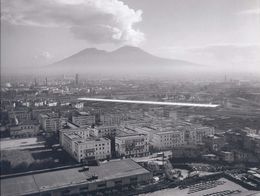
Photography, Napoli, Gabriele Basilico

Gabriele Basilico

Photography - 102 x 130 x 2 cm Photography - 40.2 x 51.2 x 0.8 inch

€10,000

Photography, Ensemble, Julien Poupart

Julien Poupart

Photography - 40 x 60 x 0.1 cm Photography - 15.7 x 23.6 x 0 inch

€950

Photography, L'étreinte, Yassin Adel

Yassin Adel

Photography - 90 x 60 cm Photography - 35.4 x 23.6 inch

€2,500

Photography, Flow., Eva Christina Nielsen

Eva Christina Nielsen

Photography - 53 x 40 x 3 cm Photography - 20.9 x 15.7 x 1.2 inch

€1,600

Photography, Pli, Magali Léonard

Pli

Magali Léonard

Photography - 45 x 60 x 0.2 cm Photography - 17.7 x 23.6 x 0.1 inch

€850

Photography, MOON I, Véronique Errera

Véronique Errera

Photography - 50 x 75 cm Photography - 19.7 x 29.5 inch

€1,800

Photography, Rome, Alexander Rocco

Alexander Rocco

Photography - 76.2 x 55.9 x 1.3 cm Photography - 30 x 22 x 0.5 inch

€2,167

Photography, Surreal Cemetery, Ken Heyman

Ken Heyman

Photography - 27.9 x 35.6 x 1.3 cm Photography - 11 x 14 x 0.5 inch

€4,333

Photography, Paris VIIème, D-A Woisard

D-A Woisard

Photography - 50 x 40 cm Photography - 19.7 x 15.7 inch

€900

Photography, 4 girls, Samuel Cueto

Samuel Cueto

Photography - 40 x 50 cm Photography - 15.7 x 19.7 inch

€900

Photography, Mostar Bridge, Ludovic Careme

Ludovic Careme

Photography - 40 x 40 x 0.1 cm Photography - 15.7 x 15.7 x 0 inch

€1,350

Photography, Tracks V, Bruno Charoy

Bruno Charoy

Photography - 40 x 40 x 0.1 cm Photography - 15.7 x 15.7 x 0 inch

€800

Photography, Baby Diana, Günter Brus

Günter Brus

Photography - 60 x 80 x 1 cm Photography - 23.6 x 31.5 x 0.4 inch

€2,250

Photography, Dior Paris, Bart Van Leeuwen

Bart Van Leeuwen

Photography - 88.9 x 76.2 x 5.1 cm Photography - 35 x 30 x 2 inch

€1,805

Photography, Muhammad Ali, Flip Schulke

Flip Schulke

Photography - 40 x 30 x 1 cm Photography - 15.7 x 11.8 x 0.4 inch

€7,500

Photography, Metropolis, Andy Sotiriou

Andy Sotiriou

Photography - 40 x 59 cm Photography - 15.7 x 23.2 inch
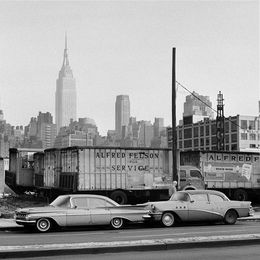
€900

1/70
Need help with Black and White Photography ?
What does black and white mean in photography?

In photography, black and white means that all color has been removed from the image, leaving just shades of gray that span from black to white. This can either be done digitally or by using black and white film. 

What is good about black and white photography?

Many photographers and artists use black and white photography because it removes the distraction of color from an image. This can draw more focus to elements of the image such as the facial expression or gesture of the subject, the composition, or the shapes and textures.

What techniques are used in black and white photography?

Black and white photography is generally shot using the same equipment as color photography (although if film, using black and white film), but artists may optimise their results by looking for high contrast images, light sources, and interesting textures. 

What is black and white photography?

Black and white photography is an artistic technique that captures images in shades of gray, without color. It emphasizes contrasts, textures, and composition, offering a timeless and expressive view of subjects.

What is a black and white photoshoot called?

A black and white photoshoot is called a "monochrome photoshoot" or "black and white photoshoot." This style emphasizes contrasts, textures, and emotion, making it a popular contemporary photography style on Artsper.

Why use black and white in photography?

Black and white photography highlights contrasts, shapes, and textures, offering a more emotional and timeless interpretation of the image. It also allows you to focus on the essentials, without the distraction of color.

What are black and white photos called?

Black and white photographs are called monochrome photographs. They are distinguished by the absence of color, emphasizing contrasts, textures, and light, and are highly prized in contemporary art.