New Figuration
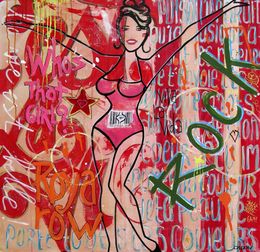
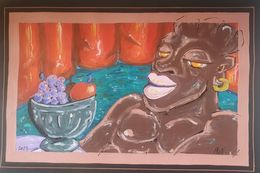
Pigments were invented about 40,000 years ago and since then have been used by artists as a visual element to form works of art. From the use of red in ancient Egypt to blue being more sought after than gold in the middle ages, the use of color and its value has shifted through the ages. This has led to the subsequent color theory in art. It was the German poet Jonathan Wolfgang Goethe who first developed a theory about color (1810). According to him, colors are composed of both light and shadow. Later, the Impressionists would disregard the classic visual elements of painting and indeed figurations and focus on the essence of color, using colors that compliment and capture light rather than use dark colors for shadow. At the turn of the 20th century Vassily Kandinsky created a grid for colors, which associated emotions and sounds with 10 colors. In our selection of works the use and admiration of color is still being explored with Guive Khosravi's works, high in vivid colors are juxtapositions of images mixing well-known characters and images whilst Robert Combas, who in the early 80s invented a new figurative painting (Free Figuration), uses color to manipulate daily life.