






China
•
1965
• 54 followers
Nationality
Categories
Artistic movements
Themes
Biography
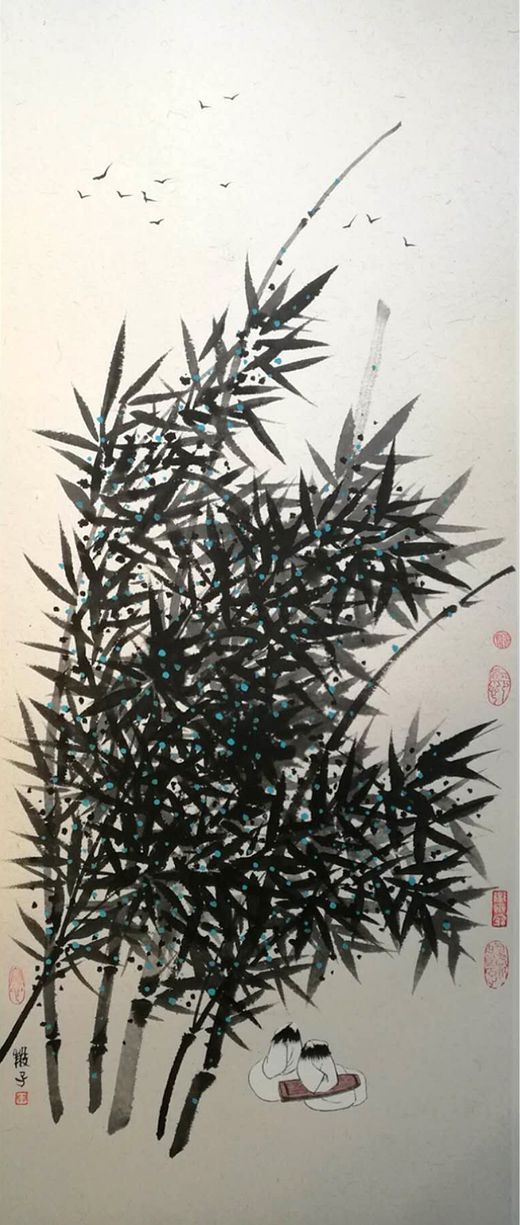
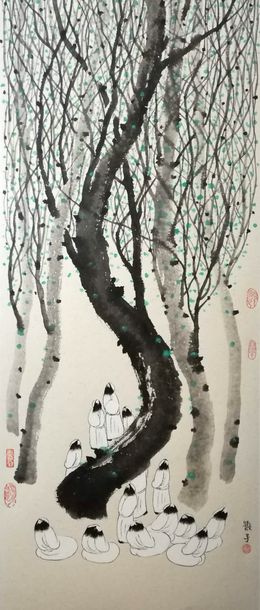
Sanzi (simplified Chinese: ??), born in 1965 in Yangzhou, Jiangsu with the name Wang Xiaolong, is a widely recognized contemporary Chinese painter and designer. Known for his mastery of deploying a combination of techniques including Western painting, traditional Chinese ink painting, metal and wood work.
Heavily influenced by Taoism, he often signs his works with “Sanzi” (??) which has the metaphysical meaning of “floating”, “freedom” and “humility”. Many of the subjects of his paintings reflect concepts of humanity, cosmos and “wu wei” - action through inaction. He also depicts Taoist view of sexuality: valuing the body and mind as positive assets which generate harmony and balance.
In 1983, Xiaolong enrolled in the Fine Arts Institute of Hunan Normal University in Changsha where he studied traditional Chinese ink painting, calligraphy, as well as European oil painting and sculpture. After graduation, he was granted a post-graduate research scholarship and was also assigned to teach newly enrolled students. Soon after he also gained entry to the Hunan Academy of Art.
He gained recognition in 2005, and is now one of the well-known figures in contemporary Chinese art. With his rising popularity, he was ordered to create one background painting for China Pavilion during the Shanghai Expo in 2010. He lived in several different cities in China, and in 2010 he also set up his first "Sanzi Studio" abroad, in Belleville, Paris.
Explore all artworks (38)

Painting . 100 x 50 x 1 cm Painting . 39.4 x 19.7 x 0.4 inch
CHF 4,325
Recommended by Artsper

Painting . 100 x 50 x 1 cm Painting . 39.4 x 19.7 x 0.4 inch
CHF 4,325
Recommended by Artsper






Exhibitions dedicated to San Zi
Need more information?




Discover the movements linked to San Zi


Discover other selections of artworks