Bronze Sculpture for Sale

Upload an image to find similar artworks

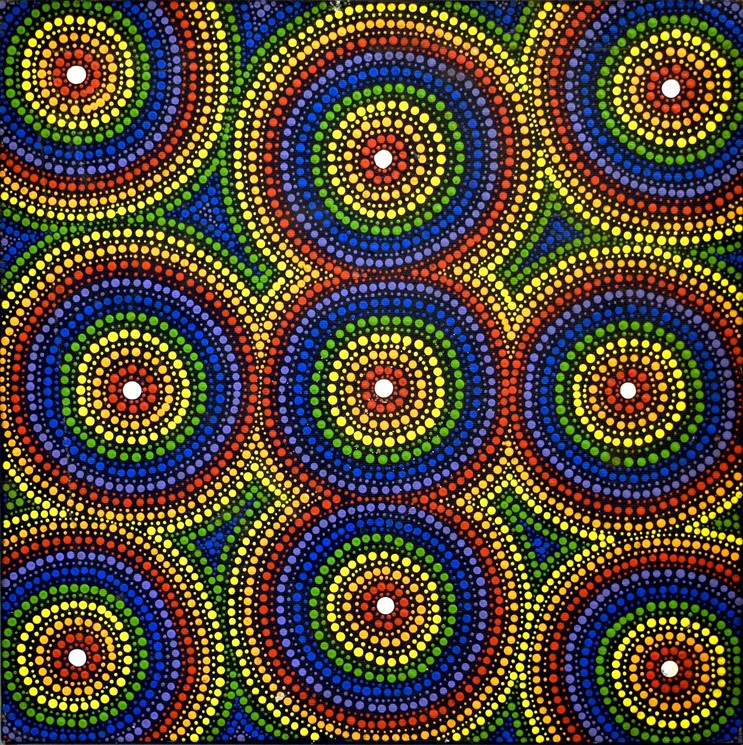
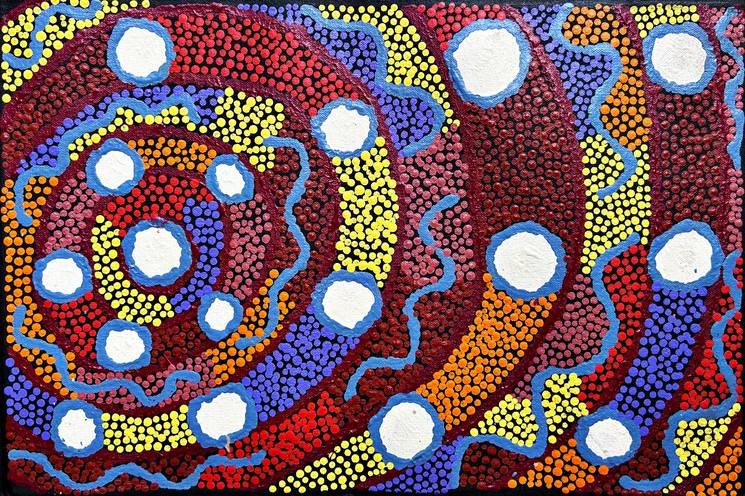
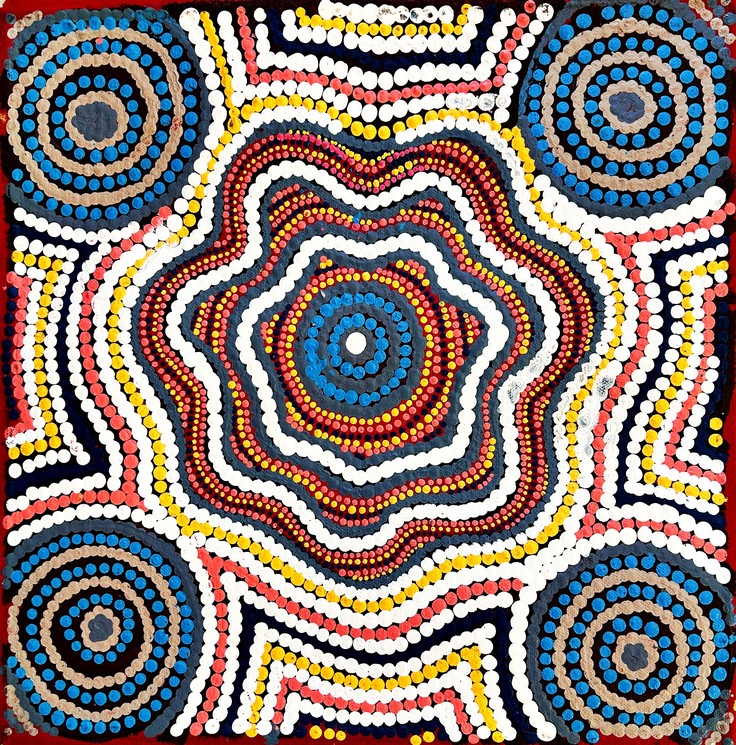
Maisey Granites Napangardi is an Aboriginal artist from Central Australia.
Within the landscape of contemporary Australian Aboriginal art, some figures remain largely unknown to the general public despite having played a fundamental role in preserving and transmitting their community's cultural knowledge. Maisie (Kajinarra) Napangardi Granites (who died before 2005) embodies this generation of artists and knowledge keepers who, from the 1980s onward, contributed to the emergence of acrylic painting on canvas in Lajamanu while simultaneously keeping ancestral ceremonial practices alive. Her life story illustrates the dual role—artistic and spiritual—that many senior Warlpiri women assumed during this pivotal period in Aboriginal cultural history.
To understand Maisie Napangardi Granites' journey, it is essential to grasp the complex historical context of Lajamanu, a community located on the northern edge of the Tanami Desert in the Northern Territory. This locality, originally known as Hooker Creek, was established in 1949-1950 by the Australian federal government as part of a policy of forced resettlement of Aboriginal populations.
In 1949, faced with fears of epidemics and overcrowding in Yuendumu, a Warlpiri settlement located approximately 600 kilometers further south, the Native Affairs Branch decided to relocate several hundred Warlpiri north. Twenty-five Warlpiri men were initially transported by truck to a watering hole called Catfish, but the settlement was ultimately established at Hooker Creek, on territory traditionally belonging to the Gurindji people.
This forced relocation triggered what remains in the collective memory as the "walkbacks": between 1951 and 1968, on three occasions, entire groups of Warlpiri walked the 600 kilometers separating Hooker Creek from Yuendumu, unable to live far from their sacred sites, their close relatives, and their ancestral land. These epic walks testify to the Warlpiri's deep attachment to their traditional territory and the trauma caused by the assimilation policy.
It was only after the third "walk back" that the Warlpiri gradually agreed to settle in Lajamanu, particularly after a series of ceremonies in the 1970s allowed the Gurindji to symbolically transfer responsibility (kirda) for this territory to the Warlpiri. This ceremonial "transfer" enabled children born in Lajamanu to develop a spiritual connection to this land, even though the ancestral sacred sites remained in Tanami, sometimes hundreds of kilometers away.
In 1980, Lajamanu became the first Aboriginal Community Government Council in the Northern Territory, marking a significant step towards self-determination. The community, which today numbers around 750 people, mostly Warlpiri, has maintained a strong cultural and linguistic identity, reinforced by its relative geographical isolation and its policy of prohibiting alcohol.
Maisie Napangardi Granites belongs to a pivotal generation of Aboriginal artists who experienced the transition from a primarily nomadic lifestyle in the bush to settlement in sedentary communities. This generation bore the burden of negotiating between maintaining traditions and adapting to new realities. Senior women like Maisie had been initiated into traditional ceremonial practices in their youth, possessing a direct and embodied knowledge of the songs, dances, and stories that constituted the body of Warlpiri women's knowledge. Simultaneously, they had to adapt to new technologies (acrylic paint, canvas), market economies (selling art to collectors and institutions), and intercultural performance contexts (collaborations with contemporary dance companies). This ability to adapt while maintaining cultural integrity demonstrates remarkable sophistication and resilience. Far from being "passive guardians of tradition," these women were active innovators, creating new forms of cultural expression while firmly anchoring these innovations in the cosmological and social foundations of the Warlpiri people.




Choose your preferences
The best
of art, online
SIGN IN - REGISTER
Forgot your password?
No worries, enter you email address and we'll send you a link to reset your password.
ReturnUpload an image and discover similar artworks available on Artsper