We Are What We Look At
We Are What We Look At traces the life and career of José Nicolas, a former soldier who became a photojournalist engaged in major conflict zones at the end of the 20th century. Initially destined for a military career, the son of a legionnaire, he grew up between Africa and France before joining the paratroopers and participating in several overseas operations. It was during these missions that he discovered his vocation as a photographer, influenced in particular by Jacques Pavlovsky and inspired by the work of Gilles Caron.
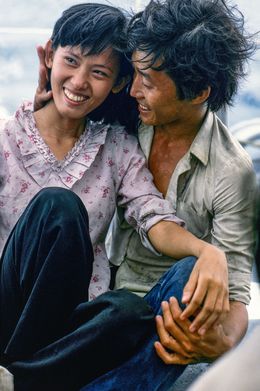
José Nicolas then began a career change focused on humanitarian work, joining Médecins du Monde. His first fieldwork as a photographer was in Lebanon, where he documented the civil war as well as the suffering of civilians. Seriously wounded in 1983, he returned as a civilian photographer, with a humane perspective. He then followed Bernard Kouchner to Kurdistan, Lebanon, among the boat people, and into various geopolitical contexts. He joined the Sipa agency and covered major conflicts: Afghanistan, Romania, Bosnia, Rwanda, Somalia, etc., and published his work in numerous publications such as VSD, Le Point, and Le Pèlerin.
José Nicolas documented contemporary tragedies, such as the fall of Ceausescu, the Rwandan genocide, and the Gulf War, with a humanist sensibility, particularly highlighting the suffering of civilians, children, and the forgotten. His ability to gain the trust of military personnel
— a former soldier himself—gave him access to sensitive areas, notably during Operation Daguet in Iraq in 1991. Rwanda in 1994 represented a traumatic turning point. Wounded in an ambush, haunted by scenes of massacre, he then took a step back. He pursued a more peaceful and anthropological photography career, focusing on humanitarian actions and threatened cultures. Madagascar, Haiti, and Beirut became the settings for a more contemplative perspective. He founded a studio-gallery in 2019 to share his passion. A return to Chad cemented the link between memory, the sweetness of recollection, and the light that underpins all photography. José Nicolas thus emerges as an essential witness to contemporary upheavals, combining documentary rigor with a profoundly human perspective.
Winner of the 2nd edition of the SAIF/Benoît Schaeffer Grant, awarded during the Visa pour l'Image international photojournalism festival in Perpignan in 2024, José Nicolas brings together in this book a selection of emblematic images from his entire career as a photojournalist. In order to enrich the story and contextualize the events covered, José Nicolas called upon Frank Tenaille, a journalist and writer specializing in geopolitics, for this publication to shed historical light on certain images which, although sometimes distant, remain deeply rooted in our contemporary history.
Read more