Every existence leaves a trace.
Some traces are deliberate: a name written across a city, a gesture repeated until it becomes a signature, a mark made to affirm one’s presence. Others remain beneath the surface, memories, affections, wounds and experiences that quietly shape who we become.
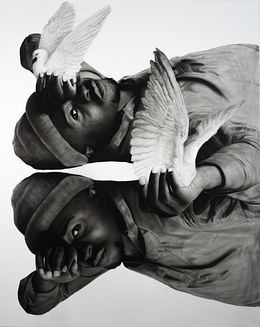
Traces of Being brings together the distinct practices of Idan Zareski, Mitsumasa Kadota, SEEN, Beto Gatti and Ritchelly Oliveira, inviting us to consider identity not as something fixed, but as something continuously written and rewritten.
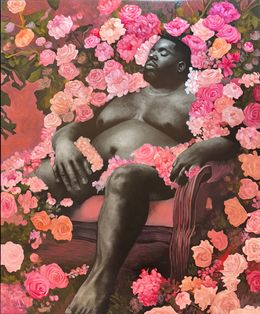
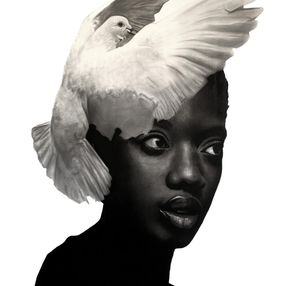
Across painting, graffiti and sculpture, the exhibition moves between the visible and the intimate. In SEEN’s work, identity becomes a public gesture: the name is transformed into image and presence, carrying into the gallery a visual language rooted in the streets of New York. In Ritchelly Oliveira’s portraits, the movement turns inward, towards affection, vulnerability and the emotional experiences that shape our relationships with ourselves and others.
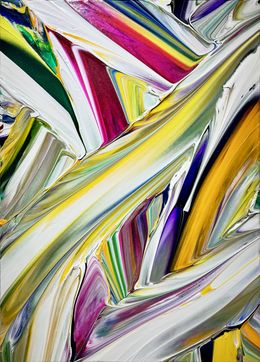
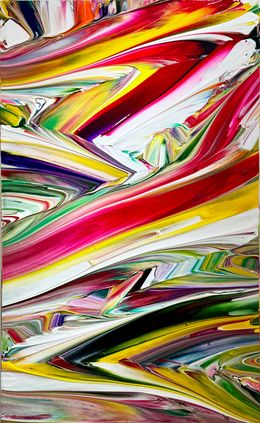
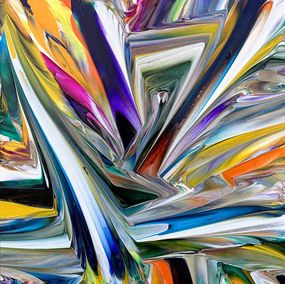
For Mitsumasa Kadota, memory is transformed through colour, gesture and matter. His paintings suggest that what lies beneath the surface: personal histories, fragments of experience, invisible roots; can continually generate new forms. Beto Gatti approaches the contemporary self through introspection and paradox, questioning our relationship with time, technology, ego and the realities we construct around ourselves.
Standing among these different expressions, Idan Zareski’s Le Siffleur introduces another possibility: simply being. Inspired by the artist’s experience of Costa Rica, the figure embodies a carefree relationship with existence, while its oversized feet evoke our shared connection to the ground beneath us, beyond borders and divisions.
Together, these works suggest that identity exists somewhere between what we inherit and what we create, between what remains within us and what we choose to leave behind.
We are the marks we make, but also the marks that have been made upon us.
Traces of Being is an invitation to encounter those marks and through them to consider the many ways in which we become who we are.
Read more