





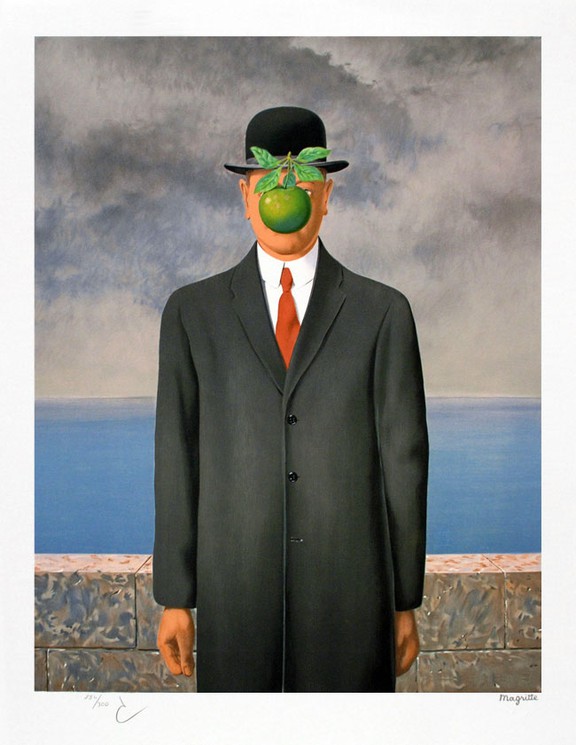


Montagne, 2023
Painting : oil, acrylic, Indian ink · 93 x 88 x 3 cm 36.6 x 34.6 x 1.2 inch
€5,900
5 900 €
Shipping & delivery
Shipped from: France
Delivery to: Germany , € 119
Estimated delivery: Less than one week
Free returns within 14 days, full refund
Authenticity guaranteed
Sold with certificate of Authenticity from the artist
Invoice from the gallery Learn more
Secure payment • Card, Amex, PayPal...
We accept several payment methods:
Paypal
American Express
Visa
Mastercard
Apple Pay
Google Pay
- Credit cards (Visa, MasterCard)
- American Express
- PayPal
- Bank transfer
- Gift card
- Apple Pay / Google Pay
All payments are secured with 3D Secure validation to protect your confidential information.
Verified Reviews : 9.6/10
Similar works


About the artwork
Type
Painting : Unique artwork
Condition
Artwork sold in perfect condition, not framed
Authenticity
Sold with certificate of Authenticity from the artist
Invoice from the gallery
Signature
Hand-signed by artist
Technique & Support
oil , acrylic , Indian ink on paper
Dimensions ( cm • inch )
93 x 88 x 3 cm 36.6 x 34.6 x 1.2 inch Height x Width x Depth
Sold by
Art gallery
Credentials
Vetted seller since 2014 • Top Seller
Discount
This seller offers discount when you purchase multiple artworks.
Description
hidden landscape
Cécile's art practices on paper
Towards the end of the 19th century and the beginning of the 20th, nationalist consciousness was beginning to awaken in China in the field of art under the influence of modern Western industrial civilization. During this time, many artists left to study either in Europe or in Japan, the neighboring country which had already introduced European art there, with the intention of launching a reform in Chinese painting by absorbing the concepts as well as the forms of Western art, of which Xu Beihong and Lin Fengmian are prominent representatives. On the other hand, the painting of orthodox scholars (or literati painting) represented by Huang Binhong propelled the
modern transformation of Chinese painting into a conventional linguistic structure.
Their artistic practices in external expressive form and at the internal spiritual level, have offered us two effective means of fusing Chinese art with that in the West. As the historical process of reform and opening up since the 1970s has taken place, an increasing number of Western artists have come to China with their curiosity for Eastern culture.
They started in traditional Chinese painting by enriching it with Western concepts and techniques, they seem to have succeeded in transforming Chinese painting to another level.
The French artist Cécile Girard settled in China in the 90s, she began her journey of artistic exploration there for more than 20 years.
Cécile has adopted the typically Chinese taste for nature. In her creation, she focused on studying the brush, ink and materials of Chinese painting, and she tried hard to adorn it with Western analytical color, creating a unique artistic perspective.
In her first series named Landscapes I, Cécile tried to apply different strokes and colors in the representation of the natural landscape, she sketched the objects with the pretty calligraphic strokes of the brush to create the effect of “pictorial calligraphy” . We see, even, the strokes in the style of “epigraphic calligraphy-painting (金石书画)” and the strokes of paint are visible in some of his works. The maturity in his works demonstrates a strong inner expressiveness and strength filled with acrylic paint and the thick colors of oil paint.
In his latest series of Landscape Ⅲ, his use of brush and ink has reached extreme limits. Brush and ink calligraphy is presented on paper more freely, and the color of his paintings tends to be more simple and elegant. Brush, ink and colors are reflected, thus forming an image of Eastern Zen. Cécile's mode of creation in this phase is close to the paintings of Chinese scholars who express the inner spirit of the painters with the description of nature. Although the language has constantly changed since then, the basic structure of his paintings has remained the same.
Chinese rice paper becomes an essential material in the creation of Cécile.
As a Westerner, she has a rich imagination for the selection and use of materials.
Through special processing such as kneading, crimping and thickening rice paper, special texture and three-dimensional visual effect turn into part of the
paper itself.
This type of paper has a unique feature, that is, the folding of the paper would show the similar effect of crumpled aesthetics in Chinese landscape painting when ink is smeared on it. In his recent works, the practice of this creative method, that is to say that it rather softened brush strokes as much as it reinforced the formal representation to the functionality of the material, this became more and more more mature in its practices. In the background, we see simple lines vaguely drawn by the artist, which form a horizontal and vertical visual representation of the double landscape as well as the shading image formed by color on rice paper.
It breaks the limit of time and space in the picture, it is similar to the concepts of “distant in three modalities (三远)” in Song Dynasty landscape painting. The deep and mysterious chromatic expression and the artistic conception of the composition of the image testify to the artist's concern for the aesthetic subject, behind which lies the artist's broader vision of the world and his philosophy of life.
Cécile realized the deep meaning of this painting of Chinese scholars in her continuous practice and she integrated it perfectly into her own abstract language.
The artistic value of Chinese landscape painting goes far beyond painting techniques.
What is most important is the oriental literary spirituality hidden behind the painting techniques. Cécile's pictorial practices provided us with a sample that would allow us to discover the vast space and the possibility of the modern transformation of Chinese painting, which went beyond the artistic experience of Chinese painting itself.
Gu Jiajun
Deputy Director of the Duolun Museum of Modern Art in Shanghai
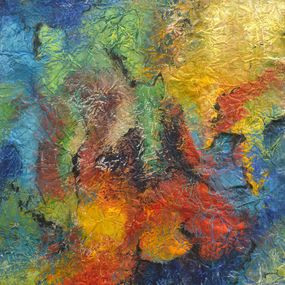
Presentation
Cécile Girard is a French artist born in Paris. Currently, she resides between France and China. Based in Shanghai since 2009 to teach fine arts, she works on her ink technique with contemporary and traditional Chinese painters, which enriches her works.
She discovered traditional painting in the 1990s when she studied calligraphy at the Chinese Central Academy of Fine Arts in Beijing after studying painting and art history in Paris, at school Martenot then at the Louvre school and at La Sorbonne.
Painter and teacher in Shanghai, her art workshop for Chinese and foreign students of all ages allows her to exhibit regularly in China and France.
In 2005, Cécile was selected for the France-China Cross Years 2003-2005 and presented a personal exhibition of her works at the Beijing Art Museum.
Between 2012 and 2015, she collaborated with the China Pavilion in Shanghai as well as Shanghai University, including lectures and publications at Shanghai Normal University.
In 2014, she participated in two exhibitions, at the Shanghai Mint Museum and in a group exhibition - with Chinese artists - in France and China, celebrating the 50th anniversary of relations between the two countries.
His works are present in the permanent collections of the Beijing Art Museum and the Duolun Museum of Modern Art in Shanghai.
Since 2012, she has also been involved in solo and group exhibitions with renowned Chinese institutions, such as the China Central Academy of Fine Arts and the Xi'an Academy of Fine Arts.
In 2016, she had a joint exhibition, "Ross Lewis and Cécile Girard in Conversation", and a group exhibition at the ArtCN Gallery in Shanghai.
Finally, since 2019, she has collaborated with Galerie Xixi in China and since 2022, with Galerie Feng Shang in France.
The “Landscapes of China" exhibition celebrates the 60th anniversary of the establishment of diplomatic relations between France and China in 2024.
Cécile Girard's paintings emerged from travels and encounters between Asian and Western civilizations.
Following a trip to China in the province of Anhui, Cécile decided to use a special local Xuan rice paper, made to measure and in the tradition of
Great Masters. By kneading, crumpling and thickening the rice paper, she gave it new life with a dense, textured, dimensional and yet flexible form.
His processing technique combines Chinese ink, acrylics and oil in bright, deep colors producing a rich artistic edet.
The inspirations behind these works are drawn from primitive Chinese characters and the use of pictograms of the Naxi minority of Dongba culture. The choice of shades, blue-greens and orange-reds, come from the landscapes of Yunnan with the use of the Zhongcai Hua technique or dense color painting. The emphasis is placed on the contours in the manner of Chinese calligraphy as well as the borrowing of constituent elements of the Chinese landscape. The division of space is inspired by the principle used in ancient Chinese claustras, principles converging with those of the treatment of light in the Italian Art of stained glass.
Cécile Girard creates her own pictorial vocabulary, a fusion of images expressing emotions and reflections using various elements and symbols from ancient China and Western aesthetics.
Discover similar artists


Reviews from our customers
All our reviews are extracted from Verified Reviews
You may also like

Sergey Arustamyan
Painting . 40 x 50 x 2 cm Painting . 15.7 x 19.7 x 0.8 inch
€278


Cécile Girard
Painting . 167 x 43 x 1 cm Painting . 65.7 x 16.9 x 0.4 inch
€1,400 €1,260


Cécile Girard
Painting . 146 x 43 x 1 cm Painting . 57.5 x 16.9 x 0.4 inch
€1,200 €1,080


Zenan Fu
Painting . 60 x 50 x 4 cm Painting . 23.6 x 19.7 x 1.6 inch
€25,800


Cécile Girard
Painting . 39 x 26 x 1 cm Painting . 15.4 x 10.2 x 0.4 inch
€1,900

Cécile Girard
Painting . 29 x 25 x 1 cm Painting . 11.4 x 9.8 x 0.4 inch
€1,900


Cécile Girard
Painting . 153 x 82 x 1 cm Painting . 60.2 x 32.3 x 0.4 inch
€4,000 €3,600


Cécile Girard
Painting . 84 x 86 x 1 cm Painting . 33.1 x 33.9 x 0.4 inch
€4,800


Neo Bauchaus
Painting . 110 x 85 x 2 cm Painting . 43.3 x 33.5 x 0.8 inch
€2,800


