










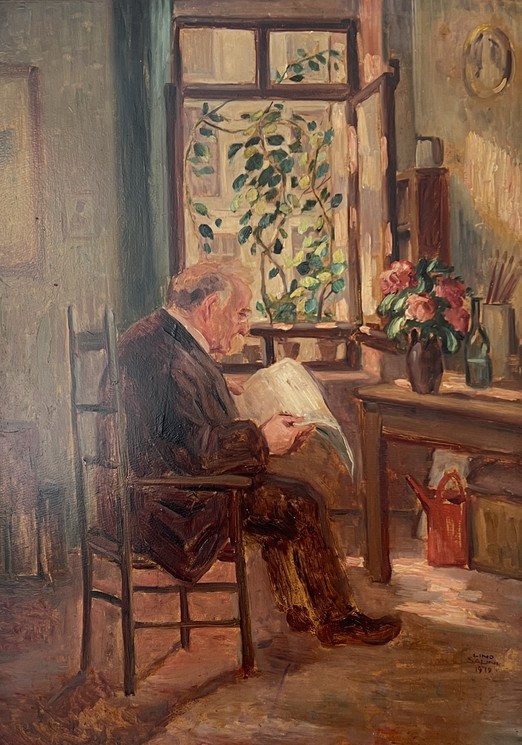

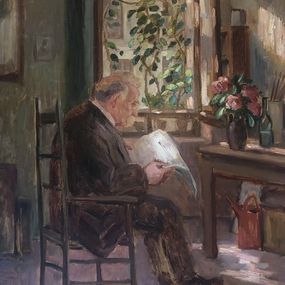
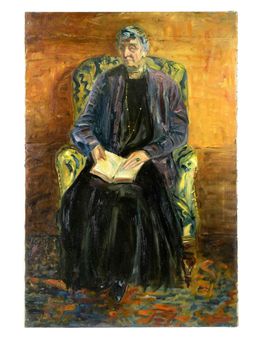
La lecture du journal du matin, 1919
Painting : oil · 71 x 50.5 x 0.5 cm 28 x 19.9 x 0.2 inch · Ready to hang
Sold
Authenticity guaranteed
Sold with certificate of Authenticity from the gallery
Invoice from the gallery Learn more
Secure payment • Card, Amex, PayPal...
We accept several payment methods:
Paypal
American Express
Visa
Mastercard
Apple Pay
Google Pay
- Credit cards (Visa, MasterCard)
- American Express
- PayPal
- Bank transfer
- Gift card
- Apple Pay / Google Pay
All payments are secured with 3D Secure validation to protect your confidential information.
Verified Reviews : 9.6/10
Similar works



Francine Ledieu
Fine Art Drawings . 65 x 50 x 0.1 cm Fine Art Drawings . 25.6 x 19.7 x 0 inch
€3,800

About the artwork
Type
Painting : Unique artwork
Condition
Artwork sold in perfect condition, framed, ready to hang
Authenticity
Sold with certificate of Authenticity from the gallery
Invoice from the gallery
Signature
Hand-signed by artist
Dimensions ( cm • inch )
71 x 50.5 x 0.5 cm 28 x 19.9 x 0.2 inch Height x Width x Depth
Artwork dimensions including frame
79 x 59 x 2.5 cm 31.1 x 23.2 x 1 inch
Sold by
Art gallery
Credentials
Vetted seller since 2019 • Top Seller
Description
Original frame
Presentation
Umberto Lino Salini (born December 27, 1889 in Frankfurt am Main, † December 20, 1944 in Würzburg) was a German painter and cartoonist. Salini is often compared to Heinrich Zille, because he liked to draw the patterns for his drawings in a particular environment: the cider houses of Sachsenhausen. His cartoons and photos of originals from Frankfurt can still be found in many hostels today. His estate is administered at the Institute of Urban History in Frankfurt.
Salini's father, Giovita Salini, was from Bédonie (province of Parma). He moved to Frankfurt am Main in 1875 as a second-hand dealer. Later he ran a wine tavern with a small restaurant in the Königswarterstraße in Ostend and, despite a thriving business, struggled as he gave the many employees of the Frankfurt import-export companies and Italian merchants who frequented him too generous credits in his country team. connections.
Giovita Salini married Dorothea Friederike Bartling from Hanover, with whom he had four children. Umberto Lino, born December 27, 1889, is the only child to survive. His mother died when he was four years old.
His father had in the meantime moved the tavern to Kaiserhofstrasse in the city center, a side street of Freßgass. There it became a meeting place for artists from Frankfurt. Salini's father also worked there as a designer, focusing mainly on one motif: the Blue Grotto of Capri, for which he found a buyer among his guests.
The son's talent manifested itself very early on. He particularly liked the animals of the Frankfurt Zoo. His penchant is also noticed by painters who frequent his father's wine bar. Antonio Becker and Gustav Herold gave him instructions at an early stage and encouraged his father to teach him first to teach the painter Alois Penz, then to undergo extensive training at the Städelschule with Professor Wilhelm Amandus Beer and Emil Gies .
Contrary to some warnings from old friends, this was not a breadless art for young Salini. Caricature becomes his real job, especially in small-format drawings (mainly in black and white, colored here and there) Occasionally, he also produces large format watercolor portraits, as well as ink, red chalk and chalk drawings.
Above all, his drawings of the Sachsenhausen cider taverns, with which he became the Ebbelwoi-Zille, became known. Like Heinrich Zille, Salini mainly drew portraits and sketches of people he met on his forays into the city's streets and taverns.
Well-known Frankfurt artists such as Wilhelm Altheim, Fritz Boehle, Cefischer, Mateo Cristiani and Georg Mahr belonged to his circle of friends. Salini represented many artists when they were invited to Frankfurt, including Heinrich George, Clemens Krauss, Paul Wegener, Fjodor Schaljapin, Arturo Toscanini, Beniamino Gigli, the clown Grock and Joachim Ringelnatz. Most of his works were lost in an air raid on Frankfurt in March 1944, which also completely destroyed his workshop on Hochstrasse.
He spent the last months of his life in Homburg am Main near Wertheim. Murals of him have been preserved in the restaurant "Zur Krone" to this day. Salini died on December 20, 1944 from severe kidney disease.
Only a part of his work which he had moved to Homburg remained in his personal domain. Although Salini was very popular in Frankfurt during his lifetime - among others. Many of his drawings appeared in the Stadtblatt of the Frankfurter Zeitung - apart from the smaller exhibitions, there was no glimpse of Lino Salini's work in the post-war period. It was not until 1978 that the works that had been preserved were shown to the public for the first time in the exhibition Lino Salini - Frankfurt Caricatures with Heart and Whistle of the Polytechnic Society.
On the occasion of its 100th anniversary, another exhibition followed in 1989 at the Institute of Urban History with the theme of Lino Salini - designer and caricaturist from the first to the second world war.
The Frankfurt Society for the Promotion of Painting e. V. organized a commemorative exhibition from November 14 to December 16, 2005 in the Dreieichstrasse in Sachsenhausen in a specially prepared apple wine restaurant.
Lino Salini has so far hardly been recognized in the literature. In 1930, the "Society of Bibliophiles" published a small number of sketches in which the heads of its members were mainly recorded. It was not until 1978 that a book appeared with Lino Salini's Frankfurter Bilderbogen, which gives a brief overview of Salini's work.
Salini's drawings, on the other hand, were often used for book illustrations, as can be seen in various volumes of Frankfurt dialect poetry and other local alphabet books.
Systematic processing of all the material obtained has not yet taken place. In addition to many private collectors, the Institute of Urban History has the largest Salini collection
Discover similar artists


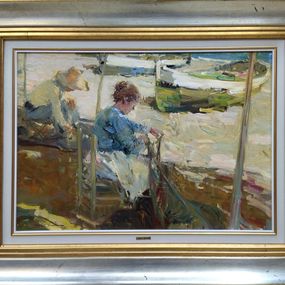

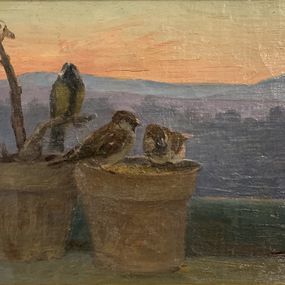
Reviews from our customers
All our reviews are extracted from Verified Reviews
You may also like

Alex D.
Painting . 70 x 80 x 2 cm Painting . 27.6 x 31.5 x 0.8 inch
€839
Recommended by Artsper
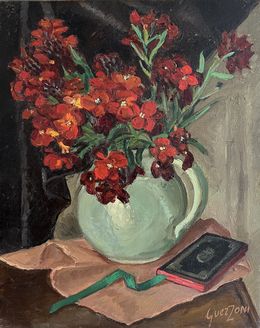
Stéphanie Caroline Guerzoni
Painting . 41 x 33 x 2 cm Painting . 16.1 x 13 x 0.8 inch
€1,071


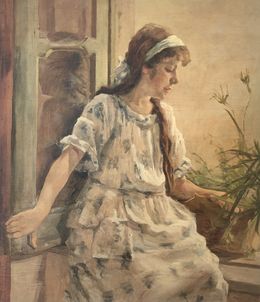
Fritz Glarner
Painting . 92 x 80 x 2 cm Painting . 36.2 x 31.5 x 0.8 inch
€3,223

Alex D.
Painting . 100 x 85 x 2 cm Painting . 39.4 x 33.5 x 0.8 inch
€1,029

Jean Verdier
Painting . 81 x 60 x 2 cm Painting . 31.9 x 23.6 x 0.8 inch
€1,882

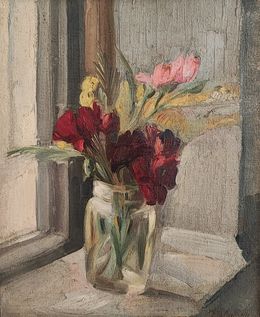
Louis Henri Salzmann
Painting . 46 x 38 x 2 cm Painting . 18.1 x 15 x 0.8 inch
€1,240

Herbert Theurillat
Painting . 65 x 54 x 2 cm Painting . 25.6 x 21.3 x 0.8 inch
€1,127

Antonio Feltrinelli
Painting . 150 x 101 x 2 cm Painting . 59.1 x 39.8 x 0.8 inch
€8,200


Liubou Sas
Painting . 70 x 40 x 1.6 cm Painting . 27.6 x 15.7 x 0.6 inch
€1,550

Oleksandr Khrapachov
Painting . 60 x 80 x 2 cm Painting . 23.6 x 31.5 x 0.8 inch
€2,325

Liubou Sas
Painting . 40 x 40 x 0.6 cm Painting . 15.7 x 15.7 x 0.2 inch
€5,000

Vyacheslav B.
Painting . 28 x 20 x 2 cm Painting . 11 x 7.9 x 0.8 inch
€209

Leonid K.
Painting . 60 x 50 x 2 cm Painting . 23.6 x 19.7 x 0.8 inch
€369

Pia Loro
Fine Art Drawings . 24 x 18 x 3 cm Fine Art Drawings . 9.4 x 7.1 x 1.2 inch
€480