












Sappho, 2023
Painting : oil · 70 x 70 x 3.5 cm 27.6 x 27.6 x 1.4 inch · Ready to hang
$5,376
5 376 $US
Shipping & delivery
Shipped from: France
Delivery to: United States , $ 582
Estimated delivery: One to two weeks
Free returns within 14 days, full refund
Authenticity guaranteed
Sold with certificate of Authenticity from the artist
Invoice from the gallery Learn more
Secure payment • Card, Amex, PayPal...
We accept several payment methods:
Paypal
American Express
Visa
Mastercard
Apple Pay
Google Pay
- Credit cards (Visa, MasterCard)
- American Express
- PayPal
- Bank transfer
- Gift card
- Apple Pay / Google Pay
All payments are secured with 3D Secure validation to protect your confidential information.
Verified Reviews : 9.6/10
Similar works





About the artwork
Type
Painting : Unique artwork
Condition
Artwork sold in perfect condition, framed, ready to hang
with stretcher frame
Authenticity
Sold with certificate of Authenticity from the artist
Invoice from the gallery
Signature
Hand-signed by artist
Dimensions ( cm • inch )
70 x 70 x 3.5 cm 27.6 x 27.6 x 1.4 inch Height x Width x Depth
Artwork dimensions including frame
76 x 76 x 4 cm 29.9 x 29.9 x 1.6 inch
Sold by
Art gallery
Credentials
Vetted seller since 2021
Discount
This seller offers discount when you purchase multiple artworks.
Description
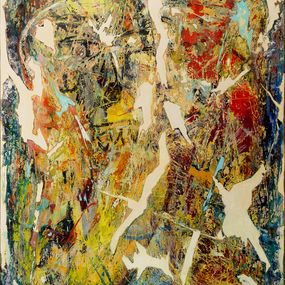
Work from the recent Palimpsests/2 series; it evokes the figure of a Greek poet who would have lived on the island of Lesbos. She is known for having expressed in her writings her attraction to other women, hence the term "sapphism" to designate female homosexuality. Here a couple of naked women in profile facing each other, seated in such a way that they seem to be attached to each other, their legs crossing. The two figures are clearly one with their context. Here again the process of erosion specific to the Palimpsests accentuates the memorial and ancestral aspect of the painting; time is at work...
Presentation
Visual artist, graduated from the Ecole Nationale Supérieure des Beaux-Arts in Paris. Associate of Plastic Arts. Born in 1956 in Paris. He began his journey in the context of Free Figuration, but then felt close to Les Nouveaux Fauves de Berlin and exhibited neo-expressionist painting which, while remaining figural, moved away from narrative figuration. The first Couples (or Duos) establish a dialectical staging within the painting, where masculine and feminine tensions, dialogue and confrontation, masks and figures, the reversibilities of desire are played out.
At the same time, his experience as a university teacher enriched him with decisive insights into contemporary plastic expression and new media; in return, he better understood the specificities of “mediumpeinture". Confronted in the Grands Couples with the test of a figuration which constructs itself, self-destructs, covers itself, because it is always "too painted" in his eyes, still too narrative, he opened, in 1993, the way to the Palimpsests which will be at the heart of the artist's future approach. A long-term work on the “disappearance" of painting, the threat of its ruin, its memory; and where the phenomenological character of the pictorial fabric is manifested, its fragility, as much as its paradoxical durability. Carried by an even more radical process, this problem will then be replayed in the Série des Brûlées; these are remnants of canvases painted with resinous oil and preserved under glass, as if preserved for a time from the erosion which they are already carrying. They revoke the status of images and become a sort of pictorial and pathetic “skin", but which continues to represent us again.
In 2009 a major retrospective at the Les Esselières Congress Space in Villejuif demonstrated this approach. It was a decisive experience for questioning the intrinsic nature of painting, the painting object and their relationship to the figured body. To this day, the Palimpsests continue the open path and are revealed to the public as a counterpoint to the different series (Duets, Solos, Curiosities, Survivances, Invisibles...). Building on this experience, the artist claims a figuration nourished by the "catastrophes" she has experienced - as if outside of time - even archaic, always more anchored in the physical substrate of the painting and which attests, ultimately, to a return to the table is always possible. The figuration becomes one with the material and structures the pictorial film, where the haptic dimension is inseparable from the image and the sign.
"The visual event of the painting only occurs from this tear which separates before us what is represented as remembered, and everything which presents itself as oblivion." Georges Didi-Huberman, in Front of the Image
Discover similar artists


Reviews from our customers
All our reviews are extracted from Verified Reviews
You may also like

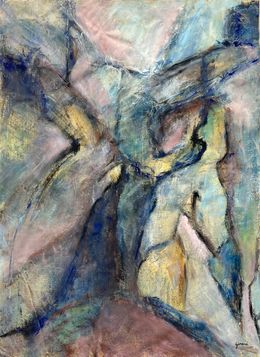
Cinzia Hochstrasser
Painting . 50 x 70 x 4 cm Painting . 19.7 x 27.6 x 1.6 inch
$2,045

Marino Marini
Print . 76 x 57 cm Print . 29.9 x 22.4 inch
$2,688

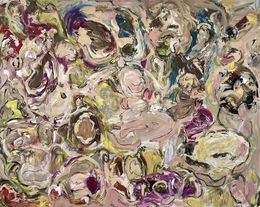
Remi Delaplace
Painting . 96 x 128 x 3 cm Painting . 37.8 x 50.4 x 1.2 inch
$4,663


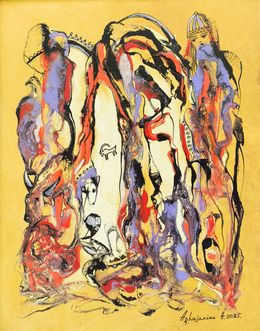
Harutyun Aghajanyan
Painting . 40 x 30 x 2 cm Painting . 15.7 x 11.8 x 0.8 inch
$280

Harutyun Aghajanyan
Painting . 40 x 30 x 2 cm Painting . 15.7 x 11.8 x 0.8 inch
$280


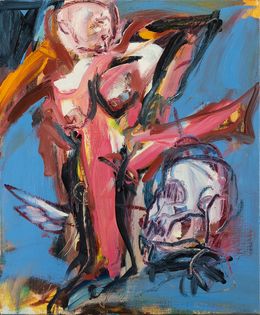
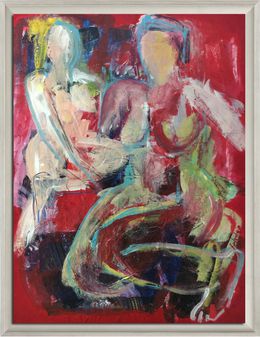
Catherine Rafenberg
Painting . 65 x 50 x 2 cm Painting . 25.6 x 19.7 x 0.8 inch
$2,337


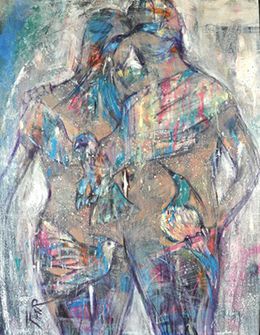

CY Pavel
Painting . 80.7 x 57.7 x 3 cm Painting . 31.8 x 22.7 x 1.2 inch
$4,675
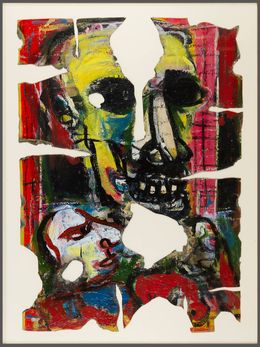

CY Pavel
Painting . 133.5 x 100.5 x 3.5 cm Painting . 52.6 x 39.6 x 1.4 inch
$10,518

Saverio Filioli Uranio
Painting . 30 x 24 x 2 cm Painting . 11.8 x 9.4 x 0.8 inch
$210
