Bronze Sculpture for Sale

Upload an image to find similar artworks
A passionate urban art enthusiast, Yannick Boesso founded Urban Art Fair in 2016, transforming the street art market in France. Artsper met with him to discover his background, his vision, and the highlights of the 2026 edition of the fair.

1. Could you briefly introduce the fair and this year’s edition? What are its main new features?
Yannick: This 10th edition is a milestone for us. It’s both an opportunity to look back at what we’ve built over the past ten years, to honor that history, but also to challenge ourselves and envision the next ten years.
We wanted to embrace this balance between heritage and renewal. You’ll find pioneering and historic figures like Bill Blast, Crash, and the The Underbelly Project. But it’s just as important for us to support emerging artists or those who haven’t received the recognition they deserve, like Popay.
This year, we wanted to highlight the relationship between architecture, design, and urban art. The city is no longer just a canvas, it’s an entity in its own right. This involves considering urban furniture and inviting artists to rethink it.
Next year, we’re launching an award with Lefranc Bourgeois on the theme ‘Redesigning the City.’ The goal is to encourage more structural interventions, beyond one-off artworks.


We’ve also expanded the formats we present, with more outdoor installations and three-dimensional works, particularly on the forecourt of Carreau du Temple, including five complementary outdoor pieces, one of which is a giant inflatable sculpture by Mara that references the aesthetic of art toys.
We are also developing more cross-disciplinary curatorial projects, like Oli’s Musée Imaginaire, echoing his exhibition in Toulouse, and a space created with the Olympic Committee, reflecting Pierre de Coubertin’s vision of combining art and sport.
Finally, the flagship project remains The Underbelly Project, presented in an immersive space right at the entrance. Initiated in 2009 in an abandoned New York subway station, it brought together around a hundred artists in a completely free context. Today, we can show some of these works physically, including pieces by artists like Jeff Soto, which brings a fresh energy to the fair.
It’s probably the most comprehensive edition of the fair we’ve ever produced, both in indoor and outdoor offerings, collaborations, and dialogue with artists. In my view, it’s our most accomplished edition yet.

2. Which art movement do you find the most exciting right now? What trends are emerging, and what inspires you the most?
Yannick: Today, everyone in the art market is reinventing themselves. Galleries are rethinking their models and their visibility formats. No one has ready-made answers, but there’s a real collective momentum.
We’re exploring digital more, with platforms like Artsper, and developing co-curations to reach diverse audiences.
And paradoxically, in the face of AI’s rise, we’re seeing a strong return to craftsmanship. Artists are experimenting more, tinkering, creating installations, three-dimensional works, and hybrid projects. That, to me, is where the new energy in the art world lies.
3. Urban art has long taken time to be recognized by the market. Do you think it has finally achieved true legitimacy?
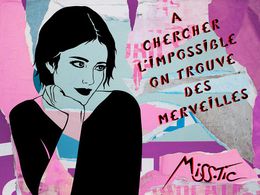
Yannick: Yes, I believe urban art has reached a form of legitimacy today. More and more institutions are taking an interest for example, the Centre Pompidou, which has acquired works by Miss.Tic and Gérard Zlotykamien.
But personally, I’ve never seen institutional recognition as an end goal. The priority is to support artists, produce solid projects, and develop solo exhibitions. Recognition comes naturally afterward.
Today, urban art is fully contemporary art, with a strong identity that continues to need affirmation.
4. The UBS x Art Basel report says fairs account for 35% of global sales, but they’re increasingly expensive for galleries. How do you see this model holding up, and what do you anticipate for the years ahead?
Yannick: The model is under pressure: costs are rising sharply, especially for shipping, which weighs heavily on galleries.
Our role is to support them by developing partnerships and new funding sources. For example, we collaborate with private players like Disney, even if not all projects come to fruition immediately.
We are also thinking about socially engaged projects, particularly around the role of women in urban art, who still make up only a small portion of artists (between 5 and 10%). This can also open new avenues for support and sponsorship.
5. How would you define the DNA of Urban Art Fair in one sentence? What keeps galleries coming back every year?
Yannick: Urban Art Fair is a contemporary art fair whose DNA is deeply connected to the city as a source of inspiration.
It’s also a fair in motion, evolving every year. Over the past two or three years, we’ve really focused on pushing boundaries, and it shows.
And there’s a very strong human dimension: an atmosphere, a collective energy that makes galleries want to come back.

6. Who is the urban art collector in 2025? How are they different from 10 Years ago?
Yannick: The profile of collectors has evolved. We see many professionals in liberal fields, particularly thanks to tools like leasing.
Small businesses are also increasingly taking an interest in urban art.
7. What type of collector does UAF aim to attract: first-time buyers or established collectors?
Yannick: We know the historic urban art collectors well, but today we’re looking to broaden our audience.
The goal is to attract contemporary art collectors more broadly. That’s why we’re thinking about aligning the fair with events like Art Paris, to reach audiences familiar with other art fairs.
8. How does the new generation of collectors purchase art: at fairs, online, or through social media, Instagram in particular?
Yannick: Sales have slowed in recent years, and collector profiles have evolved. Online buying has grown significantly.
For editions, it works very well: collectors understand the techniques and finishes, and can purchase remotely with confidence.
For original artworks, online purchases are more targeted: they’re usually collectors who already know exactly what they’re looking for.


9. Do you have international ambitions, or will the fair remain anchored in Paris?
Yannick: We’ve already explored international opportunities, notably in New York. Other projects were considered, but sometimes interrupted by circumstances.
There is today an interest in scenes like Tokyo or Singapore, where this type of event is still rare.
In the short term, we remain focused on France, but in two to three years, we hope to revive an international dynamic, possibly in Japan or Canada.
10. In your opinion, what’s missing in the current ecosystem to better support urban art?
Yannick: What’s primarily missing is funding. All players, artists, galleries, organizers are under pressure.
It’s necessary to further develop private support, patronage, and partnerships with companies to sustainably support creation.


Fine Art Drawings . 36 x 40 cm Fine Art Drawings . 14.2 x 15.7 inch
$21,522






Choose your preferences
The best
of art, online
SIGN IN - REGISTER
Forgot your password?
No worries, enter you email address and we'll send you a link to reset your password.
ReturnUpload an image and discover similar artworks available on Artsper