Bronze Sculpture for Sale

Upload an image to find similar artworks
Nationality
Themes
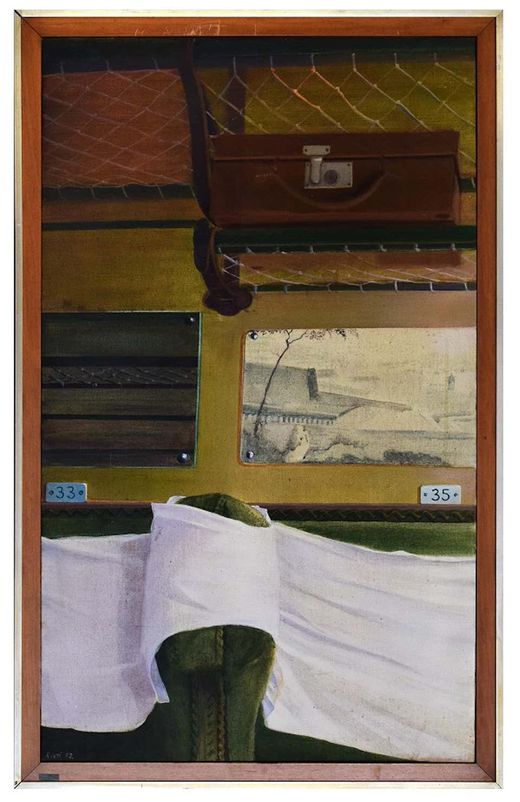
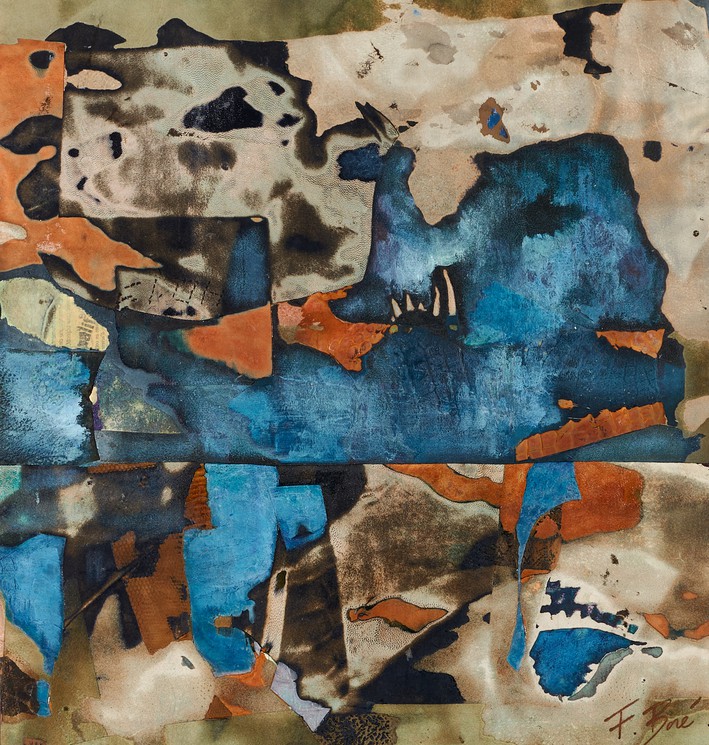
Fabio Rieti (1925-2020) is a painter, muralist, mosaicist, and artist of narrative Figuration of Italian origin, naturalized American and then French. Born in Rome in a family of intellectuals – his father is the composer Vittorio Rieti –, he leaves Italy with his family following fascist racial laws and settles in New York in 1940. He pursues artistic training with the painter Corrado Cagli, whose influence has permanently marked his approach to drawing, color, and composition.
After several years between the United States and Italy, Fabio Rieti permanently settles in Paris in 1957. He quickly joins the French art scene and draws close to artists of narrative Figuration, notably Gilles Aillaud, Eduardo Arroyo, Antonio Recalcati, Gérard Fromanger, and Francis Biras. His pictorial work is distinguished by a sensitive representation of the city, urban landscapes, architectures, interiors, and everyday scenes. Through a subtle palette and a silent narration, he develops a painting where memory, observation, and poetry constantly dialogue.
In parallel with his easel work, Fabio Rieti becomes one of the great actors in public art in France. In collaboration with the architect Émile Aillaud, he conceives vast programs of monumental frescoes, mosaics, trompe-l'œil, and colored interventions integrated into architecture. His works mark several emblematic urban ensembles, notably La Grande Borne in Grigny (1967-1971), La Noé in Chanteloup-les-Vignes, Les Courtillières in Pantin and Bobigny, the Pablo Picasso city in Nanterre, or several walls painted in Paris and the provinces. This reflection on color in public space constitutes an essential part of his artistic legacy.
Fabio Rieti's work progressively establishes itself on the international art scene through a painting where figuration, color, architecture, and urban landscape occupy a central place. His canvases, characterized by an attentive observation of built spaces and everyday scenes, bear witness to a constant search for light, perspective, and the memory of places. This singular approach finds a natural extension in his monumental interventions, where painting, mosaic, and trompe-l'œil permanently transform public space.
In 1965, Fabio Rieti participated with Gilles Aillaud, Eduardo Arroyo, Antonio Recalcati, Gérard Fromanger, and Francis Biras in the collective work Vivre et laisser mourir ou la Fin tragique de Marcel Duchamp, now housed at the Museo Reina Sofía in Madrid. In 1969, he created with Gilles Aillaud, Eduardo Arroyo, Francis Biras, and Lucio Fanti the installation La Datcha, which became an emblematic work of narrative Figuration. His work has been exhibited throughout his career in many galleries and institutions in Europe and the United States, notably in New York, Rome, Paris, London, Düsseldorf, Moscow, and Amiens. Several posthumous exhibitions, including the tribute organized in 2024 by the Galerie Sabine Bayasli, have contributed to rediscovering the importance of his work. It is today housed in the collections of the Centre Pompidou, the Musée d'Art moderne de Paris, the Centre national des arts plastiques (CNAP), and other public and private collections, consecrating Fabio Rieti as a major figure of contemporary painting, narrative Figuration, and monumental art in France.




Choose your preferences
The best
of art, online
SIGN IN - REGISTER
Forgot your password?
No worries, enter you email address and we'll send you a link to reset your password.
ReturnUpload an image and discover similar artworks available on Artsper