
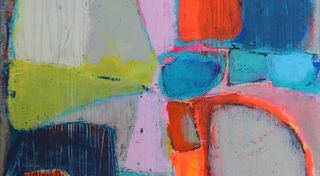




Colored artworks
The work of color is central in any artistic work. It is even one of the first tools of the artist. It is difficult to imagine a work that would exist without the working of color - even if it is the absence of color that the artist chooses to present.
Through the ages and artistic movements, the use and meaning attributed to color evolves, but the essence of color remains the same. Every artist must master the properties of color in order to control his composition. In the restoration of paintings, color even becomes a science, because it is necessary to know the different molecules to find the colors and mixtures originally used by the artist.
In the history of art, the importance of color fluctuates according to periods and geographical areas. During the Italian Renaissance, for example, there was a debate (called Paragone) between the authority of color versus drawing: according to the schools, it is the color, and not the line, that creates the emotion and visual power of a work of art. The colors thus take on an immense importance, and assume certain meanings: white symbolizes purity for example, and blue (systematically used to clothe the Virgin Mary) is associated with divinity. These symbols are not thought of randomly: the purple for example, is used since the Byzantine era to signify the highest rank of royalty. Unlike ochre, the purple pigment came from a specific shell, and was extremely difficult - and therefore rare, and expensive - to obtain.
More generally, colors can be divided into three categories: warm, cool, and neutral. As their name implies, these classes of colors give off an atmosphere that the painter can use to influence the emotion of his work. Baroque art, for example, manipulates the contrasts between warm and cold colors to capture the power of bodies. The play of light is exalted by the effects of color. For a long time, the traditional Western school of painting required painters to reproduce the colors of the environment around them. It was the Impressionists, in the 19th century, who explored other ways of seeing - and therefore of transcribing on canvas - their chromatic environment. By avoiding complex mixtures and painting spontaneously, in the open air, the Impressionists reinvented the use of color to reproduce reality.
It was not until abstract and subjective painting that art devoted itself to color as a subject. Mark Rothko, precursor of the Colorfield Painting movement and of abstract expressionism, sees in his paintings a living organism whose color is human and whose format is transcendent. Piet Mondrian, on the other hand, sought in his paintings to approach the very essence of nature through the purity of primary colors, to achieve abstraction. The founder of the Russian avant-garde movement of Suprematism, Kasimir Malevich, will disturb the senses of everyone with his work "White square on white background", in which the color is painted only for itself. Contemporary art, photography, collage, or pop art also use in their respective ways the resources of color, exploring indefinitely all its pluralities. As Picasso said, "When I have no blue, I use red."
Artsper writes art in color: discover below a great selection of works that honor color and its properties. What better way to brighten up an interior?
Choose your preferences
The art is yours
Already customer ?
Log in
or
Continue with Google
Continue with Facebook
Professional vendor?
Access my gallery space
The art is yours
New customer ?
Register
or
Continue with Google
Continue with Facebook
Professional vendor?
Access my gallery space
Image search
Upload an image and discover similar artworks available on Artsper