Bronze Sculpture for Sale

Upload an image to find similar artworks

Design : paper · 135 x 125 x 2 cm 53.1 x 49.2 x 0.8 inch · Ready to hang
Shipped from: France
Delivery to: Germany , € 135
Estimated delivery: Two to three weeks
Free returns within 14 days, full refund
Sold with certificate of Authenticity from the gallery
Invoice from the gallery Learn more
All payments are secured with 3D Secure validation to protect your confidential information.


Fine Art Drawings . 100 x 100 x 1 cm Fine Art Drawings . 39.4 x 39.4 x 0.4 inch
€11,900


Fine Art Drawings . 20 x 20 x 0.5 cm Fine Art Drawings . 7.9 x 7.9 x 0.2 inch
€130


Type
Design : Open edition
Condition
Artwork sold in perfect condition, framed, ready to hang
Authenticity
Sold with certificate of Authenticity from the gallery
Invoice from the gallery
Signature
Not Signed
Technique & Support
Dimensions ( cm • inch )
135 x 125 x 2 cm 53.1 x 49.2 x 0.8 inch Height x Width x Depth
Artwork dimensions including frame
138 x 128 x 3 cm 54.3 x 50.4 x 1.2 inch
Art gallery
Credentials
Vetted seller since 2017
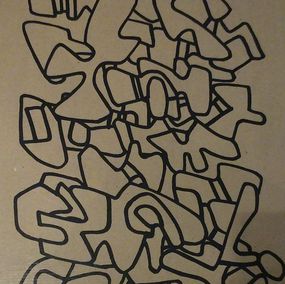
A 12-year cycle, the artist's longest and most monumental, which initiated the gallery's relationship with the artist. It began with small, instinctive graphic drawings, initially executed in blue and red ballpoint pen.
They explore the infinite variety of the world through an adventurous line, allowing images to emerge, using a wide range of techniques: markers, felt-tip pens, vinyl, collages, and cutouts of all kinds, which excite the artist with their almost magical visual potential. Continuing this adventure on paper, he takes the path of paintings and sculptures, which will become monumental, culminating in the most unimaginable architectural creations, such as the [unspecified building], housing the [unspecified] and the costumes of the show. Some twenty solo exhibitions, as well as numerous publications, mark Jean Dubuffet's journey at the Jeanne Bucher Jaeger gallery.
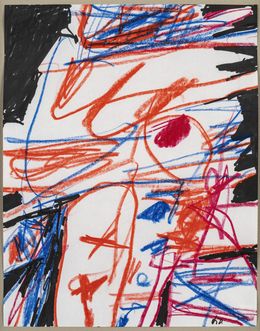
For the card game (which isn't a true card game since it merely plays with its form), Dubuffet composed 52 figures based on the spontaneous, direct inventiveness of the hand, which independently creates the lines, shapes, and figures. These figures reveal a dog, a clown, a rocket, or two people embracing only to immediately conceal them again, thus leading the imagination in a different direction.
The 52-card deck has been published in two successive editions. The first, in 1967, was titled and silkscreened from Jean Dubuffet's original marker drawings (1964-67), produced with the London-based publisher Alecto. This edition was limited to 350 numbered copies, plus 30 copies not for sale. The 52 cards, measuring 25 x 16 cm, each feature a different image on its face, rendered in a limited color palette: blue and red on a black background, alternating solid colors and hatching according to the artist's distinctive style. In addition to the 52 cards, the set includes a title card and a box, decorated with two motifs, which bears the handwritten instructions on its inside.
The second edition, based on the same original drawings by Jean Dubuffet and published in March 1968, is a co-edition between Galerie Jeanne Bucher and Galerie Beyeler, printed by the master cardmaker Baptiste-Paul Grimaud in Nancy. This second edition is titled "The format of the cards is 17 × 11.2 cm, the same as the originals."
The title card and the card backs feature original designs that were used to decorate the front and back of the box, respectively. This is an unlimited offset print run, which also resulted in a special edition for English-speaking countries. This second set comes in a slightly different box and features a new title on a white background. It includes a card listing the 52 figures in the game, followed by their English translations. Jean Dubuffet's card game was studied in the catalogue raisonné by Max Loreau and later by Sophie Webel.
In this version, which reproduces the previous one, the drawing that appeared on the back of the half-title card is replaced by the list (titled) of the fifty-two titles accompanied by their English translation.
The work, as well as and was the subject of a specific presentation at the gallery between November 7 and 30, 1968.
So that everyone can play their games of , which Dubuffet considers as an algebra, all the beings or objects that populate these cards, rather than being taken for themselves, are destined to light up, by chance, multitudes of combinations.
Bibliography:
Catalogue of the works of Jean Dubuffet, Maps, Utensils, fascicle XXII, Switzerland, 1975, ill. 168, pp.54-57
Jean Dubuffet was born in Le Havre on 31 July 1901 into a family of wine merchants. A paradox marked his life: fascinated by the fringes of society and madness, he could never be able to give up the privileges offered by his fortune even though he despised the bourgeois and the intellectuals. One of the most important French painters of the 20th century, Jean Dubuffet was the first to coin the term Art brut, to label the art of outsiders with no artistic education.
After a short stint at the Académie Julian in 1918, he established his studio in a building owned by his family's business. Eventually, he joined his father's business but took numerous breaks to travel and to work in other cultural fields, always self-taught: painting, literature, languages, music.
His real artistic career began in his forties: for the next four decades, he built a rich body of work, wrote essays and poetry, played jazz, and experimented with different materials and techniques. In his first series of paintings, Rues de Paris, Hautes Pâtes, Mirobolus, Macadam et Compagnie, he stated his desire to stay away from schools and art movements, advocating for spontaneity of the artistic gesture, instinct and the use of "low" materials, such as sand or tar.
He first used the term art brut in 1945 to define the spontaneous and primitive productions of outsiders or the mentally ill, works that he had been collecting, but also to define his own work. In 1948, he created the Compagnie de l'art brut with André Breton, Jean Paulhan, and Michel Tapié, whose goal was to study and disseminate this involuntary art. He produced multiple series: Sols et terrains, Paysages du mental, the famous Tableaux d'assemblages. He was attracted by the grotesque and wanted his work to offset viewers, like a "punch to the gut". He painted for his own enjoyment and has little interest in other painters.
Between 1962 and 1983, he worked on the Hourloupe cycle. He produced paintings, drawings, assemblages, sculptures, “praticables", architectural pieces in three essential colors: red, blue, and white. The “praticables" are animated paintings mainly assembled under the name Coucou Bazar, a work bridging painting, sculpture, dance, and performance. First presented in New York in 1973, Coucou Bazar came to life more recently in 2013 at the Musée des Arts Décoratifs in Paris and in 2016 at the Fondation Beyeler in Basel, Switzerland.
Today, his works continue to be exhibited in the world's greatest museums. In 2019 the MUCEM in Marseille presents his exhibition "Jean Dubuffet, a barbarian in Europe" and another major exhibition of his works is held at the Palazzo Franchetti in Venice.
China
Germany
France
Netherlands
Ukraine

France
France

United States
All our reviews are extracted from Verified Reviews

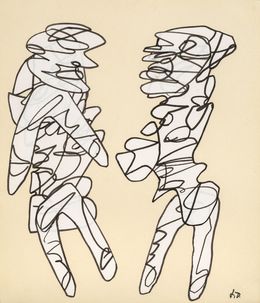
Fine Art Drawings . 25 x 21.7 cm Fine Art Drawings . 9.8 x 8.5 inch
€30,000


Fine Art Drawings . 24.5 x 32 cm Fine Art Drawings . 9.6 x 12.6 inch
€45,000

Fine Art Drawings . 25 x 21.5 cm Fine Art Drawings . 9.8 x 8.5 inch
€30,000

Painting . 15 x 15 x 0.2 cm Painting . 5.9 x 5.9 x 0.1 inch
€225

Fine Art Drawings . 21 x 21 x 0.1 cm Fine Art Drawings . 8.3 x 8.3 x 0 inch
€190
Fine Art Drawings . 27 x 21 cm Fine Art Drawings . 10.6 x 8.3 inch
€30,000

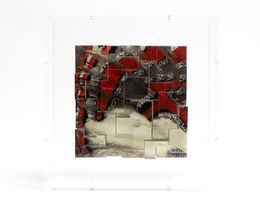
Sculpture . 20 x 20 x 6 cm Sculpture . 7.9 x 7.9 x 2.4 inch
€2,300

Painting . 20 x 25 x 0.1 cm Painting . 7.9 x 9.8 x 0 inch
€350
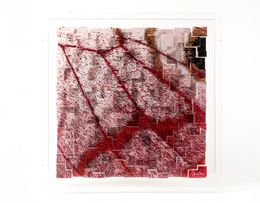
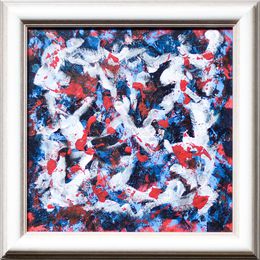
Painting . 30 x 30 x 0.4 cm Painting . 11.8 x 11.8 x 0.2 inch
€300

Painting . 58 x 41 x 0.2 cm Painting . 22.8 x 16.1 x 0.1 inch
€250


Painting . 23 x 25 x 0.5 cm Painting . 9.1 x 9.8 x 0.2 inch
€120 €108

Fine Art Drawings . 25 x 35 x 0.3 cm Fine Art Drawings . 9.8 x 13.8 x 0.1 inch
€453

Fine Art Drawings . 17 x 17 x 0.2 cm Fine Art Drawings . 6.7 x 6.7 x 0.1 inch
€120

Painting . 52 x 52 x 2 cm Painting . 20.5 x 20.5 x 0.8 inch
Price upon request

Fine Art Drawings . 62 x 49 x 0.1 cm Fine Art Drawings . 24.4 x 19.3 x 0 inch
€1,300
Have you purchased a painting, sculpture or work on paper?
Find our expert advice for the conservation and promotion of your works in the articles below:
At Artsper, our mission is to allow you to collect works of art with complete peace of mind. Discover the protections we offer at every stage of your shopping experience.
We work in close collaboration with carefully selected art galleries. Each seller on Artsper is carefully examined and approved by our team, thus ensuring compliance with our code of ethics. You therefore have the assurance of purchasing authentic, high-quality works.
Before being posted online, all artwork on Artsper is reviewed and validated by our moderation team. You can browse with complete peace of mind, knowing that each piece meets our criteria of excellence.
Our team of contemporary art experts is available by phone or email to answer all your questions. Whether you want advice on a work or a tailor-made selection to enrich your collection, we are here to support you.
If you have purchased a work on Artsper and wish to resell it, we offer you a dedicated platform to relist it. To find out more, click here.
You have the possibility to propose a price for certain works, just like in a gallery. This feature allows you to initiate discussions and potentially acquire your coins at advantageous prices.
Our team will negotiate for you and inform you as soon as the best offer is obtained. Do not hesitate to call on our expertise to ensure a transaction at the best price.
We want you to be completely satisfied with your purchase. If the work you receive is not to your liking, you have 14 days to return it free of charge, and you will be refunded in full, whatever the reason.
All credit card payments are processed by Paybox, the world leader in payment solutions. Thanks to their strict security standards, you can transact with confidence.
In the rare event that an artwork arrives damaged or not as described, we are here to help. Whether for a return, refund, restoration or exchange, our team will support you throughout the process and will ensure that we find the solution best suited to your situation.
Use one of the payment methods available on Artsper for your order.
Report any problems within one week of receiving the work.
Provide required photographic evidence (including original artwork and packaging).
The received work lacks a described characteristic (for example, a signature or frame).
The artwork has significant differences from its description (e.g. color variation).
The work is damaged upon receipt.
The work is lost or damaged by the carrier.
Delivery is significantly delayed.
With Artsper, you collect with complete peace of mind.
Artsper offers you access to more than 200,000 works of contemporary art from 2,000 partner galleries. Our team of experts carefully selects galleries to guarantee the quality and originality of the works.
You benefit from:
Works at gallery price
Return within 14 days, regardless of your location
Easy resale of the work purchased on Artsper
Personalized research tools (selection and tailor-made universe)
Our customer service is available for any assistance.
Artsper delivers internationally. The list of countries is available in the first step of your cart.
If your country is not listed contact us at [email protected] and we will see what we can do.
Note that Customs fees may apply for works shipped internationally. This is indicated in the first step of the shopping cart.
You can choose a delivery address different from the billing address. Make sure that a trusted person is present to receive the work if you cannot be there.
Choose your preferences
The best
of art, online
SIGN IN - REGISTER
Forgot your password?
No worries, enter you email address and we'll send you a link to reset your password.
ReturnUpload an image and discover similar artworks available on Artsper