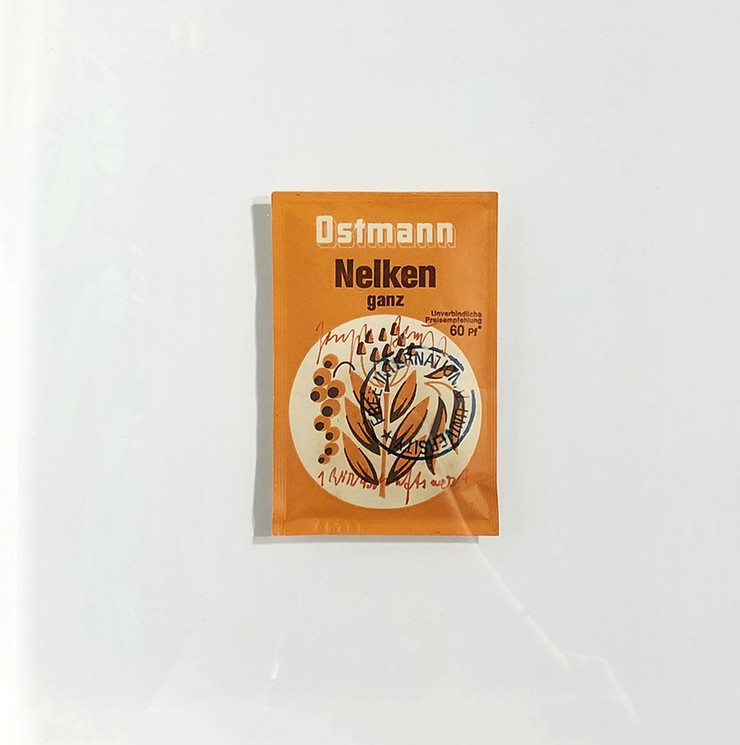

Wirtschaftswert Nelken, Circa 1976
Fine Art Drawings : marker · 13.5 x 9 x 0.5 cm 5.3 x 3.5 x 0.2 inch · Ready to hang
€1,900
1 900 €
Delivered in time for Christmas
Shipping & delivery
Shipped from: France
Delivery to: Germany , € 100
Estimated delivery: One to two weeks
Free returns within 14 days, full refund
Authenticity guaranteed
Sold with certificate of Authenticity from the gallery
Invoice from the gallery Learn more
Secure payment • Card, Amex, PayPal...
We accept several payment methods:
Paypal
American Express
Visa
Mastercard
Apple Pay
Google Pay
- Credit cards (Visa, MasterCard)
- American Express
- PayPal
- Bank transfer
- Gift card
- Apple Pay / Google Pay
All payments are secured with 3D Secure validation to protect your confidential information.
Verified Reviews : 9.6/10
Similar works

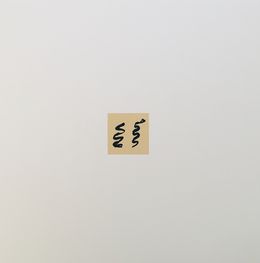
César Baldaccini
Fine Art Drawings . 21 x 15.8 x 0.01 cm Fine Art Drawings . 8.3 x 6.2 x 0 inch
€2,500


About the artwork
Type
Fine Art Drawings : Unique artwork
Condition
Artwork sold in perfect condition, framed, ready to hang
Authenticity
Sold with certificate of Authenticity from the gallery
Invoice from the gallery
Signature
Hand-signed by artist
Technique & Support
Dimensions ( cm • inch )
13.5 x 9 x 0.5 cm 5.3 x 3.5 x 0.2 inch Height x Width x Depth
Artwork dimensions including frame
32.8 x 32.8 x 3.8 cm 12.9 x 12.9 x 1.5 inch
Sold by
Art gallery
Credentials
Vetted seller since 2013 • Top Seller
Discount
This seller offers discount when you purchase multiple artworks.
Description
This work by Joseph Beuys is part of the series "Witschaftswerte" and shows an original packet of "Nelken" (cloves) from the Ostmann brand.
This artwork, depicting a packet of Ostmann spices, captures the everyday essence of cooking with striking precision. Placed at the center of a pristine white background, the bright orange sachet immediately catches the eye. The clean design, with delicate botanical illustrations and the text "Nelken ganz," evokes a nostalgic simplicity, while highlighting the product's functionality and aesthetics. The illustration attracts with its meticulous details, highlighting the natural authenticity of the cloves. Unique in its approach, the work brings an artistic dimension to a manufactured object, elevating its apparent banality to transform it into a visual celebration of the everyday. The artist succeeds in sublimating the ordinary by presenting it as is, while creating an immediate connection with the viewer through the familiarity and culinary culture it evokes.

Presentation
Joseph Heinrich Beuys, born in Krefeld, Germany on May 12, 1921 and died on January 23, 1986 in Düsseldorf, is a German artist. Joseph Beuys defined himself first as a sculptor, even if he remained an extraordinary artist. He produced sculptures , drawings , performances, installations and gave numerous lectures, in a very politically engaged artistic ensemble. He also taught in various institutes.
Joseph Beuys was the only child of a Catholic merchant family. He spent his adolescence under the Hitler regime. During his formative years, a chance encounter with the work of sculptor Wilhelm Lehmbruck determined Beuys's vocation and career direction. As if by a revelation, he realized that an entire field of expression through sculpture had barely been explored. He began studying medicine before being drafted into the Air Force in 1940 on the Russian front, where he served as a Luftwaffe pilot.
During the winter of 1943, his plane was shot down while flying over Crimea. Taken in by Tatar nomads who fed him honey, he came back to life, covered in fat and wrapped in felt blankets. This experience would resonate throughout his later work. It is now known that this wartime episode was invented by the artist to better contribute to his personal mythology. After several bombing missions, he was taken prisoner of war in Great Britain from 1945 to 1946.
Back in Germany, Joseph Beuys decided to devote his life to art. In 1947, he enrolled at the Düsseldorf Academy, where he studied under Joseph Enseling and Ewald Mataré. After graduating in 1951, the brothers Franz Joseph and Hans van der Grinten began collecting his works and became his most important clients. After a severe nervous breakdown, he rested in the countryside from 1955 to 1957 with his collector friends. There, he painted numerous watercolors that anticipated his later sculptures.
From 1958 to 1961, the bulk of his vocabulary was established, drawing on materials rarely used in art. He included organic materials in his installations, reminiscent of his plane crash: felt, which insulates from the cold, fat, a symbol of heat and energy, honey, but also beeswax, earth, butter, dead animals, blood, bones, sulfur, wood, dust, nail clippings, and hair. The artist invented a character for himself (recognizable by his hat and waistcoat).
Beuys was appointed professor of sculpture at the Düsseldorf Academy in 1961. He then participated in the Fluxus movement, which advocated "performance" and "environments." For Beuys, as for the protagonists of this movement, art is life. The act, art in action, is more important than the artwork.
Beuys was involved in various political activities. He campaigned for direct democracy, the environment , and other socio-political causes. In 1967, he founded the German Student Party and in 1970 the Organization of Non-Electors. He even ran for the Bundestag.
He was dismissed from the Düsseldorf Academy in 1972 for supporting student protesters, but he regained his position six years later. The following year, he founded the International Free University for Creativity and Interdisciplinary Research. He developed his concept of "social sculpture," which was intended to help achieve a more just society; he believed that every person is an artist, and that if everyone uses their creativity, everyone will be free. The 1970s were also marked by numerous exhibitions. In 1978, he was made a member of the Adademie der Kunst in Berlin. In January 1986, the artist received the Wilhelm Lehmbruck Prize in Duisburg. He died on January 23, 1986, in Düsseldorf.
On the occasion of the centenary of the artist's birth, numerous events around the world were dedicated to him, notably at the Musée d'Art Moderne in Paris with the exhibition "Joseph Beuys. Line by Line, Sheet by Sheet", which was previously presented at the Dresden Cabinet of Prints, Drawings and Photographs (Kupferstich-Kabinett) in Dresden.
Discover similar artists



Reviews from our customers
All our reviews are extracted from Verified Reviews
You may also like

Joseph Beuys
Sculpture . 50 x 40 x 2 cm Sculpture . 19.7 x 15.7 x 0.8 inch
€1,190

Joseph Beuys
Print . 38 x 28 cm Print . 15 x 11 inch
€2,000
Recommended by Artsper

Joseph Beuys
Print . 50 x 60 x 1 cm Print . 19.7 x 23.6 x 0.4 inch
€790
Recommended by Artsper


Joan Hernández Pijuan
Print . 100 x 76 x 1 cm Print . 39.4 x 29.9 x 0.4 inch
€2,000

Joseph Beuys
Print . 38 x 28 cm Print . 15 x 11 inch
€2,200
Recommended by Artsper

Masaya Eguchi
Painting . 30 x 36 x 3 cm Painting . 11.8 x 14.2 x 1.2 inch
€1,310

Joseph Beuys
Photography . 50 x 40 x 1 cm Photography . 19.7 x 15.7 x 0.4 inch
€990

Joseph Beuys
Sculpture . 50 x 40 x 2 cm Sculpture . 19.7 x 15.7 x 0.8 inch
€1,190


Joseph Beuys
Print . 38 x 28 cm Print . 15 x 11 inch
€2,200
Recommended by Artsper



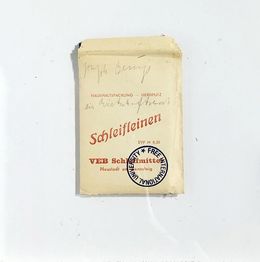
Joseph Beuys
Fine Art Drawings . 17.05 x 11.05 x 0.4 cm Fine Art Drawings . 6.7 x 4.4 x 0.2 inch
€2,800


Joseph Beuys
Print . 38 x 28 cm Print . 15 x 11 inch
€3,200
Recommended by Artsper

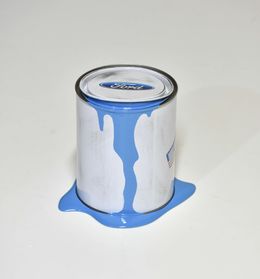
Yannick Bouillault
Sculpture . 16 x 14 x 14.5 cm Sculpture . 6.3 x 5.5 x 5.7 inch
€250


Joseph Beuys
Sculpture . 40 x 50 x 2 cm Sculpture . 15.7 x 19.7 x 0.8 inch
€3,600