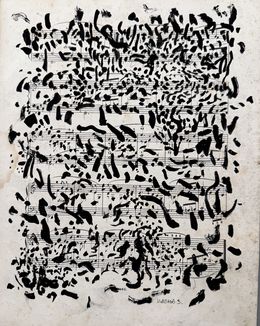
A Rhythmic Constellation of Fragmented Bodies and Playful Signs
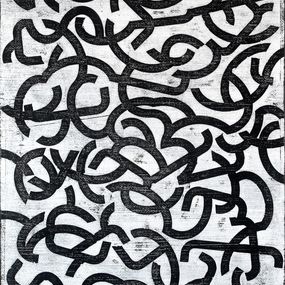
In this large-scale composition by Enrique Pichardo, the viewer is immediately drawn into a pulsating visual field where repetition, contrast, and variation coexist in a carefully orchestrated balance. The work from the series , executed in acrylic on canvas with dimensions of 110 x 110 cm, unfolds as a grid of black-and-white modules, each one hosting an abstracted figure or sign-like presence. The square format reinforces a sense of order, yet within each compartment the forms rebel, bending and transforming into playful silhouettes that suggest bodies, faces, or symbolic creatures without ever fully resolving into fixed identities.
The dominant black and white palette heightens the graphic intensity of the piece, emphasizing the crisp edges and bold contours that define its visual language. Through this stark chromatic contrast, Pichardo explores abstraction, geometric composition, and rhythmic repetition, allowing each square to function as both an autonomous image and part of a larger visual sentence. The eye moves across the surface as if reading an unknown alphabet—one built from curves, dots, angular cuts, and unexpected voids—creating a dynamic tension between unity and multiplicity that is characteristic of contemporary abstract art.
Visually, the composition resonates with the legacy of Pablo Picasso and Paul Klee, particularly in its playful deconstruction of the human figure and its childlike yet sophisticated symbolism. At the same time, the serial structure and modular logic echo modernist explorations of pattern and system, while remaining deeply personal and intuitive. The figures appear animated, almost musical, suggesting movement and dialogue across the grid. This sense of visual play aligns with naïve expressionism and modern primitivism, yet the execution remains precise and deliberate, underscoring Pichardo's mastery of form and balance.
The surface treatment reveals the immediacy of acrylic painting, with flat, confident applications of color that avoid unnecessary texture, reinforcing the clarity of each shape. The scale of the canvas allows the viewer to experience the work both up close—appreciating the subtle variations between modules—and from a distance, where the grid coalesces into a unified, striking presence. As a large-format canvas, the piece commands space, making it ideal for collectors seeking a statement work that combines intellectual rigor with visual joy.
Rooted in Mexican contemporary art yet informed by international modernist traditions, this artwork reflects Enrique Pichardo's lifelong commitment to freedom, spontaneity, and emotional intuition. It does not narrate a literal story; instead, it invites interpretation through its symbolic abstraction, offering collectors a work that remains visually engaging over time, continuously revealing new relationships and meanings within its structured yet playful universe.