Bronze Sculpture for Sale

Upload an image to find similar artworks
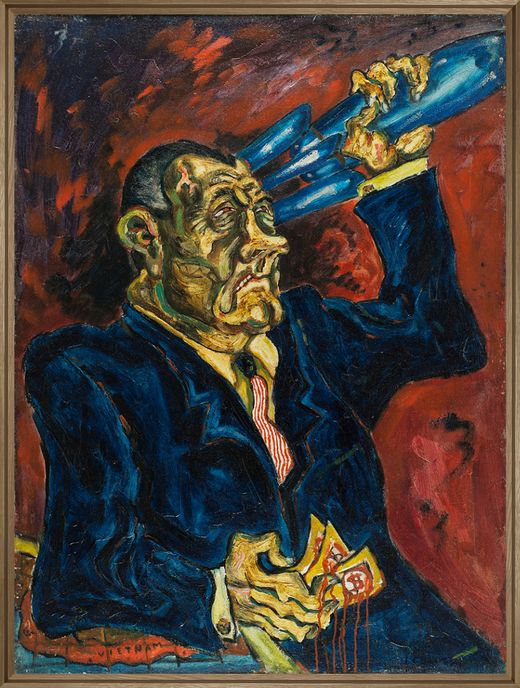
Sergio Birga was born in Florence in 1940. A graduate of the city's Scuola d'Arte, he came to Paris in 1965 to attend Lucien Coutaud's engraving classes at the Beaux-Arts. He joined the Salon de la Jeune Peinture and played an important role there in the late 1960s and early 1970s.
It was mainly during three trips to Germany and through contact with two generations of German Expressionists that he established a style and adopted a work on color that would run through his entire work, across all periods. Oskar Kokoschka, Ludwig Meidner, Erich Heckel, Conrad Felixmüller, and Otto Dix would provide him with advice and influence, and he would exchange portraits with the latter two.
Very politically engaged, he took a stand against the Vietnam War and more generally against all "imperialisms". He bluntly denounced the morals and structural organization of the bourgeoisie, and fought against the privileged status of art, artists and intellectuals who, for him, were nothing more than the servile servants of the hegemony of the so-called bourgeoisie.
In the 1970s, he witnessed the destruction of city centers by real estate swindling, the destruction of historic and working-class neighborhoods in favor of the construction of "luxury residences" for newly promoted executives.
From the 1980s onwards, his painting moved away from political argumentation and slid towards a "poetic realism" which drew its references from classical Italian painting, from the Renaissance to De Chirico. He favoured urban landscapes, gardens, colonnades in a very pronounced "magical realism".
Today, without abandoning his traditional themes, he turns to images inspired by literature or religion in which the lines owe a lot to his training as an engraver.
The expressionist vein runs through all of Sergio Birga's artistic periods. It is most evident, of course, in the aggressive statements of the 1960s and 1970s, but nonetheless always present thereafter. First and foremost, in the use of often "raw," "saturated" colors, which create a climate of violence or unreality immediately felt by the viewer. He also excels at introducing a threat into the image by creating a gap between a seemingly innocuous scene and an abnormal detail or unusual colors.
Nationality
Discover other selections of artworks
Choose your preferences
The art is yours
The art is yours
Upload an image and discover similar artworks available on Artsper