



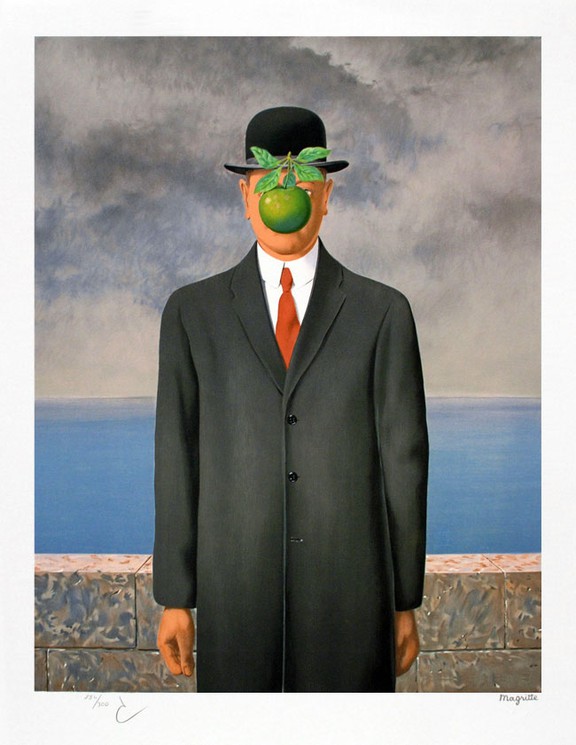
Olivio "Oli" Ordoñez: rapper and art curator
Known to millions as one half of the famous French rap duo Bigflo & Oli, Oli recently spoke with Artsper about his exhibition which caused a sensation in the art world.

1. Could you start by telling us about your upcoming exhibition, Oli's Imaginary Museum? What can visitors expect from this experience?
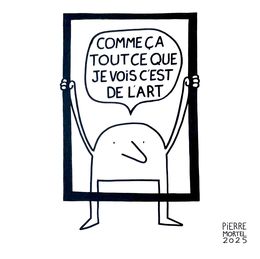
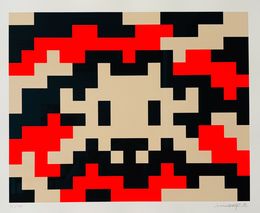
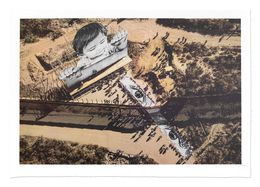
Oli: An artistic carte blanche at Les Abattoirs (the contemporary art museum in Toulouse). A manifesto exhibition! One that shakes up the "classic" museum experience. The idea was to bring my vision by making my selections from the Abattoirs museum's reserves, inviting artists I admire like Jean Jullien, Invader, and Inès Longevial, and creating art installations specifically for the occasion, often mirroring or echoing existing works. I've also created an in-house festival with concerts, talks, open mic nights, a film club, and more.


« There is also a section of the exhibition where I explore this notion through my father, to whom I gave the floor regarding works by Soulages, Eduardo Basualdo ... »
2. What inspired this project?
Oli: My desire to connect different worlds, to mix and break down pre-defined boundaries, and to bring my group of friends who often don't want to come with me to the museum! And a strong relationship between the Toulouse museum and me; they've seen me grow up, first as a young visitor, then as a musician.
3. How has your love for art evolved over time, especially with your increasing involvement in the music world?
Oli: I'm the son of a musician; my father is a salsa singer and a freelance performer. I've seen him struggle his whole life to make a living from his art. I fell in love with music, first by learning the trumpet at the conservatory, then by writing my first rap rhymes. It has evolved, as I've gained confidence in my sensitivity, but ultimately, it remains almost unchanged. My love for art remains that of a child; I want to surprise the child I once was.


4. How do you perceive the relationship between music and the visual arts? Do you see a connection between these two forms of expression?
Oli: Absolutely, and especially between rap and contemporary art: often misunderstood and judged when you don't have the cultural background or understanding to see it properly, it can sometimes become a cliché of itself. I also love the instinctive aspect of both, which sometimes transcends technique. There's an inexplicable "magic" in a great painting or a great piece of music that sometimes surpasses the number of hours spent on it or the level of drawing or music: I love this mystery of creation.
5. What was the most difficult aspect of carrying out this project, and how did you overcome these difficulties?
Oli: The hardest part was making decisions, making choices. A blank page is much more difficult than I thought. I first had to choose works from the museum's Navigart online archive, then figure out how to build upon them, and so on. It took me a long time to decide. I also had to find a balance between my own style, my own codes, and those of the museum world. There were many discussions, debates, and above all, real support from the museum staff. I learned a lot about myself while working on this project. I felt a bit like I was starting out again, with the pressure of being a beginner. I also wanted to appeal to two audiences: art connoisseurs and those who don't feel particularly connected to art, so I tried to come up with playful ideas, but not too "lighthearted."

Their favorite artworks


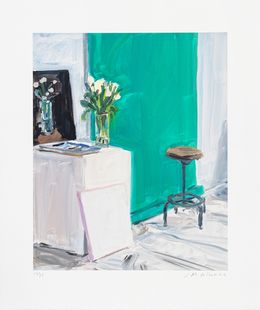
Jean-Philippe Delhomme
Print . 47.5 x 39.8 cm Print . 18.7 x 15.7 inch
CHF 580
Recommended by Artsper