





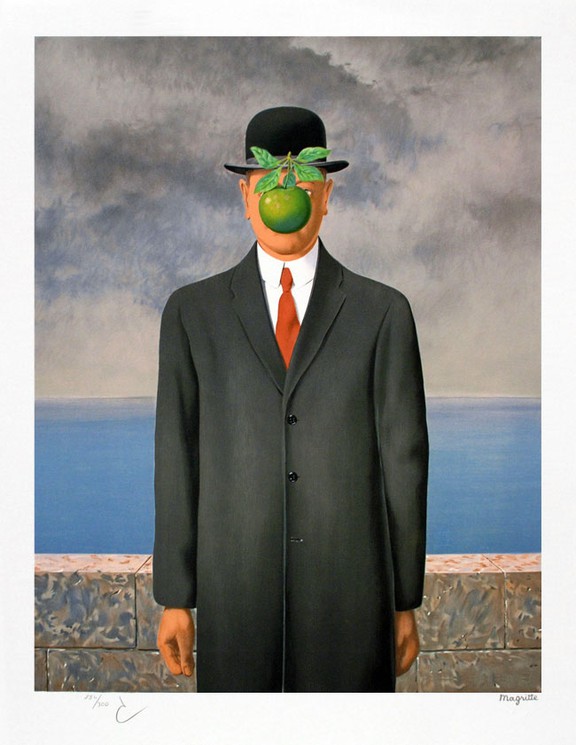


The Wounded Deer, 2025
Design : digital print · 80 x 20 x 2 cm 31.5 x 7.9 x 0.8 inch
$322
322 $US
Shipping & delivery
Shipped from: Spain
Delivery to: United States , $ 89
Estimated delivery: One to two weeks
Free returns within 14 days, full refund
Authenticity guaranteed
Sold with certificate of Authenticity from the gallery
Invoice from the gallery Learn more
Secure payment • Card, Amex, PayPal...
We accept several payment methods:
Paypal
American Express
Visa
Mastercard
Apple Pay
Google Pay
- Credit cards (Visa, MasterCard)
- American Express
- PayPal
- Bank transfer
- Gift card
- Apple Pay / Google Pay
All payments are secured with 3D Secure validation to protect your confidential information.
Verified Reviews : 9.6/10
Similar works

Isabelle Hirtzig
Design . 42 x 30 x 0.1 cm Design . 16.5 x 11.8 x 0 inch
$252
Recommended by Artsper


About the artwork
Type
Design : Open edition
Condition
Artwork sold in perfect condition
Authenticity
Sold with certificate of Authenticity from the gallery
Invoice from the gallery
Signature
Founder's stamp
Technique & Support
Dimensions ( cm • inch )
80 x 20 x 2 cm 31.5 x 7.9 x 0.8 inch Height x Width x Depth
Sold by
Art gallery
Credentials
Vetted seller since 2017 • Top Seller
Description
Date of creation: 2025
Medium: Digital print on Canadian maple wood
Edition: Open
Size: 80 x 20 cm
Condition: In mint conditions and never displayed
Skate deck made of 7 ply grade A Canadian maple wood.
(1946) is like a visual poem that Frida Kahlo wrote with arrows and melancholy, but never losing her sharp sense of humor. In this work, Frida transforms into a wounded deer—literally—with nine arrows piercing her body, an image that blends physical and emotional pain with an almost theatrical elegance.
The deer, half human and half animal, moves through a mysterious and silent forest, as if trapped in a dream where suffering becomes metaphor. Her large dark eyes look at us with a mix of vulnerability and defiance, reminding us that pain is not only endured but carried with dignity and a touch of rebellion.
Here, Frida not only exposes her wounds—often the result of her accident and turbulent life—but also plays with the idea of fragmented identity and resilience. In that body pierced by arrows, seemingly on the verge of giving way, beats an indomitable and bold spirit.
is a modern fable where suffering takes center stage but also becomes an act of aesthetic courage. It reminds us that fragility can be powerful, and that sometimes art becomes the best refuge to heal what cannot be cured.

Presentation
Frida Kahlo is one of the most prominent figures of twentieth-century art! Her self-portraits and her life story have touched millions of art lovers.
Born in Mexico in 1907, Kahlo's complicated childhood foreshadowed the many tragedies she would suffer later in life. At the age of six, she fell ill with poliomyelitis. In 1925, she was involved in a severe bus accident: impaled on a metal bar, she was paralysed and bedridden for several months. During the long period of recovery, she painted her own reflection that she could see in the mirror above her bed.
In 1928, after Kahlo regained her health, she joined the Communist Party and met the painter Diego Rivera. They fell in love and married in 1929. The couple then moved to San Francisco. Unfortunately, Kahlo suffered two miscarriages. This new tragedy fuelled her creativity and further self-portraits. Kahlo created some of her most famous works during this time: “A Few Small Nips" (Unos Cuantos Piquetitos) and “The Flying Bed" (La Cama Volando), in which she depicts the traumatic events.
In 1938, after returning to Mexico, Kahlo met some of the most prominent surrealist painters: André Breton, Max Ernst, Marcel Duchamp, and many others. She became close friends with André Breton's wife, Jacqueline Lamba, who helped Kahlo conquer the art world. Frida Kahlo began exhibiting her work in New York and was tremendously successful: all her paintings were sold!
Unfortunately, this period of prosperity was clouded by her divorce (she remarried Diego Rivera in 1940), but also by the reappearance of effects linked to her accident. Her right leg had to be amputated.
Kahlo died at the age of 47 due to pneumonia. She left behind several masterpieces: 143 paintings, mainly small in size, which depicted the artist on her own, with family, or surrounded by animals.
Kahlo immortalised her physical suffering through powerful symbols: animals that represent the children she was unable to conceive or thorns cutting her throat to show that a human being can bear more than he thinks. Her paintings also contain Christian symbols, symbols that represent suffering, symbols relating to the search for identity, and many others.
As an artist and painter, Kahlo drew inspiration from the defining moments in her life, such as her abortion, her sexuality, and her physical and mental suffering.
Her works have been displayed at the Grand Palais in Paris, the MoMA in New York, and the San Francisco Museum of Modern Art. They have marked the History of Art.
Discover similar artists




Reviews from our customers
All our reviews are extracted from Verified Reviews
You may also like


JR
Design . 20 x 80 x 1 cm Design . 7.9 x 31.5 x 0.4 inch
$697

Ai Weiwei
Design . 80 x 20 x 1 cm Design . 31.5 x 7.9 x 0.4 inch
$703


Frida Kahlo
Design . 80 x 60 x 2 cm Design . 31.5 x 23.6 x 0.8 inch
$779

Miko-R
Painting . 112 x 50 x 3 cm Painting . 44.1 x 19.7 x 1.2 inch
$1,113 $835


Guillaume & Anthony
Sculpture . 80 x 20 x 3 cm Sculpture . 31.5 x 7.9 x 1.2 inch
$900


Frida Kahlo
Design . 80 x 20 x 2 cm Design . 31.5 x 7.9 x 0.8 inch
$322


Boom Art
Print . 85 x 90 x 1 cm Print . 33.5 x 35.4 x 0.4 inch
$464