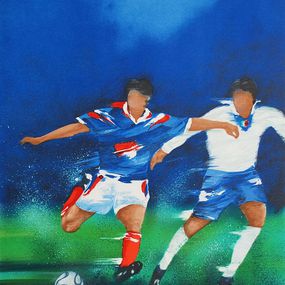
A moment of intense kinetic energy. Two athletes collide in a mid-air struggle. The composition captures a frozen second of athletic combat. Oil paint renders the tension of muscle and movement. Vivid greens clash against a deep red kit. The brushwork is fluid yet precise. It transforms a sporting gesture into a meditative study. The figures float above a blurred ground. This scene transcends a simple match. It becomes an inquiry into representation and physical presence. The artist utilizes a figurative approach to analyze the flow of reality. Contrast defines the space. The bold yellow border frames the action like a cinematic snapshot. Every stroke emphasizes the precarious balance of the leap. Light hits the white jersey with a soft glow. The background dissolves into impressionistic tones of forest green. This artwork explores the intersection of domestic memory and public performance. It focuses on the raw geometry of the human body in motion. The final detail rests in the dark precision of the footwear against the grass.
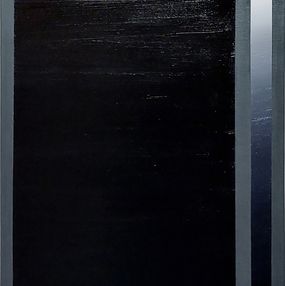
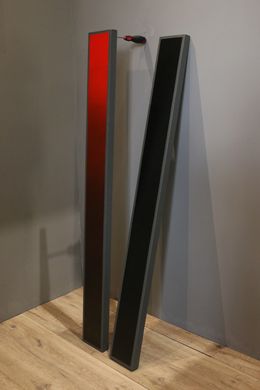
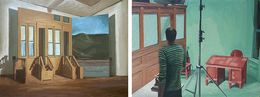
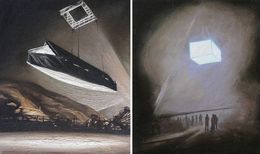
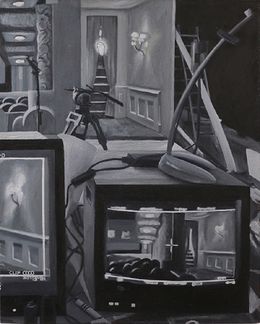
While "Composition for Film" evokes notable associations with masters of painting and poetry known precisely for their ability to evoke slow time, intimacy, poetry, and introversion (Hopper, de Chririco, Dickinson), there is also the connection to open space, to light, which is an elemental sign of exteriority, of belonging to the cosmos, and very important for Jose Ricardo Contreras's work are the equipment and props that allow photography and film to capture these sensations.
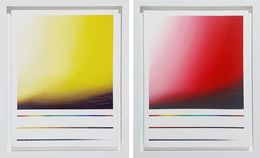
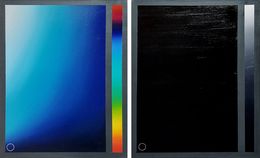
All this intensity is enlivened by "Change of Light," which, without betraying the central theme, summons a banal but extremely useful activity of generating light, even if domestic, all poetry worn out by the vicissitudes of subsistence. elemental, but lightened by a sense of humor."
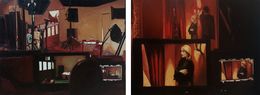
This series of pieces is the result of an investigation into the use of light as a tool for the representation of reality and image creation. Starting in the 40s, the work of the artist Edward Hopper took significant recognition that led to becoming a benchmark for cinematographers in everyone, especially because of their relationship in film noir and the influence exercised by the painter in the work of filmmakers such as Alfred Hitchcock, Jim Jarmusch, Martin Scorsese, and Wim Wender. Hopper was inspired by the cinema to create his paintings and the cinema became inspired by Hopper.
The images that the series represents were taken from the film and behind the scenes of the film "Shirley Vision of Reality" by 2013 by the Austrian director Gustav Deutsch, in an exercise that I seek to literally recreate a series of paintings by Hopper and with they narrate the story of three decades beginning in North America from the 30s and going until the 60s. The scenes depicted in the film are interior images inhabited by solitary people, who relate to the outside through the entrances of light and sound, images that. They speak of a world that was, but resembles the intermittent state of simulation and quarantine of the contemporary world.
Mounted on a stretcher