










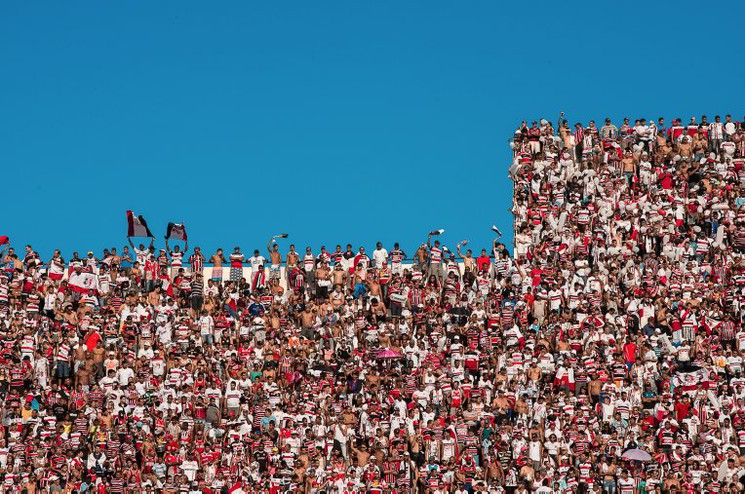

Brasil 9, 2003
Photography : inkjet · 40 x 60 cm 15.7 x 23.6 inch
$1,022
1 022 $US
Delivered in time for Christmas
One of the last works available by this artist
Shipping & delivery
Shipped from: France
Delivery to: United States , $ 127
Estimated delivery: One to two weeks
Free returns within 14 days, full refund
Authenticity guaranteed
Sold with certificate of Authenticity from the gallery
Invoice from the gallery Learn more
Secure payment • Card, Amex, PayPal...
We accept several payment methods:
Paypal
American Express
Visa
Mastercard
Apple Pay
Google Pay
- Credit cards (Visa, MasterCard)
- American Express
- PayPal
- Bank transfer
- Gift card
- Apple Pay / Google Pay
All payments are secured with 3D Secure validation to protect your confidential information.
Verified Reviews : 9.6/10
Similar works

Julien Poupart
Photography . 40 x 60 x 0.1 cm Photography . 15.7 x 23.6 x 0 inch
$1,103
Recommended by Artsper

Patrick Gripe
Photography . 40 x 60 x 0.1 cm Photography . 15.7 x 23.6 x 0 inch
$1,103
Recommended by Artsper






About the artwork
Type
Photography : numbered and limited to 9 copies
9 copies available
Condition
Artwork sold in perfect condition, not framed
Authenticity
Sold with certificate of Authenticity from the gallery
Invoice from the gallery
Signature
Signed artwork
Technique & Support
Dimensions ( cm • inch )
40 x 60 cm 15.7 x 23.6 inch Height x Width x Depth
Sold by
Art gallery
Credentials
Vetted seller since 2014 • Top Seller
Description
30 copies in all formats.
Three other formats available.
It was in Brazil, in the early 70s. I was seven years old and we lived under the dictatorship of General Medici.
My first visual emotion is linked to a childhood memory. A mythical "futebol" match opposed Brazil and Italy, for the final of the World Cup at the Aztecs stadium, in Mexico. These images broadcast on television, live and in black and white, contrasted with those of the crowd dressed in the colors of my country: yellow, green and blue which invaded the streets and the multicolored fireworks which exploded at the end of the game in the squares of my neighborhood. The "Seleção" had won its third World Champion title.
The military junta took ownership of this victory which boosted national pride. She used it as an element of propaganda to instil the idea that thanks to her everything was possible. This is how the round ball was taken hostage at home.
Twenty-four years later, I took part, as a photographer, in this same ritual as our national team brought home this much-desired trophy for the fourth time. I remember the crazy moments that surrounded their victorious return. I remember seeing these heroes parade with open arms through the avenues of Rio de Janeiro. Political power had changed hands and we were consolidating the use of democracy.
Whether the ball is plastic, rubber, leather, cardboard, rag, it doesn't matter. The main thing is that, whatever the terrain, it can roll. For us Brazilians, the ball is synonymous with breathing.
Building teams is an invitation to fellowship. Around a ball, there is neither rich nor poor. We challenge each other of all genders and ages. We play north to south and east to west in this continental-sized country.
I have photographed players on the beaches, in the favelas, in the streets, in prisons and even on oil platforms. Alongside the players, in the stadiums, I met supporters passionate about their clubs, their teams, their idols.
Victories and defeats are moments where sadness, joy and faith are expressed in an instinctive and spontaneous choreography. Each step, each dribble, each missed or successful goal reminds me of the talent of one of my idols as they fill the imagination of millions of anonymous players.
Wearing the national team's yellow t-shirt... wherever they live, kids survive thanks to this quest for the Holy Grail: contributing to collective victory by making people forget their personal defeats. How many have seen their lives changed? One in a million, the most realistic would say. Pelé, Zico, Romario, Ronaldo, Ronaldinho, Raï, Neymar… most of them emerged from miserable ghettos and talent opened the doors of the world to them!
Dreams of ordinary kids, football is a reflection of the enthusiasm that Brazilians have for life. Even after the humiliating defeat to Germany (7-1) in the last World Cup at home, the dream lives on.
Presentation
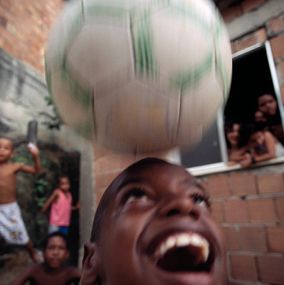
João Luiz Bulcão is a 42-year-old Brazilian photographer who began his career as a reporter for the Manchete magazine. He has travelled for three years in Brazil and in other countries of Latin America and focused on various environmental and socio-cultural themes. His discovery of the Amazon influenced him a lot and the work that he produced in connection with the area opened him the doors of Gamma; he became their Brazilian correspondent in 1990. The following year, he founded the Contexto Agency with Carlos Humberto TDC, who was working at the time as a correspondent for the Contact Agency in Brazil.
In 1992, he joined Veja, the largest Brazilian weekly newspaper. But for him, photojournalism meant more than the coverage of political and social subjects or of the lives of celebrities in Rio. In 1993, he decided to work independently, and only on social subjects, which mark for him something of a "return to the sources".
In 1994, he left Brazil for the United States, where he stayed for two and a half years during which he worked as a photographer for the Gamma Liaison agency. He moved to Paris in 1997 and started working for the Gamma Press Agency magazine. He started to work as a freelancer in 2003 and began a collaboration with the Corbis Agency. After many trips to the Amazon, he is currently working on a book project on the region.
Discover similar artists




Reviews from our customers
All our reviews are extracted from Verified Reviews
You may also like


Mark Leech
Photography . 30 x 45 x 0.1 cm Photography . 11.8 x 17.7 x 0 inch
$813
Recommended by Artsper



Christian Goetghebeur
Photography . 80 x 120 x 4 cm Photography . 31.5 x 47.2 x 1.6 inch
$2,555


Joost Wensveen
Photography . 80 x 120 x 1 cm Photography . 31.5 x 47.2 x 0.4 inch
$5,808
Recommended by Artsper




Konstantin Kornakov
Photography . 40 x 60 x 0.2 cm Photography . 15.7 x 23.6 x 0.1 inch
$813