





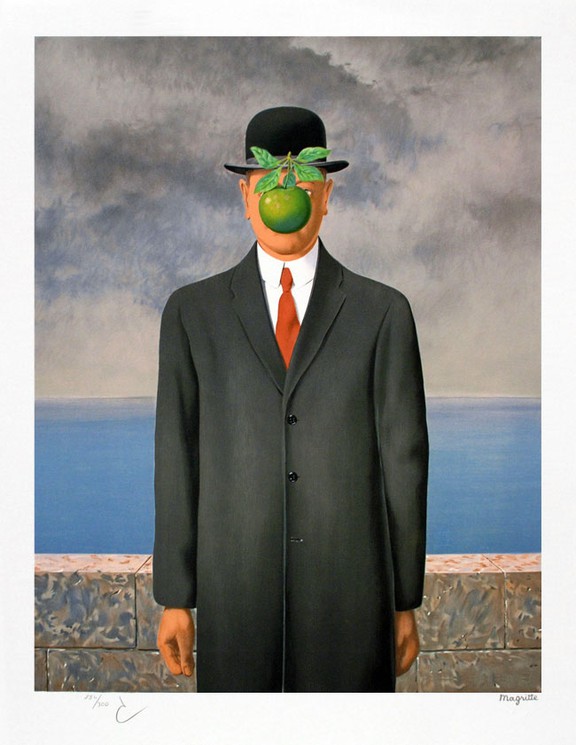


Quasivert 1963-1985, 1980
Print : Screen Print · 73 x 53 x 0.1 cm 28.7 x 20.9 x 0 inch · Ready to hang
Sold
Authenticity guaranteed
Sold with certificate of Authenticity from the gallery
Invoice from the gallery Learn more
Secure payment • Card, Amex, PayPal...
We accept several payment methods:
Paypal
American Express
Visa
Mastercard
Apple Pay
Google Pay
- Credit cards (Visa, MasterCard)
- American Express
- PayPal
- Bank transfer
- Gift card
- Apple Pay / Google Pay
All payments are secured with 3D Secure validation to protect your confidential information.
Verified Reviews : 9.6/10
Similar works


About the artwork
Type
Print : numbered and limited to 40 copies
Condition
Artwork sold in perfect condition, framed, ready to hang
Authenticity
Sold with certificate of Authenticity from the gallery
Invoice from the gallery
Signature
Hand-signed by artist
Technique & Support
Dimensions ( cm • inch )
73 x 53 x 0.1 cm 28.7 x 20.9 x 0 inch Height x Width x Depth
Artwork dimensions including frame
77 x 57 x 1.5 cm 30.3 x 22.4 x 0.6 inch
Sold by
Art gallery
Credentials
Vetted seller since 2019 • Top Seller
Description
Quasivert is an original artwork realized by Piero Dorazio in the 1963/85. Mixed colored screen print. Includes silver frame. Hand signed and dated on the lower left margin with double dating 1963/1985. Numbered on the lower left. Edition 40/100. From the portfolio Reconnaissance of the structure, with texts by Alberto Veca.
Read Less
Read Less

Presentation
Dorazio was born in Rome. His father was a civil servant, while his mother was interested in history and art. Dorazio attended the Julius Caesar Lyceum (high school) in Rome. During World War II, in 1943, the family fled to the province of Abruzzo, where they were originally from. After Italy's liberation and the end of civil war, Dorazio worked briefly as a translator for the British Army. After the war, he began to study architecture at the University of Rome.[1]
Influenced by futurists such as Gino Severini, Antonio Corpora, Enrico Prampolini, and Giacomo Balla, he gravitated to painting, but an adversion ofr their marked right-wing views pushed him to alignin himself with left-leaning artists like Renato Guttuso.[2] Along with Pietro Consagra, Achille Perilli, and Giulio Turcato, in 1947 he helped formulating a manifesto and establish a group of abstract artists called Forma I. Although imbued with socialist leanings, the group did not follow the realist social commentary furthered by Guttuso but proposed to reclaim abstraction from the Futurism movement. In 1947, Dorazio won a prize and stipend from the French government to study at the École des Beaux-Arts of Paris.[3]
In 1950, Dorazio, along with the artists Mino Perilli and Guerrini, helped found L'Age d'Or, a bookstore/gallery space dedicated to abstract art. In 1952, he promoted with Alberto Burri, Ettore Colla and others the foundation Origine and edited the magazine Arti Visive. In 1953, as a representative from Italy, he traveled for the first time to the United States to participate in the International Summer Seminar at Harvard University, Cambridge, MA. That fall, he moved to New York City and stayed through 1954. In October, Dorazio had his first solo exhibition at George Wittenborn's One-Wall Gallery.
In 1955, he published "La Fantasia Dell-Arte Nella Vita Moderna," a review of Modern art in Italy. In this book, reviewer Christopher Masters states, Dorazio advanced his belief, perhaps with surfeit of optimism, that "abstract art could change the world... that just as science and technology were destroying the barriers between different cultures, so the new 'universal style' would lead to a 'universal civilisation'."[4]
In 1961, he was awarded the Prix Kandinsky in Paris.[5]
In 1959 he was invited to teach at the Graduate School of Fine Arts program at the University of Pennsylvania School of Design. He taught painting at the graduate school from 1960-1969, one semester a year, splitting his time between the United States and Italy. In 1970 he returned to live and work full time in Rome.[6] In 1974, he moved his studio from Rome to Umbria, near Todi. He continued to work and exhibit until 2004.
Described as an "outspoken, independent character" who was the "opposite of politically correct", Dorazio's use of materials and colors did not change much over time. He is mostly known for making paintings with thick bands of bright color and cross-hatched grids.[7] While abstract, they do not neglect detail or complexity. His style is in line with what Clement Greenberg later described as "Post-painterly abstraction".
Discover similar artists



Reviews from our customers
All our reviews are extracted from Verified Reviews
You may also like

Susanna Costantini
Sculpture . 162 x 82 x 4 cm Sculpture . 63.8 x 32.3 x 1.6 inch
€2,800
Recommended by Artsper


Clément Ogiela
Painting . 81 x 60 x 2.5 cm Painting . 31.9 x 23.6 x 1 inch
€1,190

Sylvie Guyomard
Painting . 55 x 46 x 2 cm Painting . 21.7 x 18.1 x 0.8 inch
€1,200
Recommended by Artsper


Olivier Messas
Sculpture . 57 x 8 x 3 cm Sculpture . 22.4 x 3.1 x 1.2 inch
€3,600

Nicolas Galtier
Painting . 50 x 50 x 3 cm Painting . 19.7 x 19.7 x 1.2 inch
€900
Recommended by Artsper

Xybê
Painting . 80 x 40 x 0.2 cm Painting . 31.5 x 15.7 x 0.1 inch
€1,125


Giorgio Lo Fermo
Painting . 140 x 57 x 1 cm Painting . 55.1 x 22.4 x 0.4 inch
€1,800

Julie Nangala Robertson
Painting . 122 x 61 cm Painting . 48 x 24 inch
€2,200


Kyung-Sup Byun
Fine Art Drawings . 150 x 90 x 5 cm Fine Art Drawings . 59.1 x 35.4 x 2 inch
€18,700

Christine Lacour
Painting . 40 x 30 x 2.5 cm Painting . 15.7 x 11.8 x 1 inch
€590