





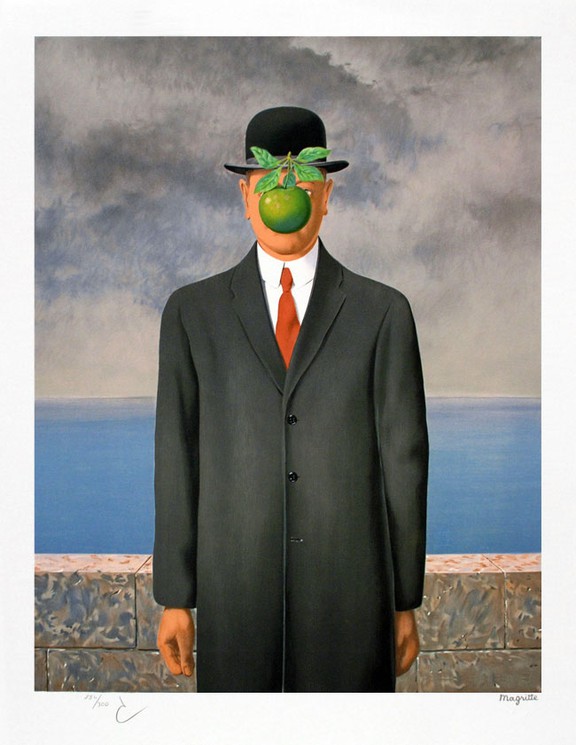


Sans titre, Circa 1982
Print : lithography · 33 x 50 cm 13 x 19.7 inch
$934
934 $US
Shipping & delivery
Shipped from: Bolivia
Delivery to: United States , $ 89
Estimated delivery: One to two weeks
Free returns within 14 days, full refund
Authenticity guaranteed
Sold with certificate of Authenticity from the gallery
Invoice from the gallery Learn more
Secure payment • Card, Amex, PayPal...
We accept several payment methods:
Paypal
American Express
Visa
Mastercard
Apple Pay
Google Pay
- Credit cards (Visa, MasterCard)
- American Express
- PayPal
- Bank transfer
- Gift card
- Apple Pay / Google Pay
All payments are secured with 3D Secure validation to protect your confidential information.
Verified Reviews : 9.6/10
Similar works


Laurent Anastay-Ponsolle
Fine Art Drawings . 42 x 59 x 0.1 cm Fine Art Drawings . 16.5 x 23.2 x 0 inch
$758


About the artwork
Type
Print : numbered and limited to 175 copies
1 copy available
Condition
Artwork sold in perfect condition, not framed
Authenticity
Sold with certificate of Authenticity from the gallery
Invoice from the gallery
Signature
Hand-signed by artist
Technique & Support
Dimensions ( cm • inch )
33 x 50 cm 13 x 19.7 inch Height x Width x Depth
Sold by
Art gallery
Credentials
Vetted seller since 2020
Discount
This seller offers discount when you purchase multiple artworks.
Description
This evocative artwork masterfully employs pen and ink to depict a figure ensnared in a moment of intense emotion. The stark black lines against the white backdrop highlight the raw expressiveness of the subject's face, capturing a visceral sense of turmoil or despair. The figure's hands are prominently featured, positioned defensively as though shielding themselves from an unseen force. This choice of composition emphasizes vulnerability and a struggle for self-preservation. The use of bold, sketch-like strokes suggests movement and tension, while the minimalistic approach leaves much to the viewer's interpretation, fostering a deeper emotional connection. The rough texture of the hair and shadows adds depth, making the figure appear both fragile and defiant. This piece stands out for its compelling representation of human emotion through abstract simplicity, inviting introspection and empathy.

Presentation
Oswaldo Guayasamín was a master Ecuadorian painter and sculptor of Quechua and mestizo heritage.
Guayasamín was born in Quito to an indigenous father and a mestizo mother, both of Quechua descent. His family was poor, and his father worked as a carpenter for most of his life. He later worked as a taxi and truck driver. He was the eldest of ten children. As a child, he enjoyed drawing caricatures of his teachers and the children he played with. He demonstrated a love of art from an early age. He created an internationally recognized Pan-American art of human and social inequalities.
A graduate of the Quito School of Fine Arts, he studied painting and sculpture there. He also studied architecture . He exhibited for the first time at the age of 23, in 1942. While he was at university, his best friend died during a demonstration in Quito. This incident would later inspire one of his paintings, "Los Niños Muertos" (The Dead Children). This event would also help shape his vision of the people and society in which he lived.
Guayasamín won first prize at the Ecuadorian National Watercolor and Drawing Exhibition in 1948. He also won first prize at the Third Biennial of Hispanic American Art in Barcelona, Spain, in 1955. In 1957, at the fourth São Paulo Biennial, he was named best South American painter.
Guayasamín met José Clemente Orozco during a trip to the United States and Mexico from 1942 to 1943. They traveled together to many South American countries, including Peru, Brazil, Chile, Argentina, Uruguay, and other countries. During these trips, he observed the lifestyle and poverty of the indigenous people, which are reflected in his paintings.
In 1988, he painted a controversial mural depicting Ecuador's history. The Ecuadorian Congress had commissioned him to do so. However, the United States government criticized him because one of the paintings depicted a man wearing a Nazi helmet with the inscription "CIA" on it.
The artist's last exhibitions were opened by himself at the Palais du Luxembourg in Paris and the Palais de Glace in Buenos Aires in 1995. In Quito, Guayasamín built a museum to showcase his work. His images illustrate political oppression, racism, poverty, the Latin American way of life, and the social divisions that characterize much of South America.
Guayasamín devoted his life to painting, sculpture, and collecting. However, he was a fervent supporter of the Cuban communist revolution in general and Fidel Castro in particular. The United Nations Educational, Scientific, and Cultural Organization awarded him the "Lifetime Achievement in Peace" award. His death on March 10, 1999, was marked by a day of nationwide strikes by indigenous people (whom he supported throughout his life) and other sectors of society, and was considered a great loss for Ecuador. He is still considered a national treasure.
In 2002, three years after his death, Guayasamín's masterpiece, La Capilla del Hombre ("The Chapel of Man"), was completed and opened to the public. The chapel aims to bear witness not only to man's cruelty to man, but also to humanity's potential for greatness. It is located near Guayasamín's home in the hills overlooking Quito.
Discover similar artists



Reviews from our customers
All our reviews are extracted from Verified Reviews
You may also like


Oswaldo Guayasamin
Print . 56 x 76 cm Print . 22 x 29.9 inch
$1,167
Recommended by Artsper

Oswaldo Guayasamin
Print . 56 x 76 cm Print . 22 x 29.9 inch
$1,167
Recommended by Artsper


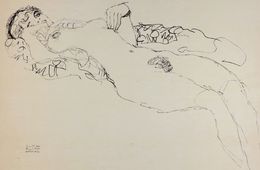
Gustav Klimt
Print . 54 x 69 cm Print . 21.3 x 27.2 inch
$1,750
Recommended by Artsper