Bronze Sculpture for Sale

Upload an image to find similar artworks

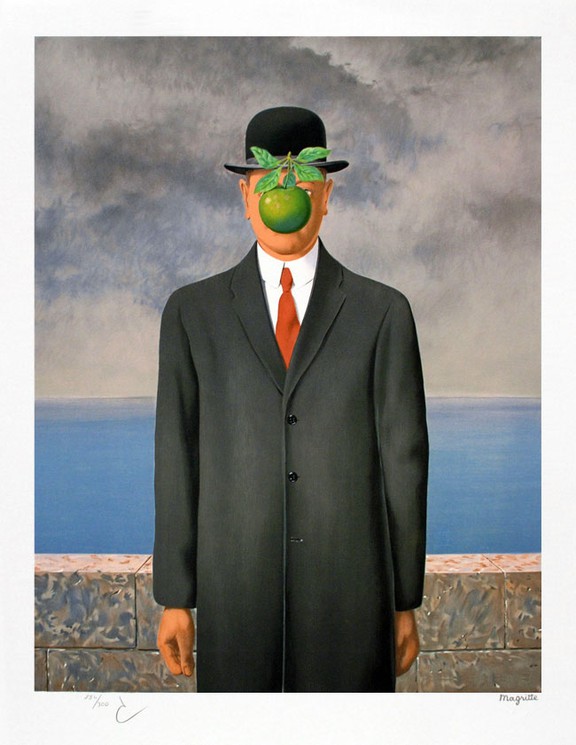
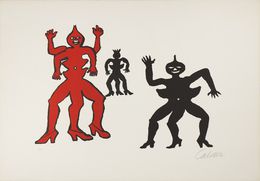
Print : lithography · 78 x 61 cm 30.7 x 24 inch
Shipped from: France
Delivery to: United States , $ 63
Estimated delivery: Less than one week
Free returns within 14 days, full refund
Sold with certificate of Authenticity from the gallery
Invoice from the gallery Learn more
All payments are secured with 3D Secure validation to protect your confidential information.

Print . 90 x 63 x 1 cm Print . 35.4 x 24.8 x 0.4 inch
$7,037


Type
Print : numbered and limited to 100 copies
1 copy available
Condition
Artwork sold in perfect condition, not framed
Authenticity
Sold with certificate of Authenticity from the gallery
Invoice from the gallery
Signature
Hand-signed by artist
Technique & Support
Dimensions ( cm • inch )
78 x 61 cm 30.7 x 24 inch Height x Width x Depth
Art gallery
Credentials
Vetted seller since 2022 • Top Seller
Discount
This seller offers discount when you purchase multiple artworks.
There are artists whose work seems inevitable—as if it could only have emerged from a single life, a single trajectory. Alexander Calder is one of them. Born in 1898 in Philadelphia into a family where sculpture was almost a genetic affair, he would radically transform the relationship of art to space, time, and movement, inventing an entirely new formal language that the whole world recognizes at first glance today.
What the prologue to the book Calder: The Conquest of Time sums up with a striking phrase—"I wasn't brought up, I was framed"—says everything about the environment in which Sandy, as he was nicknamed, grew up. His father, A. Stirling Calder, was a renowned sculptor, creator of large public works, and an admirer of Rodin. His mother, Nanette Lederer Calder, was a portrait painter with a fluid and dramatic style. His paternal grandfather, Alexander Milne Calder, had himself established the family tradition of sculpture as early as the 1870s. Three generations of sculptors. A silent but absolute transmission. Stirling himself would write that his son had "succumbed to the inevitable hereditary attraction"—a phrase that resonates like a family law. Yet Calder would grow up with an ambivalent relationship to this heritage, both nourished and burdened by it, seeking throughout his life to break free from it without ever fully disowning it.
After studying engineering—a significant detour that would instill in him the mechanical and structural sensibility that permeates his entire oeuvre—Calder arrived in Paris in the late 1920s. The city was then the nerve center of the global avant-garde. He frequented Miró, Léger, and Duchamp. But it was a visit to Piet Mondrian's studio in 1930 that proved to be the true turning point. Faced with the meticulously arranged rectangles of primary colors on the white walls, Calder had a sudden intuition: what if these forms moved? Mondrian rejected the idea—he preferred the static rigor of his compositions. But for Calder, the question had already been posed, and it would never leave him. From this encounter was born the foundational project of his entire oeuvre: to introduce time and movement into sculpture.
It was Marcel Duchamp who first lent his name to Calder's most iconic creation: the mobile Light forms—discs, leaves, fish, stars—suspended from delicately balanced metal rods, set in motion by the mere breath of air. Nothing mechanical, nothing predictable. Each work lives in rhythm with its environment, in a perpetually renewed choreography. Jean-Paul Sartre, who dedicated a famous text to him, perfectly grasped the nature of this art: Calder's mobiles do not represent movement, they are movement. They do not imitate nature—they adopt its laws. Air becomes sculptor, time becomes matter.
In contrast, Calder developed stabiles—fixed, massive works cut from steel that assert a monumental presence on the ground. The Flamingo (1973), a vibrant red sculpture erected in the heart of Chicago opposite the minimalist architecture of Mies van der Rohe, remains one of the most striking dialogues between art and urban architecture of the 20th century. Two seemingly opposing languages—the airy lightness of the mobile, the earthy mass of the stabile—which in reality reveal the same obsession: to rethink what a form can do in space.
Calder perfectly embodies that rare figure of the American artist whom Paris revealed to himself without ever uprooting him. A Francophile by birth—his parents had honeymooned in Paris in 1895—he would maintain throughout his life a foot in France and a foot in Roxbury, Connecticut, where he worked in a studio as joyful as it was prolific. For Calder was above all a man of joy. His Calder Circus—a hand-animated miniature that he presented in his Parisian studio before an audience of friends and artists—expresses better than anything else what he was: a creator of wonders, a brilliant child who took the world seriously while treating it like a game. Miró, Léger, Mondrian, Cocteau—all attended these performances and left in awe.
Calder's work is everywhere today: in museums, private collections, and the public squares of major cities. But what truly makes it unique is that it hasn't aged a day. A mobile suspended in a contemporary space retains its power to surprise, to evoke lightness, and to silently question the very nature of form in space. It took three generations of sculptors for this art to emerge—an art that turns tradition inside out, that substitutes emptiness for fullness, movement for stillness, air for stone. And that proves, once and for all, that sculpture can breathe.

Alexander Calder, a major sculptor of the abstract movement, was born in Lawton, Pennsylvania, 1898, and passed away in New York, 1976. As a child, Calder enjoyed building things and went on to study mechanical engineering. His engineering background later gave him the knowledge to develop the mechanisms of his sculptures. In 1923, he decided to devote himself fully to art and went to New York in pursuit of fine art studies.
His first freehand drawings depicting athletes, acrobats, and street scenes, which were early indicators of his sculptural style. He drew animals at the zoo and began taking a keen interest in motion, movement, and animation. In 1929, Calder moved to Paris and met some of the most important artists of the time, including Man Ray, Marcel Duchamp, and Joan Miró.
Upon seeing Piet Mondrian's colored squares for the first time in 1930, Calder had a genuine revelation. He imagined them floating in space; movement later became the main “material" of his work. He embraced geometric abstraction and produced moving wire sculptures, or "mobiles" as Marcel Duchamp called them. They broke completely with the dense and imposing sculptures of the time as Calder's works are distinguished by their lightness. This marked the beginning of kinetic art; even if Calder's goal was not so much movement yet, but the search for balance, symmetry, silence, lightness, and subtlety.
From 1933 onwards, Alexander Calder's works received critical and public acclaim, particularly his painting "La Fontaine de Mercure", shown at the Universal Exhibition in 1937. In 1952, he received the Grand Prize at the Venice Biennale, and in 1964 the Guggenheim dedicated a major retrospective to him. His influence still resonates in modern days: in 2016, the Tate Modern held a major retrospective on the legendary sculptor.
Spain
Venezuela
France
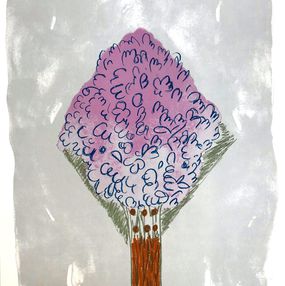
Spain
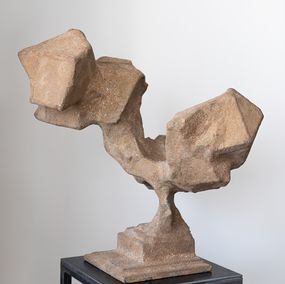
France

South Korea

Hungary
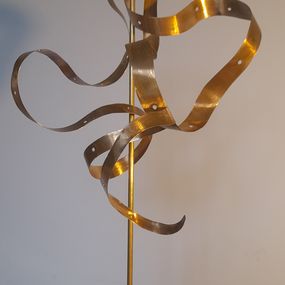
France
All our reviews are extracted from Verified Reviews

Print . 50 x 65.5 x 0.1 cm Print . 19.7 x 25.8 x 0 inch
$9,527


Print . 52.1 x 71.8 x 0.3 cm Print . 20.5 x 28.25 x 0.1 inch
$10,000

Painting . 73 x 54 x 2 cm Painting . 28.7 x 21.3 x 0.8 inch
$230 $184

Print . 75.5 x 55.5 x 0.1 cm Print . 29.7 x 21.9 x 0 inch
$12,000


Print . 88.5 x 64 cm Print . 34.8 x 25.2 inch
$3,879


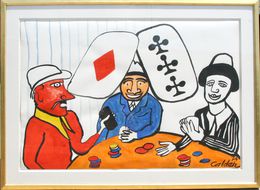



Print . 84 x 56.6 cm Print . 33.1 x 22.3 inch
$4,848
Painting . 120 x 80 x 1 cm Painting . 47.2 x 31.5 x 0.4 inch
$2,029



Painting . 150 x 110 x 1 cm Painting . 59.1 x 43.3 x 0.4 inch
$3,027


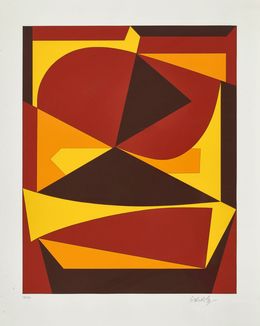
Print . 70 x 57 x 0.1 cm Print . 27.6 x 22.4 x 0 inch
$1,818

Print . 75 x 54 x 0.1 cm Print . 29.5 x 21.3 x 0 inch
$9,527
Print . 40 x 30 x 1 cm Print . 15.7 x 11.8 x 0.4 inch
$168


Painting . 116 x 89 x 2.5 cm Painting . 45.7 x 35 x 1 inch
$2,667 $1,867
Have you purchased a painting, sculpture or work on paper?
Find our expert advice for the conservation and promotion of your works in the articles below:
At Artsper, our mission is to allow you to collect works of art with complete peace of mind. Discover the protections we offer at every stage of your shopping experience.
We work in close collaboration with carefully selected art galleries. Each seller on Artsper is carefully examined and approved by our team, thus ensuring compliance with our code of ethics. You therefore have the assurance of purchasing authentic, high-quality works.
Before being posted online, all artwork on Artsper is reviewed and validated by our moderation team. You can browse with complete peace of mind, knowing that each piece meets our criteria of excellence.
Our team of contemporary art experts is available by phone or email to answer all your questions. Whether you want advice on a work or a tailor-made selection to enrich your collection, we are here to support you.
If you have purchased a work on Artsper and wish to resell it, we offer you a dedicated platform to relist it. To find out more, click here.
You have the possibility to propose a price for certain works, just like in a gallery. This feature allows you to initiate discussions and potentially acquire your coins at advantageous prices.
Our team will negotiate for you and inform you as soon as the best offer is obtained. Do not hesitate to call on our expertise to ensure a transaction at the best price.
We want you to be completely satisfied with your purchase. If the work you receive is not to your liking, you have 14 days to return it free of charge, and you will be refunded in full, whatever the reason.
All credit card payments are processed by Paybox, the world leader in payment solutions. Thanks to their strict security standards, you can transact with confidence.
In the rare event that an artwork arrives damaged or not as described, we are here to help. Whether for a return, refund, restoration or exchange, our team will support you throughout the process and will ensure that we find the solution best suited to your situation.
Use one of the payment methods available on Artsper for your order.
Report any problems within one week of receiving the work.
Provide required photographic evidence (including original artwork and packaging).
The received work lacks a described characteristic (for example, a signature or frame).
The artwork has significant differences from its description (e.g. color variation).
The work is damaged upon receipt.
The work is lost or damaged by the carrier.
Delivery is significantly delayed.
With Artsper, you collect with complete peace of mind.
Artsper offers you access to more than 200,000 works of contemporary art from 2,000 partner galleries. Our team of experts carefully selects galleries to guarantee the quality and originality of the works.
You benefit from:
Works at gallery price
Return within 14 days, regardless of your location
Easy resale of the work purchased on Artsper
Personalized research tools (selection and tailor-made universe)
Our customer service is available for any assistance.
Artsper delivers internationally. The list of countries is available in the first step of your cart.
If your country is not listed contact us at [email protected] and we will see what we can do.
Note that Customs fees may apply for works shipped internationally. This is indicated in the first step of the shopping cart.
You can choose a delivery address different from the billing address. Make sure that a trusted person is present to receive the work if you cannot be there.
Choose your preferences
The best
of art, online
SIGN IN - REGISTER
Forgot your password?
No worries, enter you email address and we'll send you a link to reset your password.
ReturnUpload an image and discover similar artworks available on Artsper