Bronze Sculpture for Sale

Upload an image to find similar artworks

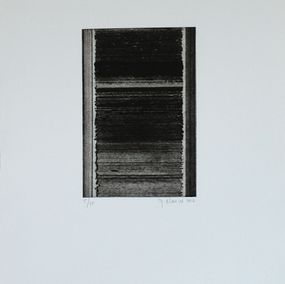
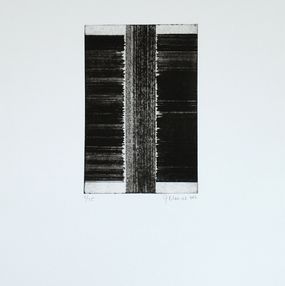
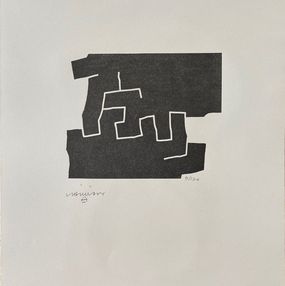
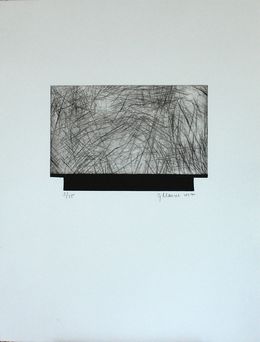
Print : etching · 65 x 50 cm 25.6 x 19.7 inch
How does it work?
1
Choose an artwork you like and the desired duration of the lease-purchase agreement
2
Fill out your profile to be contacted by a member of our team
3
Once the contract is signed, you will be debited every month for the duration of the agreement
Shipped from: France
Delivery to: France , € 40
Estimated delivery: Less than one week
Free returns within 14 days, full refund
Sold with certificate of Authenticity from the gallery
Invoice from the gallery Learn more
All payments are secured with 3D Secure validation to protect your confidential information.
Type
Print : numbered and limited to 75 copies
1 copy available
Condition
Artwork sold in perfect condition, not framed
Authenticity
Sold with certificate of Authenticity from the gallery
Invoice from the gallery
Signature
Hand-signed by artist
Dimensions ( cm • inch )
65 x 50 cm 25.6 x 19.7 inch Height x Width x Depth
Art gallery
Credentials
Vetted seller since 2022 • Top Seller
Discount
This seller offers discount when you purchase multiple artworks.
To speak of the work of Eduardo Chillida is to delve into one of the most singular adventures in 20th-century sculpture. For him, the fundamental question never concerns only matter. It concerns space itself. Where many sculptors shape a form, Chillida simultaneously shapes a void. He belongs to that rare lineage of artists who have shifted sculpture from the realm of the object to that of spatial experience.
This preoccupation is rooted in the unique history of the Basque Country from which he hails. Born in San Sebastián in 1924, he grew up in a landscape where steep mountains meet the Atlantic Ocean. This geography exerted a profound influence on his imagination. Cliffs, harbors, winds, rocky outcrops, and sea horizons gradually became a kind of inner vocabulary. For Chillida, sculpture never appears as a form imposed upon nature; it seems to extend the geological forces already shaping the world.
His artistic journey, however, began far from sculpture. As a young man, he considered a career as a professional goalkeeper before turning to architecture. This architectural training left a lasting mark on his work. Where many sculptors think in terms of volume, Chillida thinks in terms of spatial construction. His works often resemble condensed architectures, buildings reduced to their fundamental tensions.
When he settled in Paris in the late 1940s, he discovered the legacy of modern sculpture. The influence of Constantin Brâncuși, Julio González, and Pablo Picasso nourished his artistic explorations. However, he quickly distanced himself from the geometric abstraction that then dominated much of European art. His work sought a more organic, more existential dimension.
This approach aligns with certain contemporary philosophical concerns. Chillida notably maintains an intellectual dialogue with Martin Heidegger. This encounter is pivotal. Heidegger reflects on how humankind inhabits the world, how it constructs places rather than mere objects. Chillida's sculpture then becomes an inquiry into human dwelling. Each work seems to pose a simple yet profound question: how does a body exist in space?
This question explains his particular relationship with materials. Iron occupies a central place in his work. The choice has both a historical and symbolic dimension. The Basque Country has maintained a deep connection with metallurgy for centuries. The old Basque forges constitute an essential element of its heritage. When Chillida forges the metal, he engages in a dialogue with this collective memory. His masses of iron appear heavy, archaic, almost telluric. They evoke both the tools of ancient blacksmiths and the fundamental structures of the universe.
Yet, the power of his sculptures does not lie in their weight. It lies in the spaces they create. For him, emptiness becomes an invisible substance. This idea represents one of the great innovations of his work. Since ancient Greek sculpture, Western tradition had primarily valued mass. Chillida grants emptiness an equivalent dignity. The openings, the intervals, the cavities and the tensions between the elements become the true protagonists of the sculpture.
This approach shares a profound affinity with certain Eastern traditions. Taoism, for example, grants emptiness equal importance to matter. A vase is valued as much for its hollowness as for its clay. A door is valued as much for the opening it creates as for the walls that surround it. Even if Chillida does not directly subscribe to this tradition, his work sometimes seems to intuitively connect with this universal understanding of form.
This reflection reaches a particular intensity in his monumental works installed in the landscape. The most famous is undoubtedly Peine del Viento in San Sebastián. Three immense iron structures are anchored to the rocks facing the Atlantic. The work engages in a dialogue with the waves, the wind, the tides, and the light. Here, the sculpture ceases to be an autonomous object. It becomes a meeting point of natural forces. The wind seems to pass through the material. The ocean appears to shape the space. The sculpture acts as an instrument revealing invisible phenomena.
This idea paradoxically links Chillida to certain experiences of prehistoric art. The great megalithic monuments of Europe, from Stonehenge to the Atlantic alignments, already possessed this capacity to organize space rather than simply represent something. They established relationships between the sky, the earth, the seasons, and the human community. Chillida's monumental sculptures reconnect with this archaic function of art: to make the invisible structures of the world perceptible.
His work then evolved towards more diverse materials. Alabaster became particularly important. This choice profoundly transformed his artistic language. While iron absorbed light, alabaster allows it to penetrate. The stone seems to glow from within. The sculptures become luminous volumes where emptiness and light interpenetrate. This exploration sometimes reaches an almost spiritual dimension. The light ceases to illuminate the work; it becomes the work itself.
Throughout all these transformations, one constant remains: Chillida rejects representation. He never seeks to reproduce an object from the world. His art explores more fundamental realities: weight, gravity, tension, balance, space, light, time. His sculptures often resemble materializations of invisible phenomena.
This is precisely what explains their importance in the history of 20th-century art. Where geometric abstraction often sought rational order, where abstract expressionism exalted gesture, Chillida forged a unique path. His work resembles an archaeology of space. It reveals the profound structures that organize our presence in the world.
From a perspective similar to that which Élie Faure might have adopted, one could say that Chillida is not merely a sculptor of iron, stone, or alabaster. He is a sculptor of forces. His works give visible form to realities that usually remain imperceptible: the force of gravity, the circulation of the wind, the depth of silence, the expanse of the horizon. They transform space into a sensory experience and remind us that perhaps the most mysterious material in sculpture is not metal or stone, but emptiness itself.

Eduardo Chillida was born and died in San Sebastian; he was a renowned sculptor who exhibited work alongside Miró and Picasso. His success was quickly garnered: he represented Spain at the Venice Biennial when he was just 34. He initially studied architecture before giving up his studies to focus on sculpting and drawing at the Circulo de Bellas Artes in Madrid.
He then moved to Paris, where he learned to sculpt, basing his work on the old rules of the masterpieces he admired at the Louvre. His sculptures were more abstract before discovering Brancusi and Tapiès. His creations in steel, concrete and iron reduce fundamental concepts to a single shape, the origin of all things.
To create this minimalist result, he uses particularly contrasting natural materials: the sea, wood, rain, rocks. The natural environment is a key part of his work, emphasised by framing or by the emitted sounds. Curves help to emphasise the horizontal nature of the landscape in a simple, elegant way.
In the 70s, he was one of the most well-known artists and exhibited at the Museum of Fine Arts in Houston. He also became a professor at the prestigious Harvard University and won the Prix Prince Asturias in 1987 and the Imperial Order of Japan in 1991. In 2001, his artwork was honoured at the Jeu de Paume in Paris.

United States
Venezuela
France
France
France
Spain

South Korea

Hungary
All our reviews are extracted from Verified Reviews

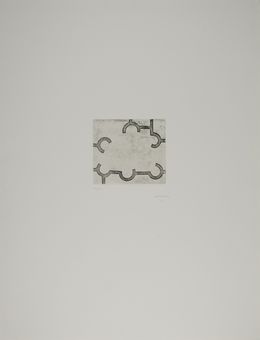
Print . 43.5 x 35.5 cm Print . 17.1 x 14 inch
€3,000
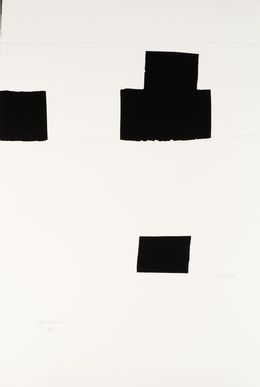
Print . 90 x 63 x 1 cm Print . 35.4 x 24.8 x 0.4 inch
€5,806


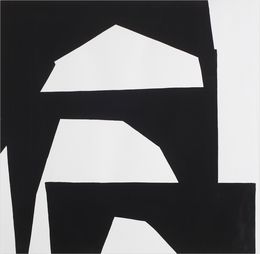
Painting . 60 x 60 x 3 cm Painting . 23.6 x 23.6 x 1.2 inch
€1,600

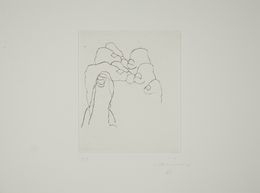
Print . 78 x 59.5 cm Print . 30.7 x 23.4 inch
€5,850



Sculpture . 45 x 45 x 3 cm Sculpture . 17.7 x 17.7 x 1.2 inch
€1,800

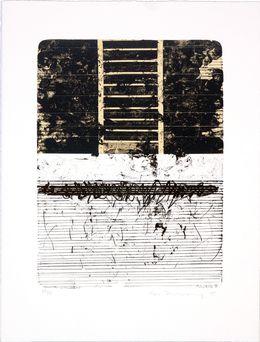
Print . 76 x 56 cm Print . 29.9 x 22 inch
€1,950








Have you purchased a painting, sculpture or work on paper?
Find our expert advice for the conservation and promotion of your works in the articles below:
At Artsper, our mission is to allow you to collect works of art with complete peace of mind. Discover the protections we offer at every stage of your shopping experience.
We work in close collaboration with carefully selected art galleries. Each seller on Artsper is carefully examined and approved by our team, thus ensuring compliance with our code of ethics. You therefore have the assurance of purchasing authentic, high-quality works.
Before being posted online, all artwork on Artsper is reviewed and validated by our moderation team. You can browse with complete peace of mind, knowing that each piece meets our criteria of excellence.
Our team of contemporary art experts is available by phone or email to answer all your questions. Whether you want advice on a work or a tailor-made selection to enrich your collection, we are here to support you.
If you have purchased a work on Artsper and wish to resell it, we offer you a dedicated platform to relist it. To find out more, click here.
You have the possibility to propose a price for certain works, just like in a gallery. This feature allows you to initiate discussions and potentially acquire your coins at advantageous prices.
Our team will negotiate for you and inform you as soon as the best offer is obtained. Do not hesitate to call on our expertise to ensure a transaction at the best price.
We want you to be completely satisfied with your purchase. If the work you receive is not to your liking, you have 14 days to return it free of charge, and you will be refunded in full, whatever the reason.
All credit card payments are processed by Paybox, the world leader in payment solutions. Thanks to their strict security standards, you can transact with confidence.
In the rare event that an artwork arrives damaged or not as described, we are here to help. Whether for a return, refund, restoration or exchange, our team will support you throughout the process and will ensure that we find the solution best suited to your situation.
Use one of the payment methods available on Artsper for your order.
Report any problems within one week of receiving the work.
Provide required photographic evidence (including original artwork and packaging).
The received work lacks a described characteristic (for example, a signature or frame).
The artwork has significant differences from its description (e.g. color variation).
The work is damaged upon receipt.
The work is lost or damaged by the carrier.
Delivery is significantly delayed.
With Artsper, you collect with complete peace of mind.
Artsper offers you access to more than 200,000 works of contemporary art from 2,000 partner galleries. Our team of experts carefully selects galleries to guarantee the quality and originality of the works.
You benefit from:
Works at gallery price
Return within 14 days, regardless of your location
Easy resale of the work purchased on Artsper
Personalized research tools (selection and tailor-made universe)
Our customer service is available for any assistance.
Artsper delivers internationally. The list of countries is available in the first step of your cart.
If your country is not listed contact us at [email protected] and we will see what we can do.
Note that Customs fees may apply for works shipped internationally. This is indicated in the first step of the shopping cart.
You can choose a delivery address different from the billing address. Make sure that a trusted person is present to receive the work if you cannot be there.
Choose your preferences
The best
of art, online
SIGN IN - REGISTER
Forgot your password?
No worries, enter you email address and we'll send you a link to reset your password.
ReturnUpload an image and discover similar artworks available on Artsper