





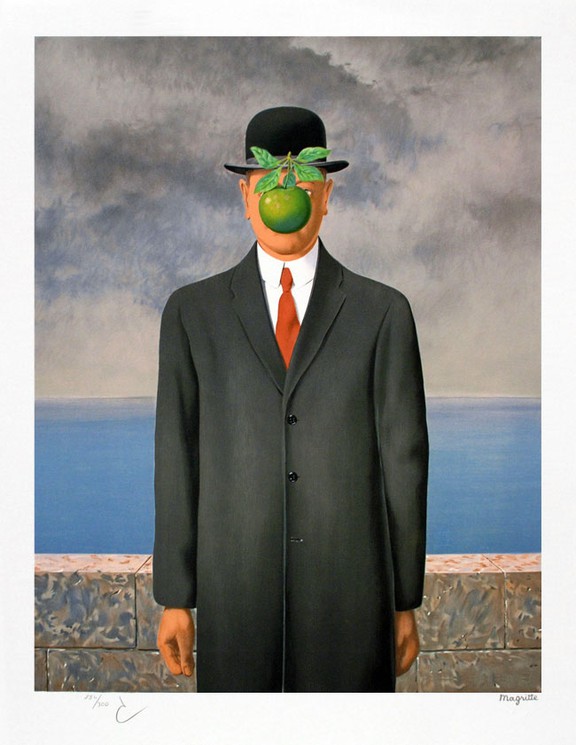


Vierge aux étrons, 1981
Print : etching, engraving · 31 x 23.5 x 0.1 cm 12.2 x 9.3 x 0 inch
Sold
Authenticity guaranteed
Sold with certificate of Authenticity from the gallery
Invoice from the gallery Learn more
Secure payment • Card, Amex, PayPal...
We accept several payment methods:
Paypal
American Express
Visa
Mastercard
Apple Pay
Google Pay
- Credit cards (Visa, MasterCard)
- American Express
- PayPal
- Bank transfer
- Gift card
- Apple Pay / Google Pay
All payments are secured with 3D Secure validation to protect your confidential information.
Verified Reviews : 9.6/10
Similar works


About the artwork
Type
Print : numbered and limited to 100 copies
Condition
Artwork sold in perfect condition, not framed
Authenticity
Sold with certificate of Authenticity from the gallery
Invoice from the gallery
Signature
Hand-signed by artist
Dimensions ( cm • inch )
31 x 23.5 x 0.1 cm 12.2 x 9.3 x 0 inch Height x Width x Depth
Sold by
Art gallery
Credentials
Vetted seller since 2015
Description
Original engraving of Philippe Mohlitz, and-signed and numeroted 10/100 by pencil.
Artwork dimensions: 31 x 23,5 cm
Image dimensions: 18 x 13 cm
Perfect state.
Artwork dimensions: 31 x 23,5 cm
Image dimensions: 18 x 13 cm
Perfect state.

Presentation
"Philippe Mohlitz isn’t an easy person to talk to when you don’t know him well. In fact, he doesn’t really talk, he throws words at you. He puts whatever he wants people to know about him in his engravings. This doesn’t make things easy for the curious.
And there is a lot of material. He has worked steadily for over forty years his first engravings were made in 1965. His prints are often relatively large for works done with a burin. They are always complex and usually prepared with drawings that are just as detailed.
His manner is not that of the well-behaved cuts of the 17th century It is both more ancient and more modern. Durer is clearly the first point of reference if only because his melancholy has affected Mohlitz favorably. Yet, he doesn’t display the calm harmony of the Nuremberg master His subjects are darker and his style more unsettled. There is a restlessness.
Although is a sense of exalted solitude in the work of both there artists, Mohlitz is more recognizable in the exuberance of Rodolphe Bresdin, the Bresdin of disheveled skies, of tousled clouds rolling like waves, the Bresdin of throngs and bewildered crowds, the Bresdin of the Bon Samaritain and of the Comédie de
la Mort, the engraver of interiors overloaded with utensils, curios, fruit, vegetables, and rabbits, with all of the things that earned him the clever epithet inextricable from Robert de Montesquiou, which Mohlitz has every right to claim.
Another aspect of Mohlitz’s work that distances him from Durer and brings him closer to Bresdin is the fact that he is a draftsman rather than a painter. He works line more than value and creates a formal luxuriance that is only possible thanks to his boundless affection r the former: To him a wayward line, should there be one
land even the greatest experience theml, provides an opportunity to explore another path. It’s the beginning of a new story. Perhaps more than any other art, engraving is a solitary pleasure, as making elaborate ink drawings. a skill practiced by many of Mohlitz’s contemporaries, Velly, Doare, Rubel, Desmazieres, among others.
He certainly has many stories to tell! Their meaning and their plot aren’t always clear, but that’s what we like about them, at least, what some of us like. Trying to understand his approach and the meaning of his work draws us into it, magnifying glass in hand. We look carefully, and discover a new world. We turn the print around and suddenly see unexpected things appear in its classical geometry.
We take pleasure in getting lost in the marshes, in going astray in the jungle, in searching the garbage dumps, in hunting through the yard sales, in wandering about strange places where strange things are happening. We are at times afraid of what we see. Mohlitz isn’t (is no longer?) an angel despite the recurrence of religious architecture in his work. His relentless invention of erotico-macabre humor has more than likely shut him out of the paradise of the righteous.
But we can also fear what we can’t see. A threat is often pending. He loves machines and machinery, machinations less, no doubt They would often be fantastic there are motorcycles but other things as well with gears everywhere. This may be part of how he works: through gears. One cut leads to another, one shape
suggests the next, etc. Sometimes, though, the machine becomes an instrument of torture. In the darkness we hear crying and the gnashing of teeth.
The graphical oxymoron is one of the driving forces of Mohlitz’s imagination. He plays on dimensional contrasts, like Lewis Carroll in Alice in Wonderland, rather than on anachronism. This enables him to showcase his technical virtuosity, Endless adjustment is required, with or without a magnifying glass, and this adds to the
difficulty of reading.
Mohlitz’s images are never boring. There is an enigma in every print. An idea floats by and we think that we can touch, even catch the tail end of a solution. But, it’s a lizard that manages to cut free and run far away, like the rail-line perspective of Autoportrait pluriel.
And, it’s beautiful."
- Maxime Préaud, Head curator of libraries, Department of prints and Photography, National Library of France
Philippe Mohlitz was born in 1941 in Saint André de Cubzac (33)
Student of Jean Delpech (Grand Prix de Rome for engraving 1948)
-Price Florence Gould 1971
- Léon-Georges Baudry Award (Taylor Foundation) 2000
Leonardo Sciascia Award (Milan) 2000
-Nahed Ojjeh Award (Academy of Fine Arts) 2011
Discover similar artists


Reviews from our customers
All our reviews are extracted from Verified Reviews
You may also like

Jake & Dinos Chapman
Print . 39 x 28 x 0.1 cm Print . 15.4 x 11 x 0 inch
€800

Miodrag Djuric (Dado)
Print . 33 x 25 cm Print . 13 x 9.8 inch
€350
Recommended by Artsper


Amedeo Tedeschi Toschi
Print . 50 x 42 x 0.1 cm Print . 19.7 x 16.5 x 0 inch
€200


Salvador Dali
Print . 60 x 55 x 0.1 cm Print . 23.6 x 21.7 x 0 inch
€1,450

Alisa Gorelova
Print . 38 x 27 x 0.5 cm Print . 15 x 10.6 x 0.2 inch
€850


Marino Marini
Print . 70 x 50 cm Print . 27.6 x 19.7 inch
€1,800
Recommended by Artsper

