










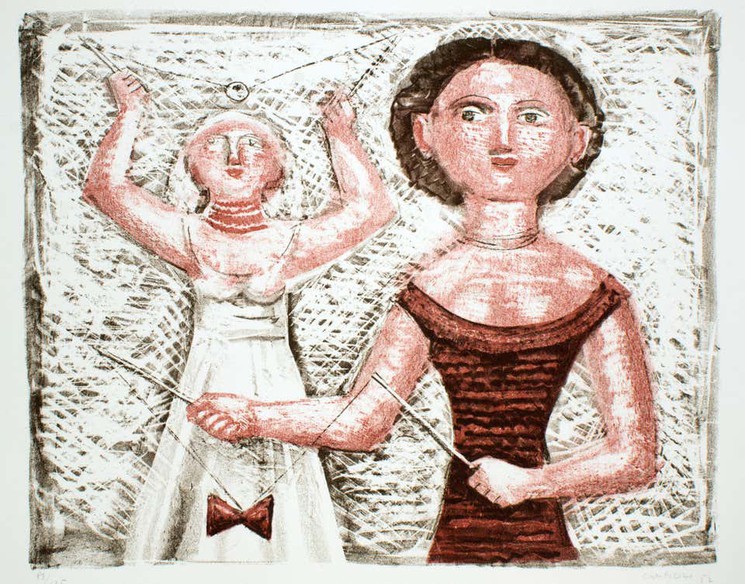

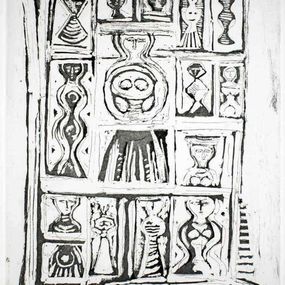
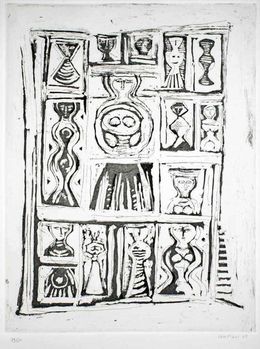
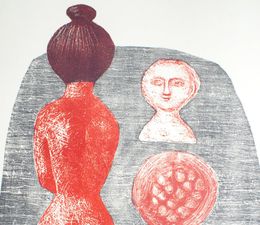
Il Gioco del Rocchetto, 1952
Print : lithography · 52 x 74 x 0.2 cm 20.5 x 29.1 x 0.1 inch
€5,200
5 200 €
Shipping & delivery
Shipped from: Italy
Delivery to: Germany , € 82
Estimated delivery: Two to three weeks
Free returns within 14 days, full refund
Authenticity guaranteed
Sold with certificate of Authenticity from the gallery
Invoice from the gallery Learn more
Secure payment • Card, Amex, PayPal...
We accept several payment methods:
Paypal
American Express
Visa
Mastercard
Apple Pay
Google Pay
- Credit cards (Visa, MasterCard)
- American Express
- PayPal
- Bank transfer
- Gift card
- Apple Pay / Google Pay
All payments are secured with 3D Secure validation to protect your confidential information.
Verified Reviews : 9.6/10
Similar works





About the artwork
Type
Print : numbered and limited to 125 copies
1 copy available
Condition
Artwork sold in perfect condition, not framed
Authenticity
Sold with certificate of Authenticity from the gallery
Invoice from the gallery
Signature
Hand-signed by artist
Technique & Support
lithography on paper
Dimensions ( cm • inch )
52 x 74 x 0.2 cm 20.5 x 29.1 x 0.1 inch Height x Width x Depth
Sold by
Art gallery
Credentials
Vetted seller since 2019 • Top Seller
Description
Image dimensions: 38 x 48 cm. Hand signed and numbered. Edition of 125 prints.
Massimo Campigli (July 4, 1895 as "Max Ihlenfeld" - 1971) was a Italian painter and journalist. He was born in Berlin, but spent most of his childhood in Florence. His family moved to Milan 1909, and here he worked on the "Letteratura" magazine, frequenting avant-garde circles and making the acquaintance of Boccioni and Carrà. In 1914 the Futurist magazine “Lacerba” published his Giornale + Strada – Parole in libertà (Journal + Road – Free speech). During World War I Campigli was captured and deported to Hungary where he remained a prisoner of war from 1916-18. At the end of the war he moved to Paris where he worked as foreign correspondent for the Milanese daily newspaper "Corriere della Sera".
Although he had already produced some drawings during the war, it was only after he arrived in Paris that he started to paint. At the Café du Dôme he consorted with artists including Giorgio de Chirico, Alberto Savinio, Gino Severini and Filippo De Pisis. Extended visits to the Louvre deepened Campigli's interest in ancient Egyptian art, which became a lasting source of his own painting. His first figurative works applied geometrical designs to the human figure, reflecting the influence of Pablo Picasso and Fernand Léger as well as the Purism of "L’Esprit Nouveau". In 1923, he organised his first personal exhibition at the Bragaglia Gallery in Rome. During the next five years his figures developed a monumental quality, often with stylised poses and the limbs interwoven into a sculptural solidity. The importance given to order and tradition, the atmosphere of serenity and eternity were in line with the post-war reconstruction and the programme of the “Twentieth Century” artists with whom Campigli frequently exhibited both in Milan from 1926-29 and abroad from 1927-31.
As from 1926, he joined the "Paris Italians" together with Giorgio de Chirico, Filippo de Pisis, Renato Paresce, Savinio, Severini and Mario Tozzi. In 1928, year of his debut at the Venice Biennial, he was very much taken by the Etruscan collection when visiting the National Etruscan Museum in Rome. He then broke away from the compact severity of his previous works in favour of a plane with subdued tones and schematic forms rich in archaisms. During a journey in Romania with his first wife Magdalena Rădulescu, he started a new cycle of works portraying women employed in domestic tasks and agricultural labour. These figures were arranged in asymmetrical and hieratic compositions, hovering on a rough textured plane, inspired by ancient frescoes. These works were enthusiastically received by the critics at the exhibition held in the Jeanne Bucher gallery, Paris, in 1929 and at the Milione Gallery, Milan, in 1931.
During the ‘thirties he held a series of solo exhibitions in New York, Paris and Milan which brought him international acclaim. In 1933 Campigli returned to Milan where he worked on projects of vast dimensions. In the same year he signed Mario Sironi’s Mural Art Manifesto and painted a fresco of mothers, country-women, working women, for the V Milan Triennial which unfortunately was later destroyed. In the following ten years other works were commissioned: “I costruttori” (The builders) for the Geneva League of Nations in 1937; “Non uccidere” (Do not kill) for the Milan Courts of Justice in 1938, an enormous 300 square metre fresco for the entrance hall, designed by Gio Ponti, of the Liviano, Padua which he painted during 1939-40. After divorcing in 1939, Campigli remarried with the sculptress Giuditta Scalini. Together they passed the war years in Milan and in Venice, then after the war they divided their time between Rome, Paris and Saint-Tropez.
In 1943, his son Nicola was born in Venice. In a personal exhibition at the Venice Biennial in 1948 he displayed his new compositions: female figures inserted in complicated architectonic structures. During the 60s his figures were reduced to coloured markings in a group of almost abstract canvasses. In 1967 a retrospective exhibition was dedicated to Campigli at the Palazzo Reale in Milan. He died in 1971 in Saint-Tropez. This artwork is shipped from Italy. Under existing legislation, any artwork in Italy created over 50 years ago by an artist who has died requires a licence for export regardless of the work’s market price. The shipping may require additional handling days to require the licence according to the final destination of the artwork.
Presentation
Massimo Campigli, born Max Ihlenfeld in 1895 in Berlin and died in 1971 in Saint-Tropez, is an Italian painter whose work marked the 20th century with its unique style and its inspirations deeply anchored in classical antiquity. Known for his serene compositions and stylized figures, Campigli has captivated the international art world with a distinct vision that reflects the essence of Mediterranean culture.
Campigli's artistic training did not follow a traditional path. Born in Germany and raised in Italy, he began his career as a journalist, which allowed him to travel throughout Europe. It was during his stays in Paris in the 1920s that his passion for painting took shape. Influenced by Etruscan and Roman art, as well as by his contemporaries like Pablo Picasso and Fernand Léger, Campigli developed an interest in archaic forms and simplified figures.Campigli's artistic style is easily recognizable by his geometric compositions and restrained color palettes, often dominated by earthy tones. Her works mainly depict groups of women, evoking scenes of daily life in a style reminiscent of ancient frescoes. The use of materials like tempera and burlap add a distinct texture to his paintings, reinforcing their timeless character.
Throughout his career, Campigli has participated in numerous significant exhibitions and collaborated with renowned galleries. His works have been exhibited in major artistic cities such as Milan, Paris and New York, thus consolidating his reputation on the international art scene. The distinctions and prizes received over the years testify to the importance and appreciation of his work in the art world.Campigli's originality and cultural impact lie in his ability to fuse ancient influences with the modernity of his time.
His work does not simply reproduce the past but offers an interpretation that dialogues with the present, thus offering a new perspective on Mediterranean artistic traditions. This aspect of his work continues to inspire and influence artists and art lovers today.In conclusion, Massimo Campigli remains an iconic figure in modern art, whose unique style and artistic vision continue to captivate and enrich the art world. His legacy lives on through his paintings, where each canvas tells a story tinged with history, culture and humanity.
Discover similar artists



Reviews from our customers
All our reviews are extracted from Verified Reviews
You may also like

Massimo Campigli
Print . 33 x 48 x 0.2 cm Print . 13 x 18.9 x 0.1 inch
€1,400

Massimo Campigli
Painting . 115 x 125 x 0.6 cm Painting . 45.3 x 49.2 x 0.2 inch
€78,000
Enrique Pichardo
Painting . 50 x 70 x 1 cm Painting . 19.7 x 27.6 x 0.4 inch
€517

Massimo Campigli
Print . 60 x 80 x 0.1 cm Print . 23.6 x 31.5 x 0 inch
€4,200

Claudine Loquen
Fine Art Drawings . 10 x 15 x 0.2 cm Fine Art Drawings . 3.9 x 5.9 x 0.1 inch
€240
Armen Gasparian
Painting . 80 x 60 x 2 cm Painting . 31.5 x 23.6 x 0.8 inch
€4,600

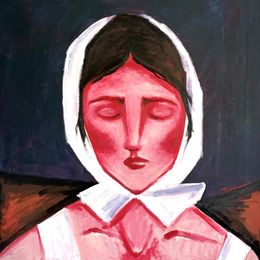
Daria Okhrimenko
Painting . 90 x 90 x 3 cm Painting . 35.4 x 35.4 x 1.2 inch
€800

Claudine Loquen
Fine Art Drawings . 15 x 10 x 0.2 cm Fine Art Drawings . 5.9 x 3.9 x 0.1 inch
€240

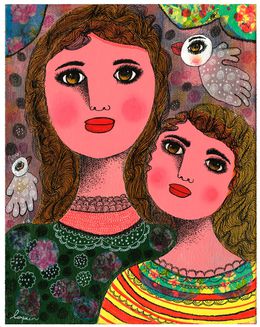
Claudine Loquen
Print . 40 x 30 x 0.1 cm Print . 15.7 x 11.8 x 0 inch
€100
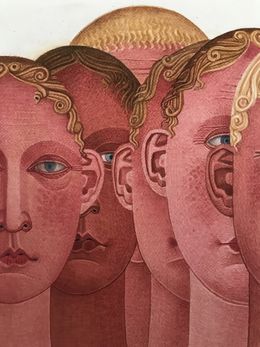
Ivan Afronskiy
Fine Art Drawings . 31 x 24 x 1 cm Fine Art Drawings . 12.2 x 9.4 x 0.4 inch
€890

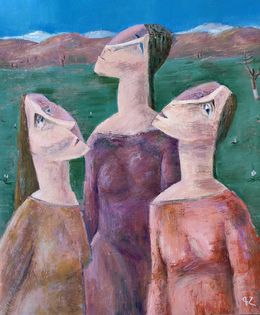
Gegham Hunanyan
Painting . 60 x 50 x 2 cm Painting . 23.6 x 19.7 x 0.8 inch
€465
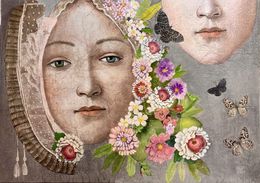
Olga Marciano
Painting . 50 x 70 x 2 cm Painting . 19.7 x 27.6 x 0.8 inch
€700
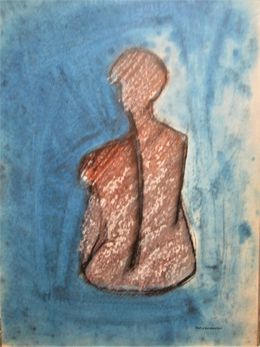
Paolo Ambrosio
Fine Art Drawings . 50 x 35 x 0.1 cm Fine Art Drawings . 19.7 x 13.8 x 0 inch
€90

Massimo Campigli
Painting . 61 x 43 x 1 cm Painting . 24 x 16.9 x 0.4 inch
Price upon request
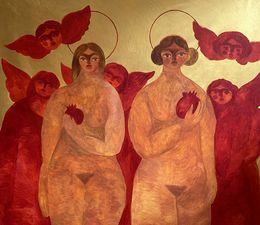
Dasha Pogodina
Painting . 130 x 150 x 2.5 cm Painting . 51.2 x 59.1 x 1 inch
€1,800
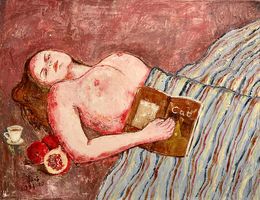
Catherine Clare
Painting . 61 x 50 x 2.5 cm Painting . 24 x 19.7 x 1 inch
€2,000

Patrick Renaud
Painting . 54 x 65 x 2 cm Painting . 21.3 x 25.6 x 0.8 inch
€420
Recommended by Artsper
