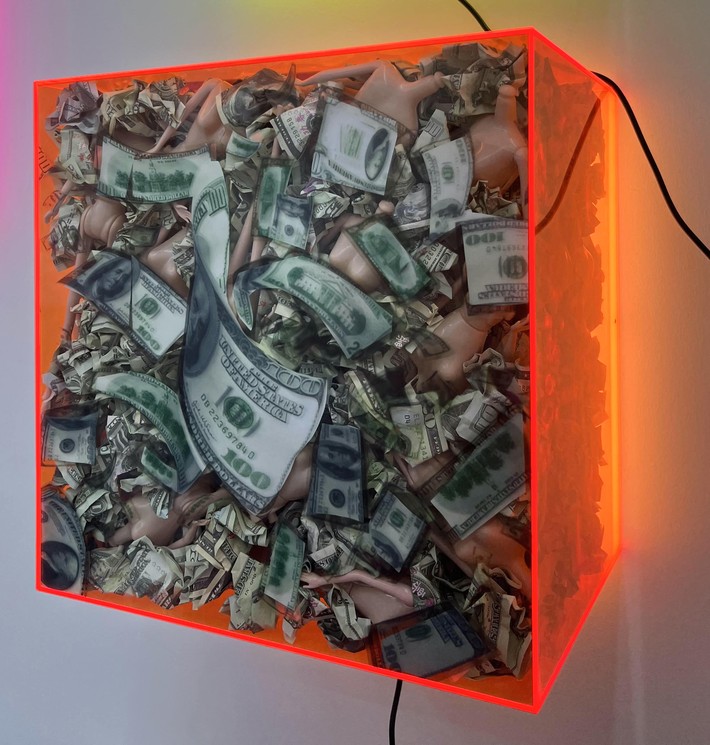

Neon capital, 2020
Sculpture : LED, paper, plexiglass · 40 x 40 x 20 cm 15.7 x 15.7 x 7.9 inch
$5,858
5 858 $US
Shipping & delivery
Shipped from: France
Delivery to: United States Free delivery
Estimated delivery: Less than one week
Free returns within 14 days, full refund
Authenticity guaranteed
Sold with certificate of Authenticity from the artist
Invoice from the gallery Learn more
Secure payment • Card, Amex, PayPal...
We accept several payment methods:
Paypal
American Express
Visa
Mastercard
Apple Pay
Google Pay
- Credit cards (Visa, MasterCard)
- American Express
- PayPal
- Bank transfer
- Gift card
- Apple Pay / Google Pay
All payments are secured with 3D Secure validation to protect your confidential information.
Verified Reviews : 9.6/10
Similar works







About the artwork
Type
Sculpture : Unique artwork
Condition
Artwork sold in perfect condition
Authenticity
Sold with certificate of Authenticity from the artist
Invoice from the gallery
Signature
Engraved signature
Technique & Support
LED , paper , plexiglass , without pedestal
Dimensions ( cm • inch )
40 x 40 x 20 cm 15.7 x 15.7 x 7.9 inch Height x Width x Depth
Sold by
Art gallery
Credentials
Vetted seller since 2014
Description
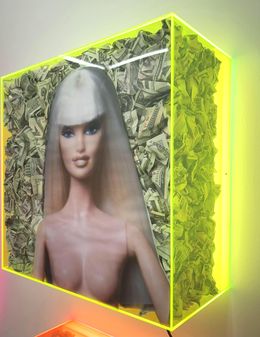
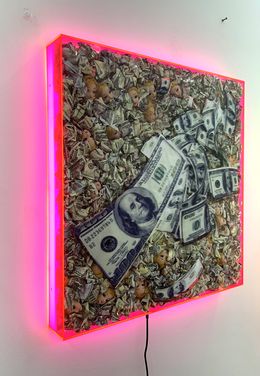
Neon Capital is a striking wall-mounted sculpture by Kumikaho Oshima from the series Dollar Dreams in Neon Barbie World, where the artist orchestrates a dense visual composition of layered dollar bills encased in plexiglass and intensified by a radiant LED glow. The work immediately captures attention through the dominance of orange light, a hue that infuses the entire piece with a sense of urgency and vitality, transforming currency into a pulsating visual field. Through this chromatic strategy, Oshima heightens the psychological impact of repetition, suggesting that financial desire is not static but constantly in motion, radiating energy that both attracts and overwhelms.
The vibrant orange frame functions as more than a formal device; it establishes an emotional temperature that shapes the viewer’s perception. Traditionally associated with stimulation, ambition, and movement, the color amplifies the symbolism of the dollar bills, turning them into an immersive landscape of aspiration. The illuminated border acts as a threshold between observer and object, reinforcing the sensation that wealth, though visible and omnipresent, remains enclosed within structures that define access and exclusivity.
Within the broader context of the series, Oshima frequently juxtaposes Barbie figures with monetary imagery; in Neon Capital, however, the emphasis on currency alone allows the chromatic intensity to take center stage. The orange LED glow reflects onto the folds and textures of the bills, creating shifting shadows that evoke the instability of financial value and the fluctuating nature of personal dreams. This interaction between color and material introduces a dynamic rhythm that encourages prolonged observation, revealing new details as light interacts with surface.
Materially, the plexiglass enclosure enhances the role of color by acting as a reflective membrane that diffuses the orange luminosity outward into the surrounding space. The result is an artwork that extends beyond its physical boundaries, subtly transforming its environment and implicating the viewer within its visual narrative. Oshima’s use of industrial materials aligns with a Neo-Pop sensibility that embraces synthetic brightness as a metaphor for contemporary overstimulation and visual consumption.
As a major member of the studio CrazyNoodles, Oshima contributes to an evolving dialogue on how global symbols circulate within Japanese visual culture. The saturation of orange in Neon Capital echoes the chromatic intensity of urban landscapes, where illuminated signage and digital displays continuously shape perception. The artwork thus becomes a reflection of a society where color itself participates in constructing emotional and economic narratives.
The conceptual ethos encouraged within the collective by Hiro Ando is evident in Oshima’s ability to balance visual seduction with layered critique. In this piece, the color orange operates as both aesthetic anchor and symbolic amplifier, reinforcing the artwork’s meditation on the commodification of desire. The glowing surface invites admiration while simultaneously prompting viewers to question the forces that make certain images and values appear irresistible.
Through its immersive luminosity, precise execution, and chromatic boldness, Neon Capital captures the tension between attraction and reflection that defines contemporary visual culture. Oshima transforms the universal symbol of money into a vibrant field of inquiry, demonstrating how color, material, and repetition can converge to express complex emotional and societal dynamics. By its poised composition, technical finesse, and subtle emotional resonance, Neon Capital stands out as a highly collectible work. Particularly suited for collectors of contemporary Japanese art, Neo-Pop, and sculptures exploring the intersections of economy, color psychology, and visual identity.
Presentation
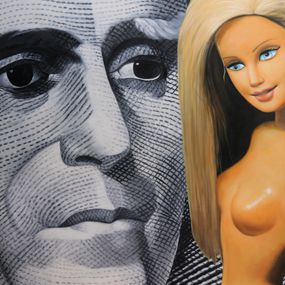
Kumikaho Oshima is a Japanese artist born in 1986 in Tokyo.
All of her work revolves around two main topics; Barbie dolls and American dollars. She seeks to illustrate the actual condition of young women in Japan through her satirical work by criticizing the excessive implantation of Western tendencies in Japanese culture and art as well as the appropriation of capitalist symbols and values. The artist evokes the revolution of Japanese women's manners and desires in her paintings, who in a traditional and limited society began to perceive money as a source of power. Barbie dolls represent the Western physical ideal and the dollar bills play the role of an essential good to female emancipation.
From an aesthetic point of view, her work belongs to the Japanese Neo-pop art movement represented by Japanese artist Takashi Murakami. Oshima work is subtle, she limits the use of colors, she prefers to use earthyand fresh tonalities, which can sometimes give an impression of whashed out to her work but this impression is compensated by the sensual and emotional scenes that she depicts. She uses certain photographic techniques such as zooming or not placing the subject in the center of the frame without making the scenes more dramatic or dynamic.
With time, Kumikaho Oshima has developed a strong and easily recognizable style. Her work is present at the Jacob Paullet Gallery.
Discover similar artists


Reviews from our customers
All our reviews are extracted from Verified Reviews
You may also like

Thierry Carrier
Painting . 200 x 160 x 3 cm Painting . 78.7 x 63 x 1.2 inch
$14,059
Recommended by Artsper


Nobuyoshi Araki
Photography . 29 x 21 x 1 cm Photography . 11.4 x 8.3 x 0.4 inch
$2,097


Sumomo Kanashiwa
Painting . 106 x 100 x 5 cm Painting . 41.7 x 39.4 x 2 inch
$4,921

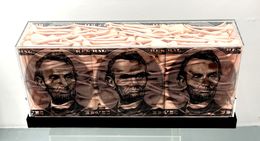


Kumikaho Oshima
Sculpture . 80 x 80 x 6 cm Sculpture . 31.5 x 31.5 x 2.4 inch
$7,029



Hiro Ando
Sculpture . 50 x 45 x 45 cm Sculpture . 19.7 x 17.7 x 17.7 inch
$14,059


Sophie Griotto
Print . 176 x 150 x 1 cm Print . 69.3 x 59.1 x 0.4 inch
$4,042


Saori Nakamishi
Sculpture . 45 x 38 x 38 cm Sculpture . 17.7 x 15 x 15 inch
$4,686
Kumikaho Oshima
Painting . 140 x 107 x 4 cm Painting . 55.1 x 42.1 x 1.6 inch
$6,444


Kumikaho Oshima
Painting . 160 x 130 x 3 cm Painting . 63 x 51.2 x 1.2 inch
$7,029


Kumikaho Oshima
Painting . 150 x 138 x 3 cm Painting . 59.1 x 54.3 x 1.2 inch
$7,264
Kumikaho Oshima
Sculpture . 40 x 40 x 20 cm Sculpture . 15.7 x 15.7 x 7.9 inch
$5,858
Kumikaho Oshima
Sculpture . 70 x 70 x 8 cm Sculpture . 27.6 x 27.6 x 3.1 inch
$7,029

Kumikaho Oshima
Sculpture . 75 x 75 x 5 cm Sculpture . 29.5 x 29.5 x 2 inch
$7,029