










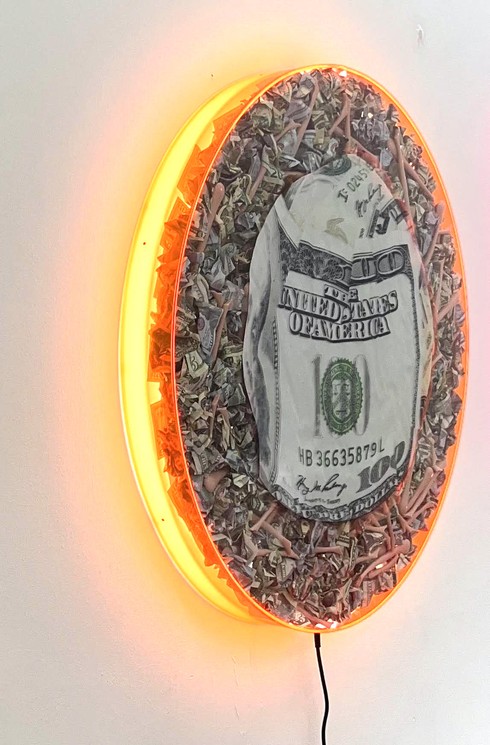

Metropolis mirage, 2020
Sculpture : LED, paper, plexiglass · 75 x 75 x 5 cm 29.5 x 29.5 x 2 inch
€6,000
6 000 €
Shipping & delivery
Shipped from: France
Delivery to: Germany Free delivery
Estimated delivery: Less than one week
Free returns within 14 days, full refund
Authenticity guaranteed
Sold with certificate of Authenticity from the artist
Invoice from the gallery Learn more
Secure payment • Card, Amex, PayPal...
We accept several payment methods:
Paypal
American Express
Visa
Mastercard
Apple Pay
Google Pay
- Credit cards (Visa, MasterCard)
- American Express
- PayPal
- Bank transfer
- Gift card
- Apple Pay / Google Pay
All payments are secured with 3D Secure validation to protect your confidential information.
Verified Reviews : 9.6/10
Similar works




About the artwork
Type
Sculpture : Unique artwork
Condition
Artwork sold in perfect condition
Authenticity
Sold with certificate of Authenticity from the artist
Invoice from the gallery
Signature
Engraved signature
Technique & Support
LED , paper , plexiglass , without pedestal
Dimensions ( cm • inch )
75 x 75 x 5 cm 29.5 x 29.5 x 2 inch Height x Width x Depth
Sold by
Art gallery
Credentials
Vetted seller since 2014
Description
Metropolis Mirage is a circular wall-mounted sculpture by Kumikaho Oshima from the series Dollar Dreams in Neon Barbie World, where the artist constructs a dense three-dimensional collage of dollar bills interwoven with fragmented Barbie elements, notably sculpted legs emerging from the monetary surface. Encased in plexiglass and illuminated by vivid orange LED light, the work immediately evokes the rhythm of an urban environment in perpetual motion. The circular format eliminates a fixed visual hierarchy, encouraging the viewer’s gaze to rotate endlessly, mirroring the cyclical pursuit of success and visibility in contemporary metropolitan life.
The color orange is central to the emotional and conceptual impact of Metropolis Mirage. Associated with stimulation, urgency, and vitality, this radiant hue transforms the layered currency into a glowing landscape that feels both energetic and overwhelming. The warm luminosity recalls neon signage and illuminated advertisements that define modern cityscapes, where brightness becomes synonymous with opportunity. Within this glowing field, the Barbie legs appear as human traces caught in a stream of economic symbolism, suggesting how personal identity is often shaped—and sometimes fragmented—by the pressures of consumer culture.
Oshima’s decision to isolate and repeat bodily fragments introduces a powerful visual metaphor. Detached from complete figures, the legs imply movement without destination, evoking ambition, aspiration, and the constant drive toward an imagined ideal. Their presence among the dollar bills underscores the tension between individuality and conformity, revealing how standardized representations of beauty and success influence self-perception. The interplay of textures—crumpled paper currency against smooth synthetic surfaces—enhances the tactile dimension of the work, inviting closer observation.
The plexiglass enclosure plays a conceptual role beyond protection, functioning as a transparent barrier that amplifies reflections and diffuses the orange glow into the surrounding space. This extension transforms the sculpture into an atmospheric presence rather than a contained object, echoing the immersive visual experiences of urban commercial displays. Oshima leverages this strategy to question how environments saturated with light and imagery condition emotional responses and shape collective aspirations.
As a major member of the studio CrazyNoodles, Oshima participates in a broader exploration of how global pop symbols circulate within Japanese Neo-Pop aesthetics. In Metropolis Mirage, the juxtaposition of American currency and Barbie iconography reflects the fluid exchange of cultural references across borders, highlighting the tension between imported ideals and local identity formation. The artwork becomes a visual reflection of globalization’s influence on personal dreams and societal values.
The conceptual legacy fostered within the collective by Hiro Ando is evident in Oshima’s ability to balance visual seduction with critical depth. The glowing orange surface initially captivates, yet the fragmentation and repetition embedded in the composition prompt a deeper reflection on the ephemeral nature of material success. Each detail—from folded edges of currency to the positioning of sculptural fragments—contributes to a nuanced meditation on value, desire, and perception.
Through its immersive circular structure, vibrant chromatic intensity, and layered symbolism, Metropolis Mirage captures the sensory overload and emotional complexity of contemporary urban culture. Oshima transforms familiar imagery into a reflective visual language that speaks to universal experiences of ambition and identity. By its poised composition, refined craftsmanship, and subtle emotional resonance, Metropolis Mirage stands out as a highly collectible work. Particularly suited for collectors of contemporary Japanese art, Neo-Pop, and sculptures exploring the intersections of urban psychology, economic symbolism, and visual identity.
Presentation
Kumikaho Oshima is a Japanese artist born in 1986 in Tokyo.
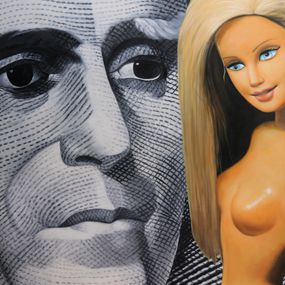
All of her work revolves around two main topics; Barbie dolls and American dollars. She seeks to illustrate the actual condition of young women in Japan through her satirical work by criticizing the excessive implantation of Western tendencies in Japanese culture and art as well as the appropriation of capitalist symbols and values. The artist evokes the revolution of Japanese women's manners and desires in her paintings, who in a traditional and limited society began to perceive money as a source of power. Barbie dolls represent the Western physical ideal and the dollar bills play the role of an essential good to female emancipation.
From an aesthetic point of view, her work belongs to the Japanese Neo-pop art movement represented by Japanese artist Takashi Murakami. Oshima work is subtle, she limits the use of colors, she prefers to use earthyand fresh tonalities, which can sometimes give an impression of whashed out to her work but this impression is compensated by the sensual and emotional scenes that she depicts. She uses certain photographic techniques such as zooming or not placing the subject in the center of the frame without making the scenes more dramatic or dynamic.
With time, Kumikaho Oshima has developed a strong and easily recognizable style. Her work is present at the Jacob Paullet Gallery.
Discover similar artists



Reviews from our customers
All our reviews are extracted from Verified Reviews
You may also like
Karl Lagasse
Sculpture . 17 x 39 x 1 cm Sculpture . 6.7 x 15.4 x 0.4 inch
€3,892





Diederik Van Apple
Painting . 75 x 180 x 4 cm Painting . 29.5 x 70.9 x 1.6 inch
€4,950


Artbynaor
Sculpture . 35 x 30 x 25 cm Sculpture . 13.8 x 11.8 x 9.8 inch
€950

Kumikaho Oshima
Sculpture . 80 x 80 x 6 cm Sculpture . 31.5 x 31.5 x 2.4 inch
€6,000
Vincent Sabatier
Sculpture . 25 x 16 x 4 cm Sculpture . 9.8 x 6.3 x 1.6 inch
€1,200


Karl Lagasse
Sculpture . 16 x 38 x 0.2 cm Sculpture . 6.3 x 15 x 0.1 inch
€990


Phantom Art
Sculpture . 29 x 20 x 26 cm Sculpture . 11.4 x 7.9 x 10.2 inch
€4,950

IPR Graph
Print . 80 x 60 x 5 cm Print . 31.5 x 23.6 x 2 inch
€200


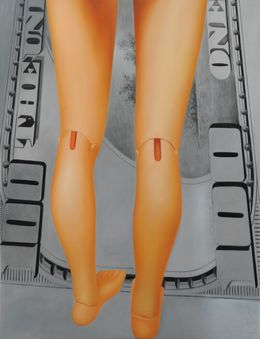
Kumikaho Oshima
Painting . 140 x 107 x 4 cm Painting . 55.1 x 42.1 x 1.6 inch
€5,500


Kumikaho Oshima
Painting . 160 x 130 x 3 cm Painting . 63 x 51.2 x 1.2 inch
€6,000


Kumikaho Oshima
Painting . 150 x 138 x 3 cm Painting . 59.1 x 54.3 x 1.2 inch
€6,200

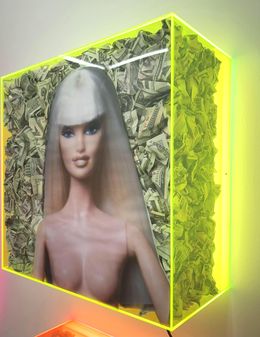
Kumikaho Oshima
Sculpture . 40 x 40 x 20 cm Sculpture . 15.7 x 15.7 x 7.9 inch
€5,000
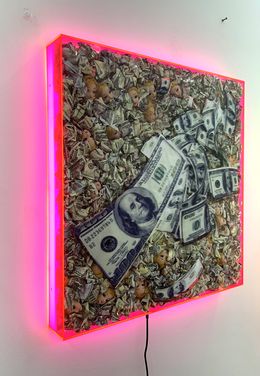
Kumikaho Oshima
Sculpture . 70 x 70 x 8 cm Sculpture . 27.6 x 27.6 x 3.1 inch
€6,000