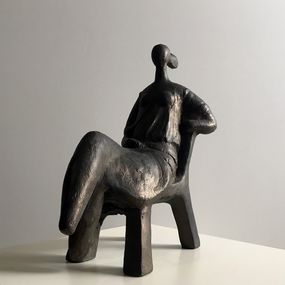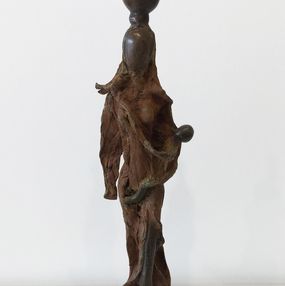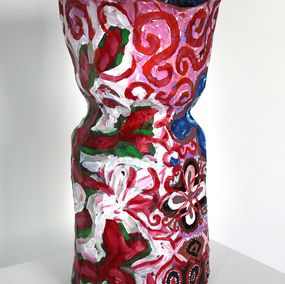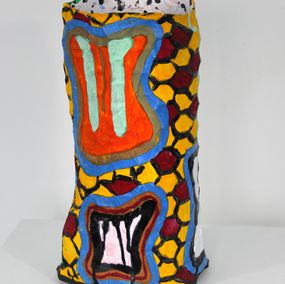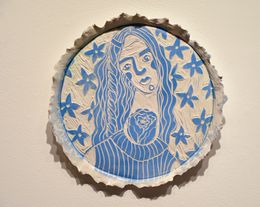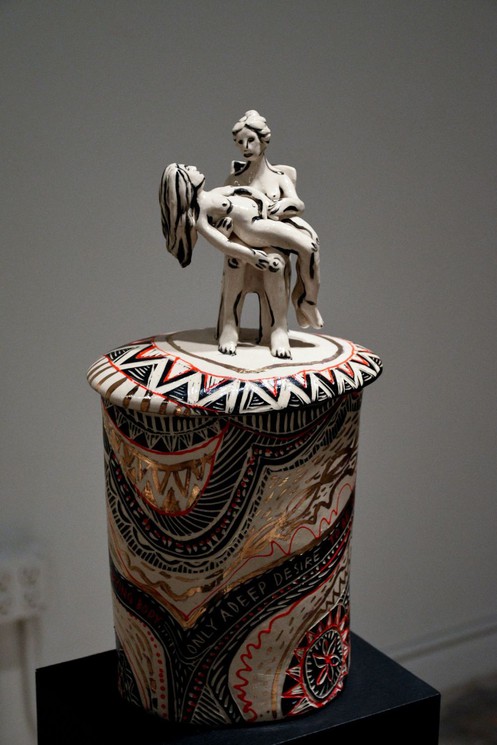
Pieta Porcelain and gold 13.5 in x 6 in x 5.5 in One of a kind
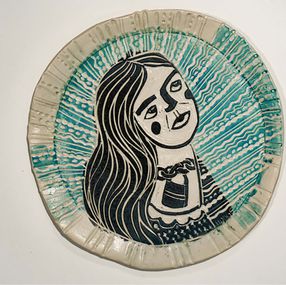
Hodge weaves stories into the clay which are both personal and universal. This piece is part of the Historic Jar Collection and recalls Manet’s painting of the same name. While Manet sought to confront the viewer with Olympia’s gaze, as she was a known sex worker, Hodge’s reinvention of the scene focuses on the connection between the two women in the scene. Instead of Olympia looking out for her next client, she is captured by this woman’s gesture of affection in the form of a bouquet.
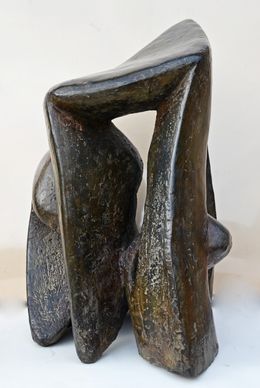
This striking artwork is a ceramic sculpture combining intricate patterns with a bold figural element. The cylindrical base features an elaborate tapestry of interwoven geometric designs in a palette of black, red, and cream, evoking tribal artistry. These patterns create a dynamic flow of movement across the surface, engaging viewers with their rhythmic precision. Crowning the piece is a sculptural depiction of a seated figure, skillfully rendered in unglazed, natural ceramic. This figure, with its elongated proportions and serene posture, holds an abstract object suggestive of a mask or shield, hinting at themes of protection or identity. The juxtaposition of complex surface patterns and the minimalist figure imbues the piece with a sense of balance and harmony, making it a captivating blend of form and storytelling. The artwork's distinct fusion of texture, pattern, and form invites admiration for its artistic innovation and craftsmanship.
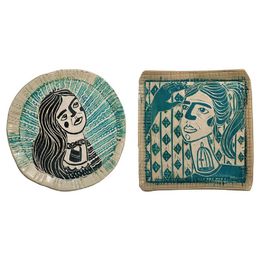
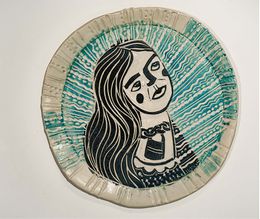
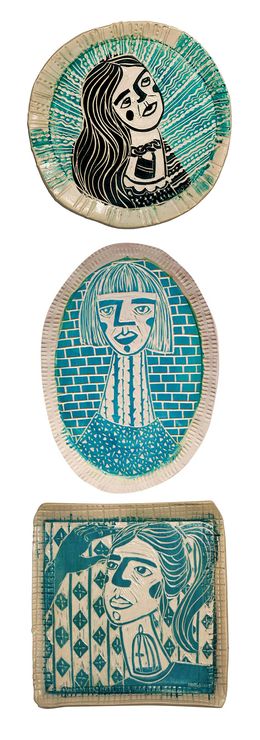
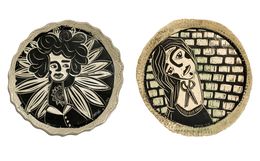
Alex Hodge grew up on a blueberry farm in South Georgia where she learned the value of cultivating the earth. Currently based in Miami, Florida, Hodge focuses on prioritizing women’s narratives in all aspects of her work. Her poetic porcelain objects examine and reimagine the history of art in a way that values women, not only in body, but in wholeness, power, and love. By combining sculptural and drawn elements, such as carved and painted pattern, her works create a dialogue between space and line, form and surface for a dynamic viewing experience. Often limiting her color palette to black and white, she uses the carving technique called sgraffito to incise her pieces with drawings, her own text, and pattern. Focusing on the narrative qualities of art making, Hodge weaves stories into the clay which are both personal and universal. Through the decorative and symbolic details, she hints at narratives without completing them to invite the viewer to participate in creating meaning. The women she invents exist in the present but are of the imagined future in which we all have room to flourish, to tell our stories, to give and receive love, and to express the beauty and pain of the human condition. Fundamentally, her artworks are a celebration of the tenacity and vulnerability of women and clay, an interplay of history and hope.