



Comics
Graphic novels, once seen as childish, are now celebrated as the ninth art, with records being broken at auction houses. In 2014, an original Tintin page by Georges Remi (Hergé) sold for 2.5 million euros. The genre's roots trace back to Swiss artist Rodolphe Töpffer in the 1830s, who pioneered 'mixed' literature combining drawings and storylines.
The U.S. became the major comic consumer in the early 20th century, with mass production of comic strips. The 1930s golden age birthed superheroes like Superman (created by Jerry Siegel and Joe Shuster) and Batman (created by Bob Kane), with comic giants Marvel and DC. In Europe, the Franco-Belgian school thrived with artists like Georges Remi (Hergé) and André Franquin, creating iconic characters like Tintin, Lucky Luke, and Spirou. The genre evolved, addressing adult themes from the 1960s onward.
Pop art icons likeAndy Warhol, Roy Lichtenstein, and Mel Ramos helped elevate graphic novels to fine art. Lichtenstein's Look Mickey (1961) was a milestone in integrating comic strip aesthetics with pop art. Meanwhile, manga, pioneered by Katsushika Hokusai and later, creators like Naoki Urasawa, Osamu Tezuka, and Katsuhiro Otomo, gained global popularity.
Explore the world of graphic novels, from legendary artists to emerging talents like Lenil Yu, David Leroi, and Lucio Forte. Discover the rich history, cultural impact, and evolution of graphic novels in today's art scene.



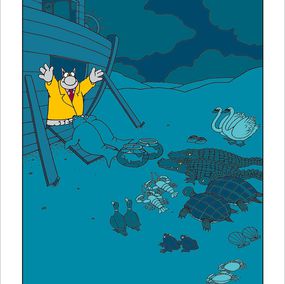

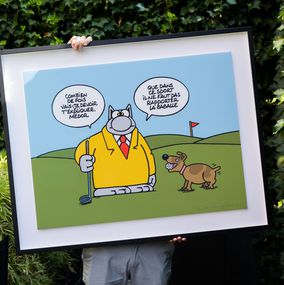


Robert Combas
Fine Art Drawings - 29.5 x 18 x 0.5 cm Fine Art Drawings - 11.6 x 7.1 x 0.2 inch
€2,950


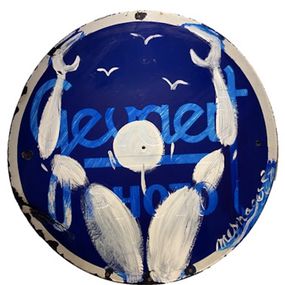

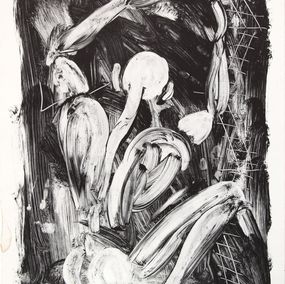
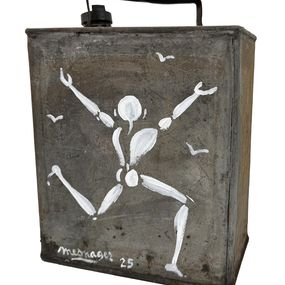
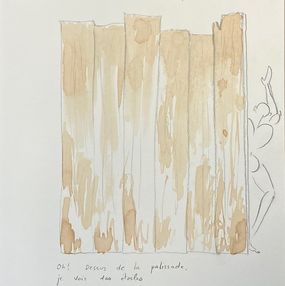
Jérôme Mesnager
Fine Art Drawings - 40.3 x 26 x 0.3 cm Fine Art Drawings - 15.9 x 10.2 x 0.1 inch
€600