





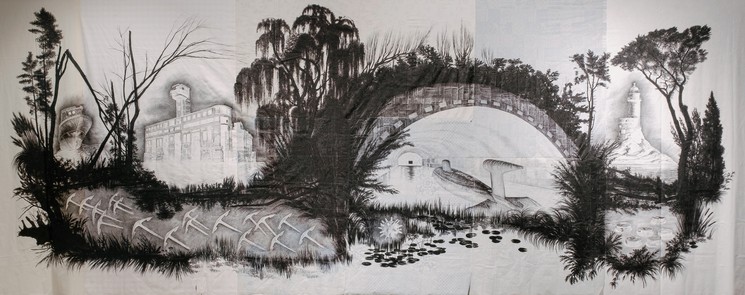

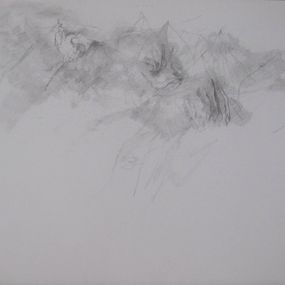
Dark Forest, Sea, 2018
Fine Art Drawings : marker · 280 x 670 x 0.1 cm 110.2 x 263.8 x 0 inch
$46,806
46 806 $US
Shipping & delivery
Shipped from: France
Delivery to: United States , $ 1,041
Estimated delivery: One to two weeks
Free returns within 14 days, full refund
Authenticity guaranteed
Sold with certificate of Authenticity from the artist
Invoice from the gallery Learn more
Secure payment • Card, Amex, PayPal...
We accept several payment methods:
Paypal
American Express
Visa
Mastercard
Apple Pay
Google Pay
- Credit cards (Visa, MasterCard)
- American Express
- PayPal
- Bank transfer
- Gift card
- Apple Pay / Google Pay
All payments are secured with 3D Secure validation to protect your confidential information.
Verified Reviews : 9.6/10
Similar works




About the artwork
Type
Fine Art Drawings : Unique artwork
Condition
Artwork sold in perfect condition, not framed
Unstretched (shipped rolled)
Authenticity
Sold with certificate of Authenticity from the artist
Invoice from the gallery
Signature
Not Signed
Dimensions ( cm • inch )
280 x 670 x 0.1 cm 110.2 x 263.8 x 0 inch Height x Width x Depth
Sold by
Art gallery
Credentials
Vetted seller since 2017 • Top Seller
Discount
This seller offers discount when you purchase multiple artworks.
Description
Taisiya Korotkova's work invites reflection on a disturbing duality: technological advancement versus humanity's instinctive regression.
The "Dark Forest" series continues the artist's exploration of the relationship between humans and technology. It consists of numerous felt-tip drawings on the back of waxed kitchen canvases of various sizes, from 280 x 950 cm to miniatures.
In this project, Korotkova imagines the present and future in which humanity, guided by primitive instincts, has utilized destructive high technologies. There are no more men, only the ruins of military facilities and nature, slowly dissolving the remains of the so-called "civilization."
The drawings evoke fairy tale illustrations, reinforcing the impression of an almost mythological warning. The plants depicted have magical and medicinal properties, standing in front of the ruins, testifying to the resilience and ancient wisdom in the face of the rapid obsolescence of human "civilization."
Notable elements in this drawing:
Dagdiesel
Dagdiesel Shop No. 8 is a test facility for underwater torpedoes at the Dagdiesel Machine Building Plant in the city of Kaspiysk, Republic of Dagestan.
Weeping willow (Salix)
A hybrid of Babylon willow (Salix babylonica), white willow (Salix alba), brittle willow (Salix fragilis) and charming willow (Salix blanda). Willow bark has antibiotic
properties. In folk medicine, bark infusions are used to treat colds. Salicylic acid was first discovered in willow, hence its name.
Cane (Phragmites)
A common genus of large perennial herbaceous plants. It grows in large thickets along
river bank sand deltas in countries with warm and temperate climates. Cane was traditionally used to make roofs, hedges, wicker walls, or insulation.
Submarine bunker
A submarine bunker is a specialised type of underground enclosure, first created in Germany to protect their submarine bases from air raids. The bunkers were also used sometimes to repair and assemble the submarines.
Sunk barrels with unidentified contents
According to the fragmented and faded recollections of merchant fleet sailors, who operated the vessels carrying chemical warfare agents, in the 1950s there were top secret journeys, where the captain would receive a sealed package with instructions:
to be opened in a certain location out in the White Sea and throw overboard the ship's cargo. These were strange containers and barrels, and the crew were unaware of the contents. All seafarers involved had to sign a non‑disclosure about these operations.
« The Dark Forest by Taisia Korotkova is the first total installation by the artist. [] It is not so much an impassable pristine thicket, but a slightly deserted world fair, where looming behind the laces of branches are outlines of grand and mysterious structures, there to showcase all sorts of wonders of progress: towers and domes, antennae and radars, missile silos and power generators. []
The new proiect by Taisia Korotkova continues on the themes that the artist began exploring in her past painting projects. In the series Technology, Museum of Cosmonautics, Closed Russia and others, she looked at the mythology of progress and achievement, the legacy and ruins of the sci-tech utopia.
Taisia's medium of choice, tempera, was deliberately anachronistic, which presented her narratives through a lens of an artificially distant perspective. The ruins of abandoned Soviet defense installations were reminiscent of the ruins as depicted in Romanticism, and the spacesuits in the museums seemed as ancient as Egyptian sarcophagi.
In the Dark Forest, Taisia Korotkova goes for a drastically different technique and scale. Painting is replaced in favor of black-and-white drawings, which, according to the artist, is a reference to old Art Nouveau illustrations in old fairy tales: a dark forest is first and foremost a fairy-tale setting. [] Images look even more refined than Taisia's past paintings, small and meticulously detailed - yet, they do not allow the audience to maintain any distance by surrounding the viewer with the dark forest, the one which leads astray. Their incorporeality is the incorporeality of the omnipermeating specter.
The Dark Forest invites a description as "hauntological." Coined by Jacques Derrida, the term "hauntology" was first introduced in 1993 in his Specters of Marx. By the late 2000s, through the works of British thinkers and music critics Mark Fisher and Simon Reynolds, hauntology came to denote a genre of electronic music-thus becoming a trend in contemporary culture, engrossed in a nostalgia for unrealized futures. In Fisher's eyes, the claustrophobia of the eternal present and the inevitability of capitalism were connected, to a large degree, with the collapse of the Soviet Union. []
Although most structures depicted in Taisia Korotkova's Dark Forest works are functional and come from the military-industrial complex, when surrounded by greenery in the monochrome "tapestries" they look like whimsical architecture utopias (utopias that could be produced by any people in any historical period).[]
Other structures depicted in the Dark Forest have also attracted "stalker" pilgrimages, visits by urban explorers, or mentions in conspiracy-themed folklore around formerly secret sites. The artist refers to the "stalker" subculture and, too, to the movie by Tarkovsky, which is part of the "hauntological canon." The multitude of social media communities have made these ruins almost a kitsch item (also noted by Brian Dillon) - joining the ranks of such clichés as romantic ruins in old paintings or postcards, becoming the familiar elements of "picturesqueness" and Taisia Korotkova makes a play on it by drawing her works with a marker on the backside of a tablecloth. It would not be too much of a stretch to imagine that similar landscapes with test sites and bunkers could soon adorn table covers or shower curtains, like the Eiffel Tower or old lighthouses do now.
We are not faced with a "dark forest" but with a full-blown "park of ruins." In place of nature prevailing over civilization, here is a botanical garden, where all plants are actually artifacts and not products of wild nature. The "herbarium" collected by Taisia Korotkova contains both grasses and monumental trees, but there is an additional rubric for flora that possesses magical, medicinal or intoxicating potency, or, in other words, a power to manipulate reality.
The Dark Forest brings to mind the renowned project by Pierre Hughe at dOCUMENTA (13). A lost world of bogs, marijuana bushes, a stature with living beehive in place of a head, and a white dog with a pink paw - a world which, by the artist's own admission, was a "composting pit" whereto all the various objects found on-site went to "rot," and, ultimately, for this "humus" not to return into nature but to produce new cultural apparitions. The "nature" itself in the Dark Forest seems a construct, a decoy, a mimicry act by the collective memory. In this case, it is the culture and the past, which poses as nature, that prevail over modernity and progress with its ambitions for the future, they get grounded and enveloped in roots. And this "nature" is by far not going to "heal". »
Irina Kulik
Presentation
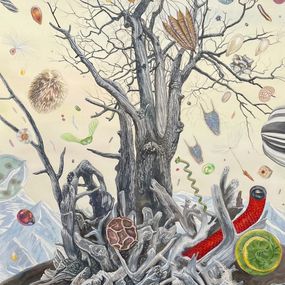
Born in Moscow in 1980, the painter and graphic artist Taisia Korotkova works on the subjects of relationships between human society and science, industry and contemporary technologies and also its influence on human life and ecology.
Before starting her work Taisia Korotkova usually does research, collects materials, meets specialists and scientists, which work is connected with the investigated topic.
One of the main techniques of Korotkova is an egg-tempera on gesso, on a wooden panel. It’s important for an artist that the technique of painting she uses complies with a natural perception of the human eye, when saturation and volume are connected directly with a luminosity. This technique allows her to play a game with time: Korotkova paints the events of the present like the deep past, constructing the sight from the future and showing the fast ageing of the new technologies. Also she works with etching, drawing and watercolor.
The most important for Taisia Korotkova is to formulate the questions, to open the discussions and create a composition without ready answers. Korotkova finds the subjects of her pictures in real life or composes them based on the real events. In 21-th century, in the ocean of information, an artist can find, analyse, choose, mix and show significant subjects. Exactly in this manner, Korotkova works on her projects, which include many different aspects of contemporary life.
Her works are part of the collections of Moscow Museum of Modern Art, State Tretyakov Gallery Moscow, Uppsala Konstmuseum, Uppsala commun, Republic of Austria, IRRA Moscow, German Titov’s collection, Smirnov & Sorokin Foundation. Participant of Utopia Lille 3000, “Novacene” project.
She lives and works in Milan.
Education :
Moscow State Academic Art Institute Surikov
Institute of Contemporary Art, Moscow
Prizes and nominations:
Kandinsky Prize, Young Artist of the year 2010
Long list Strabag Art Award 2014
Long list Kandinsky Prize 2015
Discover similar artists



Reviews from our customers
All our reviews are extracted from Verified Reviews
You may also like

Taisia Korotkova
Fine Art Drawings . 95 x 68 x 0.1 cm Fine Art Drawings . 37.4 x 26.8 x 0 inch
$4,096


Taisia Korotkova
Fine Art Drawings . 107 x 86 x 0.1 cm Fine Art Drawings . 42.1 x 33.9 x 0 inch
$5,851


Taisia Korotkova
Fine Art Drawings . 100 x 100 x 0.1 cm Fine Art Drawings . 39.4 x 39.4 x 0 inch
$7,021

Nadine Pillon
Painting . 80 x 130 x 2 cm Painting . 31.5 x 51.2 x 0.8 inch
$3,861
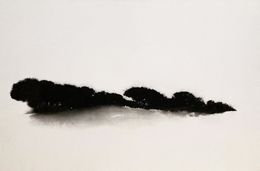


Emmanuelle Vroelant
Painting . 50 x 140 x 3 cm Painting . 19.7 x 55.1 x 1.2 inch
$3,861

Taisia Korotkova
Painting . 76 x 56 x 0.2 cm Painting . 29.9 x 22 x 0.1 inch
$2,340


Taisia Korotkova
Painting . 56 x 76 x 0.2 cm Painting . 22 x 29.9 x 0.1 inch
$2,340

Taisia Korotkova
Painting . 56 x 76 x 0.2 cm Painting . 22 x 29.9 x 0.1 inch
$2,340

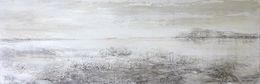
Emmanuelle Vroelant
Painting . 40 x 120 x 3.5 cm Painting . 15.7 x 47.2 x 1.4 inch
$1,287

Nadine Pillon
Painting . 80 x 160 x 2 cm Painting . 31.5 x 63 x 0.8 inch
$4,681

Dannie Launay
Painting . 40 x 120 x 3 cm Painting . 15.7 x 47.2 x 1.2 inch
$2,340 $1,638
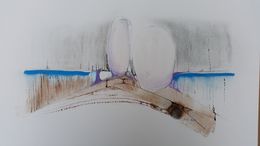

Taisia Korotkova
Painting . 24 x 39.7 x 2.8 cm Painting . 9.4 x 15.6 x 1.1 inch
$1,287
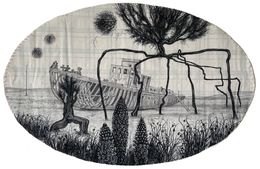
Taisia Korotkova
Fine Art Drawings . 57 x 87 x 0.1 cm Fine Art Drawings . 22.4 x 34.3 x 0 inch
$3,510

Taisia Korotkova
Painting . 76 x 56 x 0.2 cm Painting . 29.9 x 22 x 0.1 inch
$2,340

Farid Saâdi
Fine Art Drawings . 27 x 46 x 0.1 cm Fine Art Drawings . 10.6 x 18.1 x 0 inch
$351

Taisia Korotkova
Painting . 18 x 12 x 2.1 cm Painting . 7.1 x 4.7 x 0.8 inch
$761
Need help?
How do I showcase my work?
Have you purchased a painting, sculpture or work on paper?
Find our expert advice for the conservation and promotion of your works in the articles below:
Protect your purchase with Artsper: Buy with confidence
At Artsper, our mission is to allow you to collect works of art with complete peace of mind. Discover the protections we offer at every stage of your shopping experience.
Buy works from top galleries
We work in close collaboration with carefully selected art galleries. Each seller on Artsper is carefully examined and approved by our team, thus ensuring compliance with our code of ethics. You therefore have the assurance of purchasing authentic, high-quality works.
Total transparency: you know what you are buying
Before being posted online, all artwork on Artsper is reviewed and validated by our moderation team. You can browse with complete peace of mind, knowing that each piece meets our criteria of excellence.
Personalized support: our experts at your service
Our team of contemporary art experts is available by phone or email to answer all your questions. Whether you want advice on a work or a tailor-made selection to enrich your collection, we are here to support you.
Resell your works with ease
If you have purchased a work on Artsper and wish to resell it, we offer you a dedicated platform to relist it. To find out more, click here.
Make offers with Artsper: negotiate like in a gallery
You have the possibility to propose a price for certain works, just like in a gallery. This feature allows you to initiate discussions and potentially acquire your coins at advantageous prices.
Get help with your negotiations
Our team will negotiate for you and inform you as soon as the best offer is obtained. Do not hesitate to call on our expertise to ensure a transaction at the best price.
Order securely
Artsper satisfaction assurance
We want you to be completely satisfied with your purchase. If the work you receive is not to your liking, you have 14 days to return it free of charge, and you will be refunded in full, whatever the reason.
Secure payment with Artsper partners
All credit card payments are processed by Paybox, the world leader in payment solutions. Thanks to their strict security standards, you can transact with confidence.
Problem Support
In the rare event that an artwork arrives damaged or not as described, we are here to help. Whether for a return, refund, restoration or exchange, our team will support you throughout the process and will ensure that we find the solution best suited to your situation.
Conditions to benefit from Artsper protections:
Use one of the payment methods available on Artsper for your order.
Report any problems within one week of receiving the work.
Provide required photographic evidence (including original artwork and packaging).
Artsper guarantees cover the following cases:
The received work lacks a described characteristic (for example, a signature or frame).
The artwork has significant differences from its description (e.g. color variation).
The work is damaged upon receipt.
The work is lost or damaged by the carrier.
Delivery is significantly delayed.
With Artsper, you collect with complete peace of mind.
Why choose Artsper for your art purchases
Artsper offers you access to more than 200,000 works of contemporary art from 2,000 partner galleries. Our team of experts carefully selects galleries to guarantee the quality and originality of the works.
You benefit from:
Works at gallery price
Return within 14 days, regardless of your location
Easy resale of the work purchased on Artsper
Personalized research tools (selection and tailor-made universe)
Our customer service is available for any assistance.
Where can I be delivered?
Artsper delivers internationally. The list of countries is available in the first step of your cart.
If your country is not listed contact us at [email protected] and we will see what we can do.
Note that Customs fees may apply for works shipped internationally. This is indicated in the first step of the shopping cart.
You can choose a delivery address different from the billing address. Make sure that a trusted person is present to receive the work if you cannot be there.