










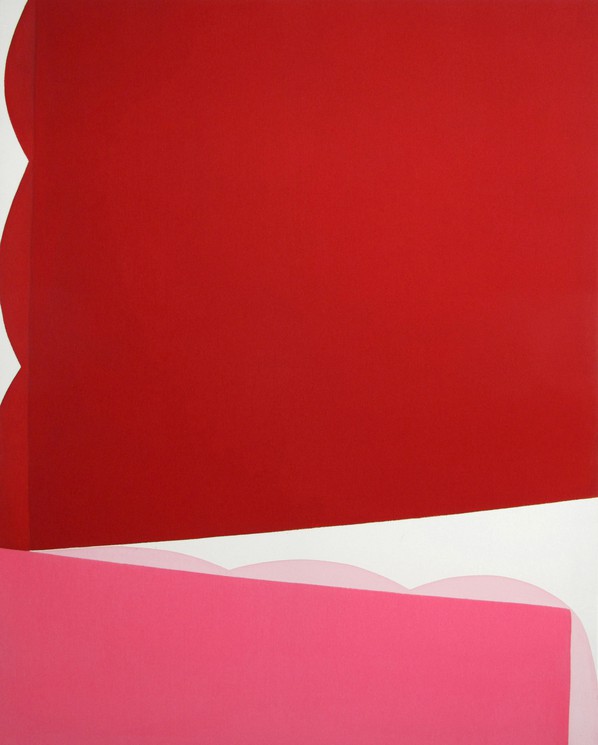

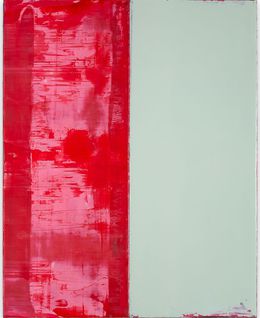
Ondulation, 2014
Painting : acrylic, ink · 162 x 130 x 2.5 cm 63.8 x 51.2 x 1 inch
€9,452
9 452 €
Shipping & delivery
Shipped from: France
Delivery to: Germany , € 225
Estimated delivery: One to two weeks
Free returns within 14 days, full refund
Authenticity guaranteed
Sold with certificate of Authenticity from the gallery
Invoice from the gallery Learn more
Secure payment • Card, Amex, PayPal...
We accept several payment methods:
Paypal
American Express
Visa
Mastercard
Apple Pay
Google Pay
- Credit cards (Visa, MasterCard)
- American Express
- PayPal
- Bank transfer
- Gift card
- Apple Pay / Google Pay
All payments are secured with 3D Secure validation to protect your confidential information.
Verified Reviews : 9.6/10
Similar works

Arvid Boecker
Painting . 50 x 40 x 6 cm Painting . 19.7 x 15.7 x 2.4 inch
€3,047
Recommended by Artsper




About the artwork
Type
Painting : Unique artwork
Condition
Artwork sold in perfect condition, not framed
Unstretched (shipped rolled)
Authenticity
Sold with certificate of Authenticity from the gallery
Invoice from the gallery
Signature
Hand-signed by artist
Dimensions ( cm • inch )
162 x 130 x 2.5 cm 63.8 x 51.2 x 1 inch Height x Width x Depth
Sold by
Art gallery
Credentials
Vetted seller since 2015 • Top Seller
Discount
This seller offers discount when you purchase multiple artworks.
Description
This artwork will be shipped rolled in a dent-resistant tube.
This method is especially safe for large works, and provides lower shipping costs as well.
Rolled works can be easily stretched (for canvas works, i.e. placed onto wooden stretcher bars) and/or framed by a local framer upon arrival.
Guillaume Moschini is a French abstract artist mentored by the internationally recognized Supports/Surfaces artists Claude Viallat, Patrick Saytour, and Vincent Bioules.
Much like Helen Frankenthaler, Moschini’s work depends on process: unprimed, raw canvas, a diluted pigment (mixed inks, acrylics, and paint thinners), and the unconscious phenomenon that occurs through the process of art making.
In his organized studio, he constructs compositions of color, transparent tints, overlays and shapes.
Liquid pigments melt into the raw canvas with precarious intention.
Meditation on the proper tools, balance of color, form and the flow of material is his strategy.
Moschini’s palette is reinvented per series, sometimes vibrant and sometimes muted.
Conceptually, Moschini’s work echoes Kenneth Noland’s minimalism without the restraint of flatness. His transparency variations within the color field and transparent overlays reinvent a contemporary and unique approach. Moschini reflects on a time in the history of painting that questioned its definition.
Presentation
Guillaume Moschini’s work is focussed on a gesture, a hue, always carried out in a
very liquid matter. In his paintings, he incessantly mingles inks with acrylic and
methylated spirits. Interested in the limits of the colour field, he paints by combining
rectangular shapes which are not tint areas but traces of a single brushstroke.
For a long time, the artist preferred using rather small-sized frames, making it easier
for him to paint that trace, whose width is strictly determined by the width of the
brush, in a vision which is quite close to Nick Toroni’s. By successive corrections of
“accidental” drips, these shapes sometimes invaded the canvas to turn into a quasi-
monochrome. This practice, which was felt like an obsession, stood for a crucial
change in the artist’s recent apprehension of large-sized frames. Moreover, it had
already characterized his first works, the ones painted with brooms on canvas sheets
up to six metres long and mainly inspired by American abstract paintings. These
resulted from an initial search of vast expanses of colour along with a desire to
penetrate the canvas.
In order to adapt his work to larger dimensions, Moschini started out by assembling
two frames. From that moment on, he designed his paintings in terms of length and
not of height, their various possibilities of arrangement creating new relations
between colour, composition and even scale. Within his quasi-monochromes, shapes
reappeared in the unpainted spaces of the canvas. An emergence accompanied by a
conversion of Moschini’s paintings into drawings, which offers many a variations he
played around with.
Having reached a certain degree of skill in the art of converting a trace into a shape,
he could reproduce his technique on any kind of format and medium. Guillaume
Moschini pays great attention to the selection of the right tool and considers the
choice of the method very carefully. On the one hand, the absolute clarity of his work
requires the use of wider and wider industrial brushes so as to avoid repeated
strokes of paintbrush. On the other hand, in order to be less litteral, the artist willingly
breaks the continuity of the strokes by still using smaller brushes. Thus, he draws
and redraws the story of a shape by changing the way to produce it. The position of
the trace is determined to the naked eye and not according to a specific design or
drawing. It traverses the canvas, no matter where. The only rule to follow is to try to
find a balance between the traces without them having necessarily the same
dimensions.
Choosing large formats compelled Guillaume Moschini to lay his canvasses down on
a table and work the four sides of the frames, which required a real physical
commitment. Paradoxically, for the very exacting professional he is, working on
large-sized frames allows greater control than on smaller ones. He just needs to
stand on little bench to apply the brush most delicately. If his approach is based on
gesture, it refers to no expressionist style.
Furthermore, the artist protects the first trace from the various splutters. However,
some of them are preserved insofar as they pertain to the stability of the painting.
Then, they function as a writing style, a wash tint, a “circumstance” which might be
obsessively controlled and might even be the starting point of a painting. As regards
the artist, he plays with the dichotomy between heaviness and weightlessness.
In this demanding approach, unconsciousness is at work : “My paintings are organic,”
Moschini says. The artist works in series. Each painting remains independent from
the others and is not necessarily intended to be displayed within a predetermined set.
Pieces can function in three, their association or separation depending on their
relation to space and colour.
If Moschini’s work on shape is fundamental, it is a pretext to colour, which stands for
a real project to him. The object, the motive of his approach is the communication
between two colours and even the invention or the discovery of a new colour,
including the one that is not perceptible at first glance, resulting from infinitely
variable combinations… In order for two colours to match, there needs to be a fair
balance between shapes, on the assumption that what is not painted is as important
as what is. Afterwards, the logical harmony between sometimes clashing colours
depends on the evolution of this or that series.
Fascinated by repetitive painting, Moschini develops a more and more distinctive
taste for minimalism and radicalism. In order to show his longing to go straight to the
point by being as light as possible, Moschini does not apply any primer coat to his
canvasses. Instead, he even applies a very transparent coat of diluted colour – a
“jus” –, in direct continuation of Marc Devalde’s experiments. If there are fewer and
fewer hues, colour becomes brighter and brighter.
Moschini’s gesture conveys an emotion, a tension which only arises from playing on
equilibrium and disequilibrium between shapes and colours, excluding any kind of
systematic approach. If this work mostly deals with aesthetics, no aestheticism can
be detected : indeed, Guillaume Moschini’s attention is not focussed on the beauty of
colours, but on their unsteady balance, depending on the exposure conditions and
the viewer who never stops capturing and recreating their values.
Aurélie Barnier, June 2014
Discover similar artists




Reviews from our customers
All our reviews are extracted from Verified Reviews
You may also like

Jean-François Dubreuil
Painting . 59 x 42 x 5 cm Painting . 23.2 x 16.5 x 2 inch
€3,100
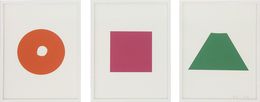
Claude Closky
Print . 31.5 x 64.5 x 2 cm Print . 12.4 x 25.4 x 0.8 inch
€1,500
Recommended by Artsper
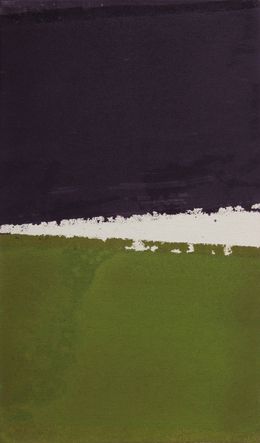

Guillaume Moschini
Painting . 46 x 27 x 2 cm Painting . 18.1 x 10.6 x 0.8 inch
€1,181

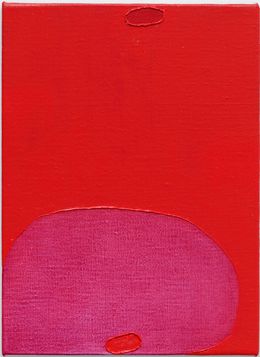


Andy Harwood
Painting . 77 x 61 x 3.8 cm Painting . 30.3 x 24 x 1.5 inch
€3,109


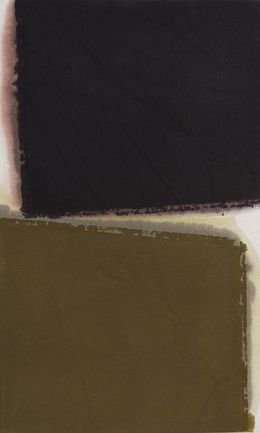

Guillaume Moschini
Painting . 65 x 46 x 2 cm Painting . 25.6 x 18.1 x 0.8 inch
€2,176
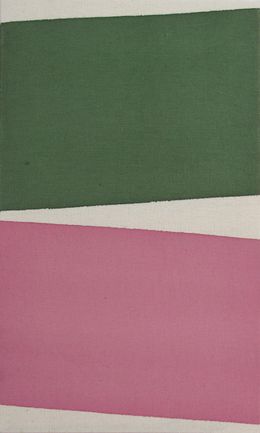

Guillaume Moschini
Painting . 55 x 33 x 2 cm Painting . 21.7 x 13 x 0.8 inch
€1,741

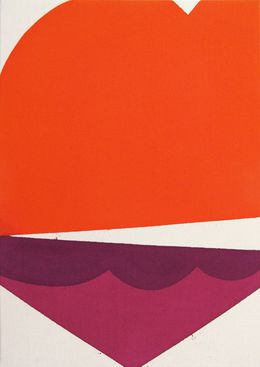
Guillaume Moschini
Painting . 65 x 46 x 2 cm Painting . 25.6 x 18.1 x 0.8 inch
€2,176

Guillaume Moschini
Painting . 55 x 33 x 2 cm Painting . 21.7 x 13 x 0.8 inch
€1,741


Guillaume Moschini
Painting . 81 x 54 x 2 cm Painting . 31.9 x 21.3 x 0.8 inch
€2,612

Kyong Lee
Painting . 65 x 50 x 0.1 cm Painting . 25.6 x 19.7 x 0 inch
€1,057

Guillaume Moschini
Painting . 65 x 81 x 2 cm Painting . 25.6 x 31.9 x 0.8 inch
€2,860

Guillaume Moschini
Painting . 100 x 73 x 2 cm Painting . 39.4 x 28.7 x 0.8 inch
€3,855
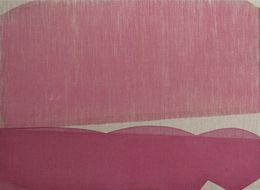
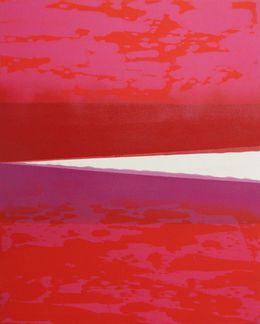
Guillaume Moschini
Painting . 81 x 65 x 2 cm Painting . 31.9 x 25.6 x 0.8 inch
€2,860

Guillaume Moschini
Painting . 100 x 73 x 2 cm Painting . 39.4 x 28.7 x 0.8 inch
€3,855
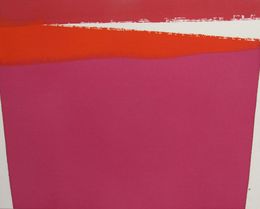
Guillaume Moschini
Painting . 65 x 81 x 2 cm Painting . 25.6 x 31.9 x 0.8 inch
€2,860

Veronika Obushikhina
Painting . 65 x 46 x 2 cm Painting . 25.6 x 18.1 x 0.8 inch
€651