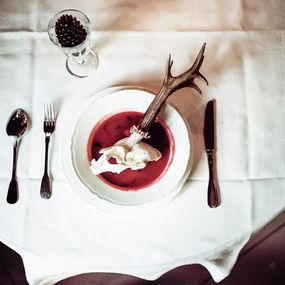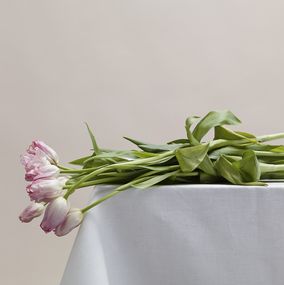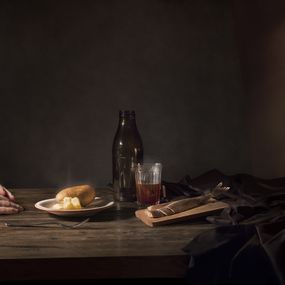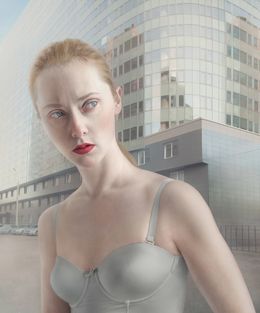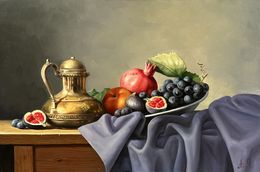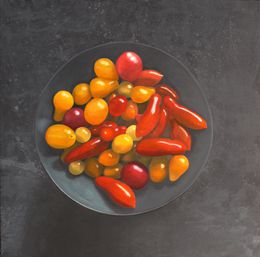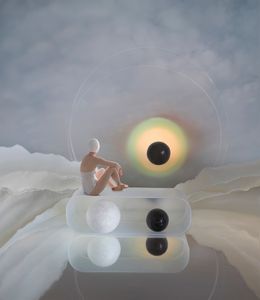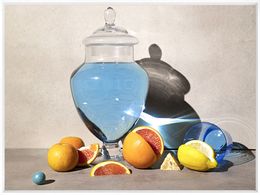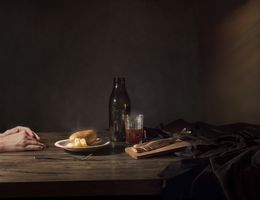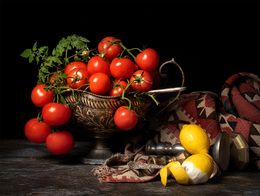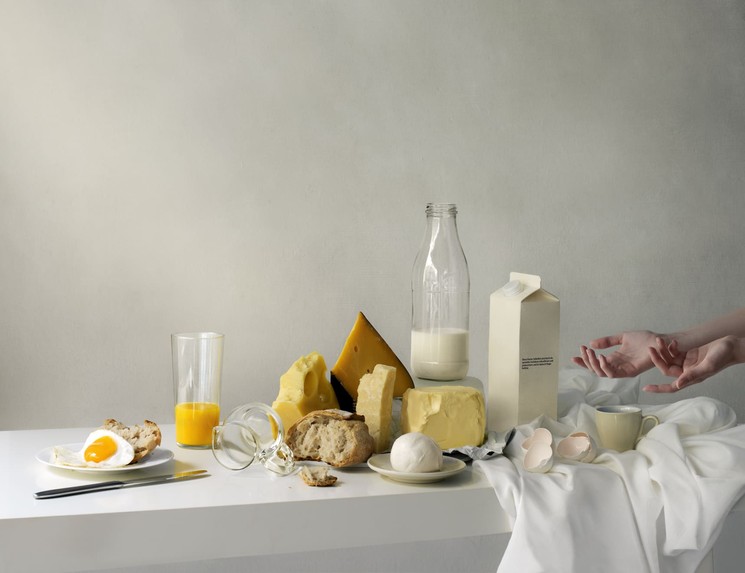
Repast is an allegory of life cycles. Cyclicity perfectly characterizes humanity and our perception of time. Morning (childhood) signifies acquisition and accumulation. At the beginning of life, we receive a certain foundation and potency from both our family and the society in which we live. We learn to recognize and feel the beauty around us—we use all of this for the rest of our lives. Even if "breakfast" is sparse in physical reality, it is often filled to the brim with intangible treasures such as love, imagination, discoveries, strong impressions, and initial disappointments. At "breakfast," the abundance of dairy products is symbolic. Milk is associated with purity and virginity. Memories of breast milk are still fresh. The abundance you see is an exaggeration. The yellow of orange juice symbolizes concentrated emotions, the taste of life, sincere joy, and the energy of children. A lemon or an orange signifies the unquenchable thirst for action, knowledge, and discovery. Day (youth, adulthood) – creation, destruction, giving, and taking. The flesh (fruit) and the color red are symbols of life and sacrifice. Youth is a time of giving—some build, others destroy. "A time to cast stones and gather stones"—there is a balance within it. We all make sacrifices and give our all at this point in our lives, more or less. Evening (old age, completion) – contemplation, silence. A meditative part. Scarcity at dinner does not mean scarcity of life or poverty. The table is set for one person. We come to the end of our lives alone, yet we merge face to face with the Divine in this world. It is a time of transition, when all matter fades and loses all meaning. I believe our spirit reaches its peak here, and we either accept or reject this transition completely. The depicted collection of elements is simple: the fish is the symbol of Christ, the potato (the second bread) represents the body losing its spirit (steam), and black tea is the drink of the gods and sages, not simply for quenching thirst, but for contemplation. The position of the hands in the triptych refers to Leonardo da Vinci's "The Last Supper," in which the master emphasized the hands. Here, they recede into the background, inviting the viewer to enter this or that phase of life—past or future.