












Mare, 2022
Photography : pigment ink, digital, HD print · 40 x 60 x 0.1 cm 15.7 x 23.6 x 0 inch
$583
583 $US
Shipping & delivery
Shipped from: France
Delivery to: United States , $ 99
Estimated delivery: One to two weeks
Free returns within 14 days, full refund
Authenticity guaranteed
Sold with certificate of Authenticity from the gallery
Invoice from the gallery Learn more
Secure payment • Card, Amex, PayPal...
We accept several payment methods:
Paypal
American Express
Visa
Mastercard
Apple Pay
Google Pay
- Credit cards (Visa, MasterCard)
- American Express
- PayPal
- Bank transfer
- Gift card
- Apple Pay / Google Pay
All payments are secured with 3D Secure validation to protect your confidential information.
Verified Reviews : 9.6/10
Similar works






About the artwork
Type
Photography : numbered and limited to 10 copies
1 copy available
Condition
Artwork sold in perfect condition, not framed
Authenticity
Sold with certificate of Authenticity from the gallery
Invoice from the gallery
Signature
Signed artwork
Technique & Support
Dimensions ( cm • inch )
40 x 60 x 0.1 cm 15.7 x 23.6 x 0 inch Height x Width x Depth
Sold by
Art gallery
Credentials
Vetted seller since 2016 • Top Seller
Discount
This seller offers discount when you purchase multiple artworks.
Description
Technique: Digital printing
Support: Hahnemühle Fine Art Baryta 325 g, glossy
Artwork No. 9/10
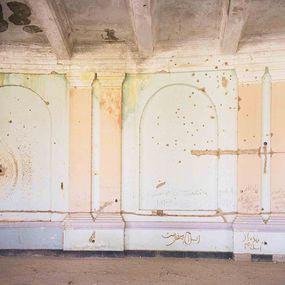
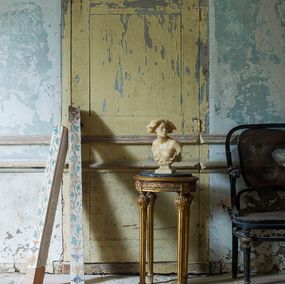
Photo description: This photograph is from the "Primavera" series. It was taken in 2022 in the entrance hall of an Italian villa adorned with magnificent frescoes that invite both reverie and travel.
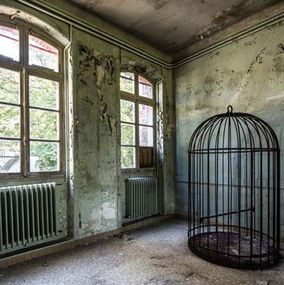
Series Description: This series presents abandoned villas that once belonged to wealthy Italian families. Wide shots highlight their monumental and ornate architecture, while tighter close-ups emphasize the inventiveness and profusion of their decor, featuring bas-reliefs, murals, moldings, and sculptures. Instead of a nostalgic look at a bygone era and its splendor, this series offers a positive vision that transcends the initially morbid feeling inspired by these ruins destined for slow decay. For a whole host of organic life, constantly evolving, thrives within them, thanks to the passage of time and the changing seasons, and the effects of light, sun, and weather. Is not spring the season of rebirth, and after the long winter slumber, does not nature restart its perpetual cycle of life?

Presentation
Sébastien Wasseler is a French photographer born in Besançon in 1980, specializing in architectural photography. Since the 2010s, ruins have become his main subject of study; he currently resides in Strasbourg.
His work on industrial landscapes was notably recognized in the 2022 edition of the Archifoto competition organized by the European House of Architecture Upper Rhine and the Strasbourg Chamber.
ARTISTIC CAREER PATH AND APPROACH
A self-taught training
Growing up between Burgundy and Franche-Comté, two regions hit by deindustrialization, abandoned places became familiar landscapes and childhood playgrounds for the photographer. The forbidden and mysterious surrounding these buildings compelled him to cross their thresholds from a very young age.
In the late 1990s, Sébastien Wasseler trained in film photography while beginning university studies in history and geography. Influenced by humanist photography, street and landscape photography were his initial sources of inspiration. In the 2010s, his growing interest in architecture led him to explore marginalized places, those that, having lost their original function, are no longer noticed by society, or are even neglected and forgotten. Equipped with his digital SLR camera, he began to explore the abandoned sites in his immediate surroundings. A visit to the monumental Rhodiaceta textile factory in Besançon marked the starting point of his photographic journey dedicated to ruins.
The remains
Places once inhabited and then abandoned by humankind are rich in interest. Material products of an era and a civilization, they bear witness to past human genius and vanished glory. Their disuse and absence of human occupation do not, however, make them gloomy, frozen, and inanimate spaces. Subject to the passage of time, they are, on the contrary, living organisms in perpetual motion. Peeling paint, moldy wallpaper, a wall riddled with cracks, a collapsing roof, or a facade overgrown with vegetation are all traces of human presence as well as symptoms of a rupture that means what once was is no more. The discovery of this state of decay leaves no viewer indifferent. It spontaneously evokes a wide range of emotions and places the viewer in the position of witness to a bygone past that raises questions and carries meaning. Thus, these vestiges act as a mirror to the fragility of our existence and the ephemeral nature of our societies and utopias; a kind of modern, architectural vanitas. The energy, technological, economic, social, and cultural transformations of our societies are all underlying themes. The vestiges, in this way, question both the link our societies forge with the past and the relationship they maintain with the future.
Sébastien Wasseller's images seek to capture the human imprint and the passage of time on buildings before their restoration or their slow, outright disappearance. His predilection for wide shots highlights the scale of the architecture while simultaneously unsettling the viewer, who is drawn into the perspectives, whereas tighter shots focus on architectural details. The notion of abandonment is sometimes subtle, revealed by a minute clue, and sometimes more obvious. The series is thus punctuated by the monumentality of the buildings and by the details of their slow decay, which disorient and challenge the viewer.
The series
Over the course of about fifteen years, Sébastien Wasseler has visited and photographed several hundred buildings in Europe and the United States, which currently form several series:
The Primavera series presents abandoned villas that once belonged to wealthy Italian families. Wide shots highlight their monumental and ornate architecture, while tighter close-ups emphasize the inventiveness and profusion of their decoration, including bas-reliefs, murals, moldings, and sculptures. Instead of a nostalgic look at a bygone era and its splendor, this series offers a positive vision that transcends the initially morbid feeling inspired by these vestiges destined for slow disappearance. For a whole host of organic life, constantly evolving, thrives within them, thanks to the passage of time and the seasons, and the effects of light, sun, and weather. Is not spring the season of rebirth, and after the long winter slumber, does not nature restart its perpetual cycle of life?
- In the Metropolis series, Sébastien Wasseller extracts commonplaces from their original function to create a sense of disorientation in the viewer and plunge them into the confines of a dreamlike, futuristic world. By blurring the lines between reality and the supernatural, present and future, the artist questions our relationship to space and time. In an era where technological innovations allow yesterday's science fiction to permeate our daily lives, what points of reference can we cling to in a world that moves at breakneck speed and where it seems so easy to lose our footing?
Discover similar artists

Reviews from our customers
All our reviews are extracted from Verified Reviews
You may also like

Stefan Georgiev
Painting . 100 x 100 x 2 cm Painting . 39.4 x 39.4 x 0.8 inch
$2,626
Josette Dubost
Painting . 100 x 70 x 4 cm Painting . 39.4 x 27.6 x 1.6 inch
$934
Recommended by Artsper

Ekaterine Ilashvili
Painting . 25 x 35 x 2 cm Painting . 9.8 x 13.8 x 0.8 inch
$1,319



Sébastien Wasseler
Photography . 75 x 50 x 0.1 cm Photography . 29.5 x 19.7 x 0 inch
$817
Jacques Ayel
Painting . 60 x 80 x 2 cm Painting . 23.6 x 31.5 x 0.8 inch
$1,429

Jacques Robert
Painting . 80 x 120 x 2 cm Painting . 31.5 x 47.2 x 0.8 inch
$6,885

Isabelle Fournet
Painting . 81 x 100 x 2 cm Painting . 31.9 x 39.4 x 0.8 inch
$2,159


Philippe Vercellotti
Painting . 60 x 73 x 1 cm Painting . 23.6 x 28.7 x 0.4 inch
$6,885
Francesc Genovés
Fine Art Drawings . 65 x 50 x 0.1 cm Fine Art Drawings . 25.6 x 19.7 x 0 inch
$648
Tetiana Ocheredko
Fine Art Drawings . 35 x 50 x 0.1 cm Fine Art Drawings . 13.8 x 19.7 x 0 inch
$350
