












Buste de Van Gogh, chemise ouverte, 1957
Sculpture : bronze · 45 x 48 x 15 cm 17.7 x 18.9 x 5.9 inch
Sold
Authenticity guaranteed
Sold with certificate of Authenticity from the gallery
Invoice from the gallery Learn more
Secure payment • Card, Amex, PayPal...
We accept several payment methods:
Paypal
American Express
Visa
Mastercard
Apple Pay
Google Pay
- Credit cards (Visa, MasterCard)
- American Express
- PayPal
- Bank transfer
- Gift card
- Apple Pay / Google Pay
All payments are secured with 3D Secure validation to protect your confidential information.
Verified Reviews : 9.6/10
Similar works




About the artwork
Type
Sculpture : numbered and limited to 5 copies
Condition
Artwork sold in perfect condition
Authenticity
Sold with certificate of Authenticity from the gallery
Invoice from the gallery
Signature
Engraved signature
Technique & Support
bronze , without pedestal
Dimensions ( cm • inch )
45 x 48 x 15 cm 17.7 x 18.9 x 5.9 inch Height x Width x Depth
Sold by
Art gallery
Credentials
Vetted seller since 2016 • Top Seller
Discount
This seller offers discount when you purchase multiple artworks.
Description
Ossip Zadkine
Bust of Van Gogh, open shirt (second version), 1957
Bronze with a black-brown patina
45 × 48 cm
Edition 1/5
Signed, dated and numbered on the reverse: “O ZADKINE 57 / 1/5"
Foundry mark: “Susse Fondeur Paris"
Created in 1957, Buste de Van Gogh, chemise ouverte belongs to the extensive group of works that Ossip Zadkine devoted to Vincent van Gogh between 1955 and 1965. Rather than producing a conventional commemorative portrait, Zadkine sought to translate Van Gogh's psychological intensity into sculptural form. The painter's identity is conveyed through the posture of the body, the construction of the face and the energetic modelling of the bronze.
The bust presents Van Gogh frontally, his head rising from an open shirt whose spreading folds give the composition an unusually broad base. The exposed chest introduces a sense of physical vulnerability, while the sharp contours of the garment project outwards with an almost centrifugal force. Zadkine treats clothing as an active extension of the body. Its broken planes direct attention towards the neck and face, where the sculpture's emotional tension is concentrated.
Van Gogh's features are recognisable, yet they have been subjected to a process of formal compression. The elongated head, prominent cheekbones, deep-set eyes and emphatically constructed beard create a face that appears at once human and architectural. Zadkine does not imitate the painter's physical appearance with documentary precision. He reorganises it through angular surfaces, incisions and projecting volumes, allowing light to fragment across the face. As the viewer changes position, the expression shifts between concentration, anxiety and withdrawal.
The sculpture retains the influence of Cubism, which had shaped Zadkine's work since his arrival in Paris before the First World War. Here, however, geometric fragmentation serves an expressive purpose. The planes of the face do not dissolve the sitter's identity; they intensify it. Each ridge and hollow contributes to the impression of a personality under pressure. The contrast between the dark patina and the highlights caught by the bronze reinforces this effect, making the features appear to emerge gradually from shadow.
The open shirt is central to the work's interpretation. It removes the social formality traditionally associated with portrait busts and presents Van Gogh as an exposed, restless figure. The absence of arms and the abrupt termination of the torso heighten the concentration on the inner life of the subject. The body has been reduced to the elements required to support the head, yet the expanding collar gives the bust a powerful spatial presence. Its irregular silhouette resists the stability and self-possession commonly associated with commemorative sculpture.
Zadkine's encounter with Van Gogh was grounded in a broader reflection on the position of the artist in society. Both artists had experienced displacement and periods of isolation, although their lives and careers differed substantially. Zadkine approached Van Gogh as a historical figure whose work had transformed personal perception into a new visual language. His sculpture addresses this artistic intensity without turning suffering into anecdote. The face bears the signs of inward conflict, but its vertical structure and concentrated gaze also suggest endurance.
This bust formed part of a sustained investigation that eventually produced several monuments to Van Gogh, including the standing figure installed at Auvers-sur-Oise. The Musée Zadkine notes that the subject occupied the sculptor for nearly a decade, from the first bust to the final monumental versions. Within this development, the present second version holds a significant position: it establishes the essential vocabulary of the later works through the frontal stance, angular modelling and fusion of physical likeness with psychological interpretation.
Cast by Susse Fondeur Paris in an edition of five, the present bronze is numbered 1/5. The black-brown patina gives unity to a surface built from discontinuities, while preserving the traces of Zadkine's modelling. These variations prevent the bronze from appearing inert. Light moves across it as if across a carved landscape, revealing the sculpture progressively rather than all at once.
In Buste de Van Gogh, chemise ouverte, portraiture becomes an inquiry into artistic presence. Zadkine represents Van Gogh through a body shaped by tension and a face constructed from concentrated planes. The resulting figure carries the memory of the painter while remaining fully embedded in Zadkine's own sculptural language. It is a portrait conceived less as a record of appearance than as a material interpretation of creative intensity. The work's technical details are recorded on the PM GALLERY Artsy listing.

Presentation
Ossip Zadkine (July 4, 1890 – November 25, 1967) was a Russian-born artist who lived in France. He is primarily known as a sculptor, but also produced paintings and lithographs.
He is considered to be one of the great masters of cubist sculpture. After attending art school in London, Zadkine settled in Paris in 1910. He studied at the Ecole des Beaux-Arts for six months. In 1911 he lived and worked in La Ruche. While in Paris he joined the Cubist movement, working in a Cubist idiom from 1914 to 1925. He later developed his own style, one that was strongly influenced by African and Greek art.
He is considered to be one of the great masters of cubist sculpture. After attending art school in London, Zadkine settled in Paris in 1910. He studied at the Ecole des Beaux-Arts for six months. In 1911 he lived and worked in La Ruche. While in Paris he joined the Cubist movement, working in a Cubist idiom from 1914 to 1925. He later developed his own style, one that was strongly influenced by African and Greek art.
Discover similar artists

Reviews from our customers
All our reviews are extracted from Verified Reviews
You may also like

Christophe Charbonnel
Sculpture . 29 x 13 x 11 cm Sculpture . 11.4 x 5.1 x 4.3 inch
€3,500
Recommended by Artsper
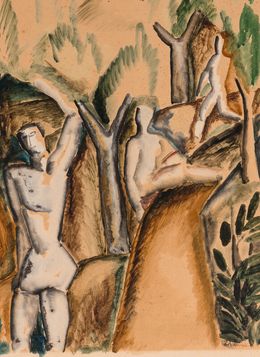
Ossip Zadkine
Fine Art Drawings . 62 x 45 x 1 cm Fine Art Drawings . 24.4 x 17.7 x 0.4 inch
€30,000
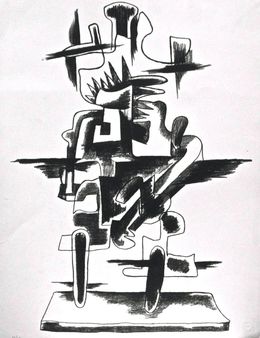


Katarina Kudelova
Sculpture . 20 x 15 x 15 cm Sculpture . 7.9 x 5.9 x 5.9 inch
€1,500
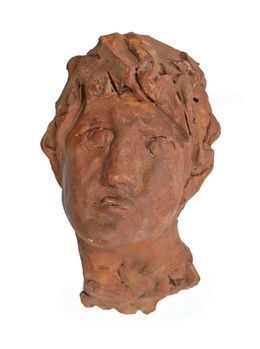

Pier
Sculpture . 59 x 14 x 4 cm Sculpture . 23.2 x 5.5 x 1.6 inch
€600
Emmanuel Chikumbirike
Sculpture . 55 x 25 x 15 cm Sculpture . 21.7 x 9.8 x 5.9 inch
€2,900 €2,320
Ossip Zadkine
Fine Art Drawings . 62 x 45 x 0.1 cm Fine Art Drawings . 24.4 x 17.7 x 0 inch
€12,000
Christophe Charbonnel
Sculpture . 87 x 42 x 47 cm Sculpture . 34.3 x 16.5 x 18.5 inch
€45,000
Emmanuel Chikumbirike
Sculpture . 59 x 25 x 15 cm Sculpture . 23.2 x 9.8 x 5.9 inch
€3,200 €2,720
Ossip Zadkine
Fine Art Drawings . 19 x 19 x 1 cm Fine Art Drawings . 7.5 x 7.5 x 0.4 inch
€10,000
Ossip Zadkine
Print . 69 x 53 x 0.2 cm Print . 27.2 x 20.9 x 0.1 inch
€350

César Baldaccini
Sculpture . 53 x 23 x 20 cm Sculpture . 20.9 x 9.1 x 7.9 inch
€32,000

Ossip Zadkine
Print . 53 x 69 x 0.2 cm Print . 20.9 x 27.2 x 0.1 inch
€350

Ossip Zadkine
Print . 53 x 69 x 0.2 cm Print . 20.9 x 27.2 x 0.1 inch
€350

Pier
Sculpture . 59 x 15 x 54 cm Sculpture . 23.2 x 5.9 x 21.3 inch
€600

Ossip Zadkine
Print . 69 x 53 x 0.2 cm Print . 27.2 x 20.9 x 0.1 inch
€350
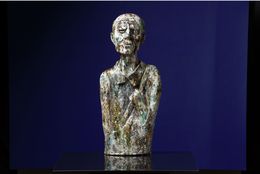
Victor Prodanchuk
Sculpture . 62 x 28 x 40 cm Sculpture . 24.4 x 11 x 15.7 inch
€5,300
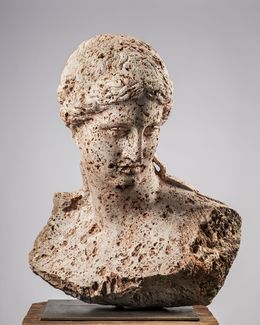
Massimiliano Pelletti
Sculpture . 82 x 84 x 47 cm Sculpture . 32.3 x 33.1 x 18.5 inch
€70,000
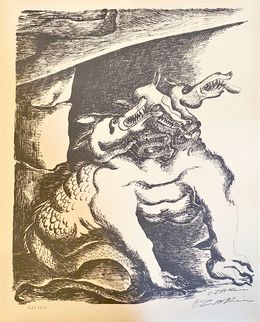
Ossip Zadkine
Print . 69 x 53 x 0.2 cm Print . 27.2 x 20.9 x 0.1 inch
€350


Ossip Zadkine
Print . 45.5 x 33.5 x 0.5 cm Print . 17.9 x 13.2 x 0.2 inch
€2,000