





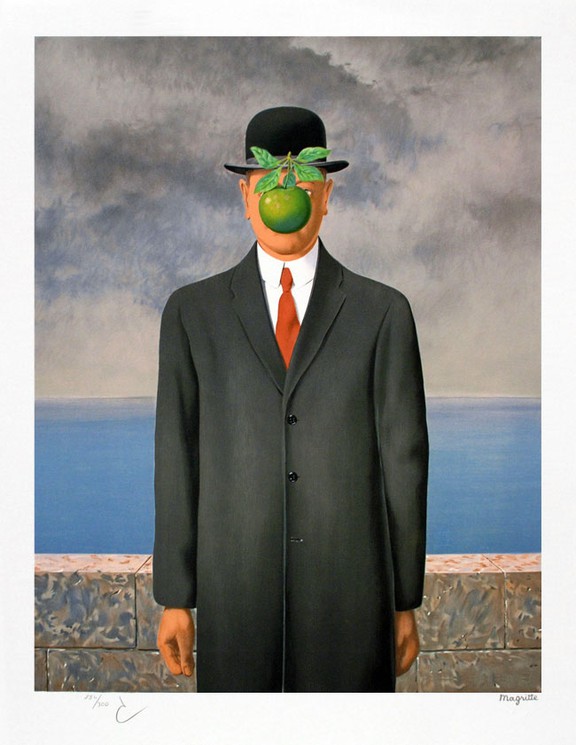


L'Alambic à Villerville, 1935
Fine Art Drawings : Watercolour · 51 x 66 x 0.5 cm 20.1 x 26 x 0.2 inch · Ready to hang
€80,000
80 000 €
Delivered in time for Christmas
Shipping & delivery
Shipped from: France
Delivery to: Germany , € 173
Estimated delivery: One to two weeks
Free returns within 14 days, full refund
Authenticity guaranteed
Sold with certificate of Authenticity from the gallery
Invoice from the gallery Learn more
Secure payment • Card, Amex, PayPal...
We accept several payment methods:
Paypal
American Express
Visa
Mastercard
Apple Pay
Google Pay
- Credit cards (Visa, MasterCard)
- American Express
- PayPal
- Bank transfer
- Gift card
- Apple Pay / Google Pay
All payments are secured with 3D Secure validation to protect your confidential information.
Verified Reviews : 9.6/10
Similar works


Maurice Utrillo
Fine Art Drawings . 31 x 25 x 2 cm Fine Art Drawings . 12.2 x 9.8 x 0.8 inch
€10,000


Zoran Music
Fine Art Drawings . 73 x 54 cm Fine Art Drawings . 28.7 x 21.3 inch
€70,000
Recommended by Artsper


Roberto Matta
Fine Art Drawings . 50 x 65 x 0.1 cm Fine Art Drawings . 19.7 x 25.6 x 0 inch
€9,000 €7,200


About the artwork
Type
Fine Art Drawings : Unique artwork
Condition
Artwork sold in perfect condition, framed, ready to hang
Authenticity
Sold with certificate of Authenticity from the gallery
Invoice from the gallery
Signature
Hand-signed by artist
Technique & Support
Watercolour on paper
Dimensions ( cm • inch )
51 x 66 x 0.5 cm 20.1 x 26 x 0.2 inch Height x Width x Depth
Artwork dimensions including frame
71 x 88 x 2 cm 28 x 34.6 x 0.8 inch
Sold by
Art gallery
Credentials
Vetted seller since 2016 • Top Seller
Discount
This seller offers discount when you purchase multiple artworks.
Description
Raoul Dufy
The Alan and Marion Oliner Collection
French, 1877-1953
L'Alambic à Villerville, 1935
Signed, dated and dedicated to Etienne Bignou (lc)
Watercolor on paper
20 x 26 inches
Provenance:
Etienne Bignou, Hennequeville (Calvados)
Galerie Rene Drouet, Paris
Exhibited:
Honfleur, 1954, no. 31
Tokyo, Galerie Nichido, 1967, no. 19, illus.
Tokyo, 1974, no. 36
Paris, 1975, no. 6
Literature:
Fanny Guillon-Laffaille, Raoul Dufy, catalogue raisonne des aquarelles, gouaches et pastels, vol. I, Paris, no. 594, illus. p. 216
This work is accompanied by a certificate of authenticity from Michel Bignou dated Sep. 20, 1978. In it he states that Dufy executed this work at his father's (Etienne Bignou) property, Le Manoir du Vallon, in Hennequeville, France, in 1935.

Presentation
The well-known artist, Raoul Dufy, was born in Le Havre, in 1877. A painter, draftsman, printmaker, illustrator, ceramic artist and set designer, he stands out thanks to his unique approach to colours and contours. He studied at the Le Havre Municipal School of Fine Arts with Charles L'Huillier, and then at the 'Beaux Arts de Paris' (Paris School of Fine Arts) in 1900.
The portrayal of landscapes plays a prominent role in his artwork. He first produced watercolour paintings of Normandy landscapes, followed by the beach at Sainte-Adresse, which had also inspired the Impressionists, such as Monet and Boudin, and he later portrayed the Martigues canals in Provence. The painter went on to travel extensively across Europe, and paid particular visits to Italy, where he loved to marvel at the works of Titian. As early as 1901, he displayed his artwork at the 'Salon des Artistes Français' (French Exhibition of Artists), and then at the 'Salon des Indépendants' (Exhibition of Private Artists). At the time, he was friends with Raimond Lecourt and Othon Friesz, and he would go on to work extensively with them, inspired by Henri Matisse and the Fauvism movement. He also worked closely with Artigas on ceramic art. Around this period, he started to depict cheerful family outings to the horse races.
It was in 1907 that Raoul Dufy recognised the prominence of Cézanne, and gradually moved away from Fauvism. At the 'Villa Médicis Libre' residence, where he stayed with André Lhote and Jean Marchand, he was inspired by Cubist artists such as George Braque and Pablo Picasso. Profoundly focused on patterns, he worked with Paul Poiret to design print patterns for fabric. His artwork developed over time - it adopted a softer style, and featured increasingly bright colours. In fact, whilst catching a glimpse of a little girl running along the Honfleur quay, he discovered that colour is the first thing recalled in our mind's eye. Thus, he started to use washes of paint, and would then draw on additional detail to define the subject, using a curved, elegant line. He moved towards a sense of colour consistency, and tended to prefer certain warm tones in his canvases.
The artist died in 1953, but leaves behind over two thousand paintings, including the world's largest painting: 'La Fée Électricité' (The Spirit of Electricity), 624m2 in size, displayed in the 'Musée d'Art Moderne' (Museum of Modern Art) in Paris. His work is also exhibited at the 'Musée Marmottan' (Marmottan Museum).
Discover similar artists




Reviews from our customers
All our reviews are extracted from Verified Reviews
You may also like


Franck Perrot
Painting . 30 x 24 x 0.2 cm Painting . 11.8 x 9.4 x 0.1 inch
€125
Recommended by Artsper


Raoul Dufy
Fine Art Drawings . 50.5 x 46 x 0.1 cm Fine Art Drawings . 19.9 x 18.1 x 0 inch
€2,500


Kate Wilczynski
Fine Art Drawings . 40 x 50 x 0.1 cm Fine Art Drawings . 15.7 x 19.7 x 0 inch
€600


Cyril Destrade
Fine Art Drawings . 30 x 20 cm Fine Art Drawings . 11.8 x 7.9 inch
€650

Paul Emile Colin
Fine Art Drawings . 16 x 25 x 0.1 cm Fine Art Drawings . 6.3 x 9.8 x 0 inch
€250

Marta & Slava
Fine Art Drawings . 55 x 75 cm Fine Art Drawings . 21.7 x 29.5 inch
€2,550

Paul Emile Colin
Fine Art Drawings . 16 x 25 x 0.1 cm Fine Art Drawings . 6.3 x 9.8 x 0 inch
€200


Salvador Dali
Print . 56 x 76 x 0.1 cm Print . 22 x 29.9 x 0 inch
€6,780

Raoul Dufy
Print . 46 x 64 x 0.2 cm Print . 18.1 x 25.2 x 0.1 inch
€1,800

Raoul Dufy
Painting . 81 x 65.5 x 1 cm Painting . 31.9 x 25.8 x 0.4 inch
Price upon request