Businesses, buy your work through a lease-purchase agreement
A lease-purchase agreement lets you spread the cost of the work over 13 to 48 months and reduce your corporate tax by deducting each of the monthly payments from your taxable income. Please note, the 14-day cooling-off period does not apply in the case of a lease-purchase agreement.
13 months
Monthly installments
excl. tax
Residual value
Tax Savings
Total cost
24 months
Monthly installments
excl. tax
Residual value
Tax Savings
Total cost
36 months
Monthly installments
excl. tax
Residual value
Tax Savings
Total cost
48 months
Monthly installments
excl. tax
Residual value
Tax Savings
Total cost
How does it work?
1
Choose an artwork you like and the desired duration of the lease-purchase agreement
2
Fill out your profile to be contacted by a member of our team
3
Once the contract is signed, you will be debited every month for the duration of the agreement
Shipping & delivery
Shipped from: South Korea
Delivery to: France
, € 300
Estimated delivery: Two to three weeks
Free returns within 14 days, full refund
Authenticity guaranteed
Sold with certificate of Authenticity from the gallery
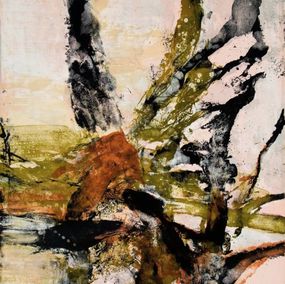
Born in South Korea in 1940 during the Japanese occupation, Kim En Joong will know the two Korean wars, communism, and hardships. His father, a calligrapher, will raise his eight children in the Taoist tradition.
In 1956, his decisive meeting with a calligraphy teacher will push him towards graphic arts; he will study at the Beaux-Arts School of Seoul, and follow French lessons given by the foreign mission. Quickly, he chooses to study occidental painting and gets interested in impressionism, cubism and abstract art.
Then Kim fulfils his dream and goes to Switzerland to study history of Art, then theology and metaphysics. His meeting with the Dominicans reinforce his vocation and on the 4th of August 1979, Kim En Joong puts on for the first time the white outfit of the Friar Preachers, his priestly ordination would take place four years later. He was assigned to the Annunciation Covent in Paris, that will become and his always, his community life and artist place.
He already had been exhibited in Seoul during his studies at the Beaux-Arts School, but in 1973 it is the first time his white and black works of art are exhibited at the Massol Gallery in Paris. Years after years he manages to combine both of his vocations encouraged by the Friar Preachers and the art critics. He is known as the "White painter" or "The painter of light".
In 1980, the future seems brighter: Kim's path crosses the boarders of the Hexagon: The Pauli Gallery in Lausanne, Mée in Seoul, Artes in Oslo, Kutter in Luxemburg, Hannan Feldmann in Bern, Guillaume Daeppen in Frankfurt welcome the man in white.
Then the artist gives up acrylic painting for oil painting, and creates large formats where the whites are reduced, and colors delicately assert themselves.