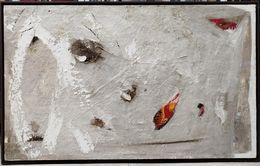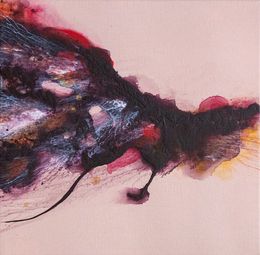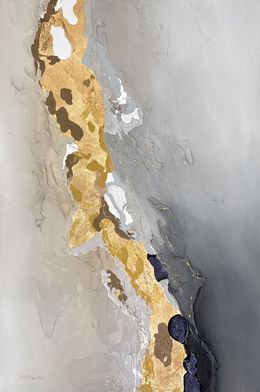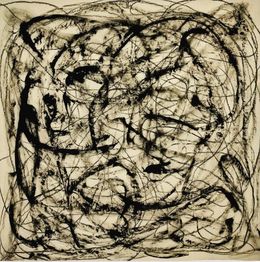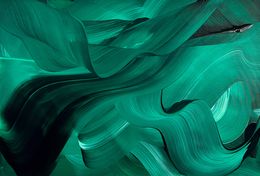
Victoria Horkan is a British contemporary artist whose richly textured paintings explore the places we retreat to — both real and imagined — when the world becomes too loud.
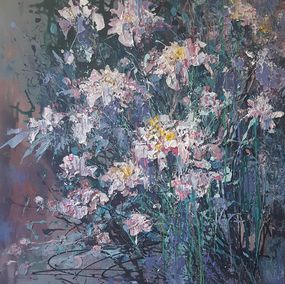
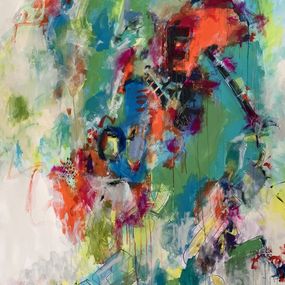
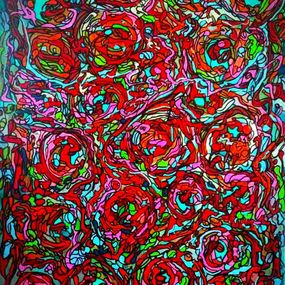
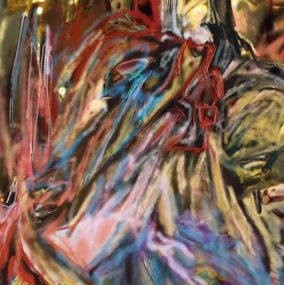
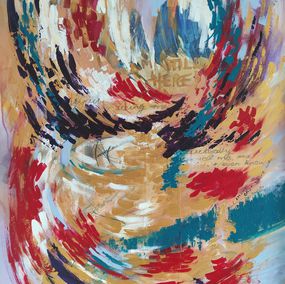
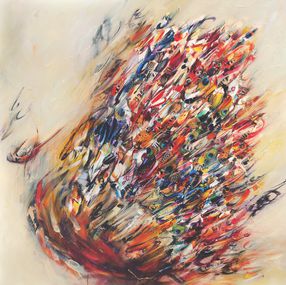
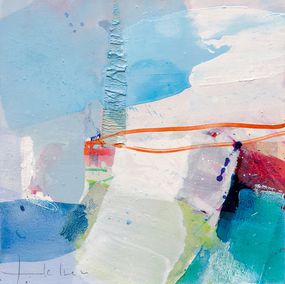
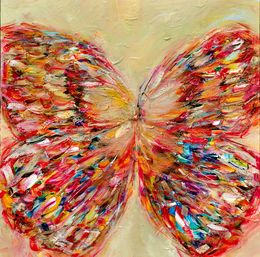
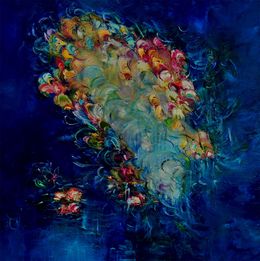
Known for her expressive use of colour, movement and sculptural surface, Horkan creates paintings that seem to exist somewhere between the natural world and memory. Forms reminiscent of water, petals, wings and underwater landscapes emerge and disappear across the canvas, inviting the viewer to find their own meaning within them.
Behind the beauty and energy of the work lies a deeply personal story.
Growing up within a turbulent home, Horkan often sought sanctuary alone in her room, distancing herself from the noise and unpredictability around her. In those solitary moments, imagination became a form of escape. She remembers becoming absorbed by colour, pattern and shape — constructing private worlds in which she could disappear for a while.
That instinct has remained with her.
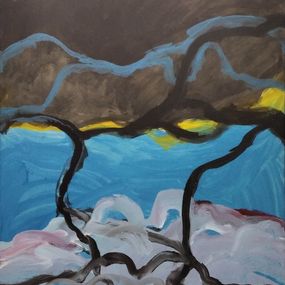
Water, in particular, has become an important recurring presence within her work. It can represent freedom and weightlessness, but also the sensation of being overwhelmed or submerged. Against it, colour becomes something altogether more powerful: energetic, optimistic and life-affirming — a way of finding the surface again.
For many years these experiences existed quietly beneath Horkan's paintings. Only more recently has she begun consciously allowing childhood memory, sanctuary and escapism to become part of the language of her work.
The result is painting that operates between two worlds: the physical and the imagined.
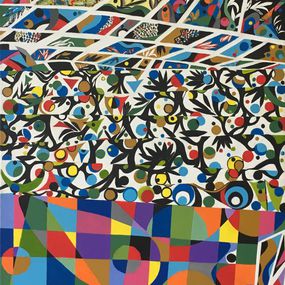
Working predominantly in oils and mixed media, Horkan builds her surfaces through layers of colour and tactile, almost sculptural forms. Her background in textile design remains visible in her instinctive understanding of pattern, repetition and materiality, while gestural marks introduce movement and unpredictability.
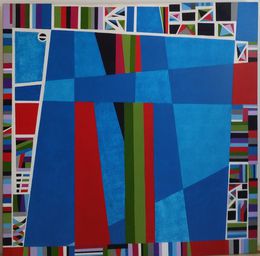
Recurring organic forms can suggest petals, coral, feathers, foliage or creatures beneath the surface, yet Horkan deliberately resists defining them. What one person sees as a flower, another may experience as an underwater landscape or a half-remembered childhood place.
This ambiguity is fundamental to the work.
Rather than telling the viewer what to see, Horkan creates a space for them to enter.
Her paintings ultimately concern something universal: our capacity to retreat into imagination, to transform difficult experiences and to create places — however fleeting — in which we feel safe, free and entirely ourselves.
Each painting becomes its own small world.
And the viewer is invited to decide where it takes them.