












David Bowie Aladdin Sane Eyes Open, 1973
Photography : archival pigment print · 101 x 101 x 0.01 cm 39.8 x 39.8 x 0 inch
< $ 5,000
Shipping & delivery
Shipped from: United Kingdom
Delivery to: United States Free delivery
Estimated delivery: One to two weeks
Free returns within 14 days, full refund
Authenticity guaranteed
Sold with certificate of Authenticity from the artist
Invoice from the gallery Learn more
Secure payment • Card, Amex, PayPal...
We accept several payment methods:
Paypal
American Express
Visa
Mastercard
Apple Pay
Google Pay
- Credit cards (Visa, MasterCard)
- American Express
- PayPal
- Bank transfer
- Gift card
- Apple Pay / Google Pay
All payments are secured with 3D Secure validation to protect your confidential information.
Verified Reviews : 9.6/10
Similar works

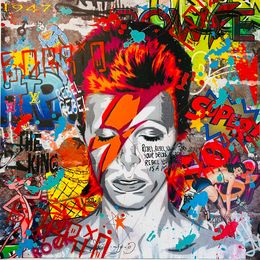
Sara Chelou
Painting . 60 x 120 x 2 cm Painting . 23.6 x 47.2 x 0.8 inch
$1,109
Recommended by Artsper





About the artwork
Type
Photography : numbered and limited to 50 copies
1 copy available
Condition
Artwork sold in perfect condition, not framed
Authenticity
Sold with certificate of Authenticity from the artist
Invoice from the gallery
Signature
Not Signed
Technique & Support
Dimensions ( cm • inch )
101 x 101 x 0.01 cm 39.8 x 39.8 x 0 inch Height x Width x Depth
Sold by
Art gallery
Credentials
Vetted seller since 2018 • Top Seller
Description
Taken by Duffy during the second of Five Sessions with David Bowie –
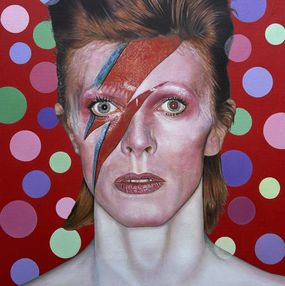
Duffy’s most famous photograph dates from the 1973 and is the iconic and revolutionary cover of David Bowie’s album – Aladdin Sane.
A shot that became the defining look of Bowie’s long career, and has been referred to as the “Mona Lisa of pop.”
The defining image of Duffy and Bowie’s creative relationship which has become synonymous with the legacy of both artists.
Tony Defries commissioned Duffy Design Concepts to create the entire Aladdin Sane album.
The brief was simple – “Can you make it expensive?”
The intention was to take Bowie to an international level.
Also to make a bill so large that the record label would have to pay attention.
A Dye-transfer image was the answer. A process which was notoriously costly, with the production taking place in Switzerland.
Duffy carved the iconic red and blue “Flash” across David’s face in lipstick.
The outline was then filled in by makeup artist Pierre Laroche.
The image was then sent to airbrush artist Philip Castle.
Duffy previously worked on the 1973 Pirelli Calendar with Castle who applied the water symbol on Bowie’s chest.
The Whole Story
The fascinating story behind this timeless session is fully documented in the Duffy Bowie Five Sessions Book told by those who were there. Including Duffy who said of the session – “It happened because there was a little bit of magic in the room that night. I’ll say it myself – it’s a great cover!”
Photo Duffy © Duffy Archive & The David Bowie ArchiveTM.
Presentation
Brian Duffy (1933 - 2010)
'I don't give a f**k what anybody thinks about me…. I never wanted to be famous. Why? For what? So the doorman at Harrods can recognise me? What I care about is what my kids think about me, and what my grandchildren think of me – the fact that they think I'm a genius is delicious.'
- Brian Duffy.
Duffy was both rival and contemporary of David Bailey and Terence Donovan. This “terrible trio" as the British press had dubbed them, were the innovators of “documentary" fashion photography, a style which revolutionised fashion imagery and furthermore the fashion industry.
The 'Trio' became far more famous than many of the models, with whom they worked, and were, for a while, even bigger than the glossy magazines that published their pictures.
Beginning his career at Vogue Magazine, Duffy made his name in fashion and celebrity photography and went on to become one of only a few photographers to have shot two Pirelli calendars.
Few celebrities of the 1960s and 1970s escaped Duffy's lens, which created memorable and sometimes iconic images of sitters including, probably most famously David Bowie, Jane Birkin, John Lennon, Blondie, Sir Michael Caine, Jean Shrimpton (The Shrimp), William Burroughs, Sidney Poitier, Terence Stamp and a naked Christine Keeler, whose scandalous affairs, famously almost brought down the British Government.
His work was dynamic and inventive, as can be seen in the memorable 1973 album cover he shot for David Bowie's Aladdin Sane, but in 1979, disillusioned with the business, he took his transparencies and negatives into his studios garden and set them alight in a ceremonial finale to his career as a photographer, having felt that he had said all he could say in the medium. Thankfully, not all the negatives were destroyed!
Although Duffy wasn't concerned with his own fame, the legacy he leaves us is unquestionable and he will no doubt continue to inspire for generations to come.
Discover similar artists



Reviews from our customers
All our reviews are extracted from Verified Reviews
You may also like
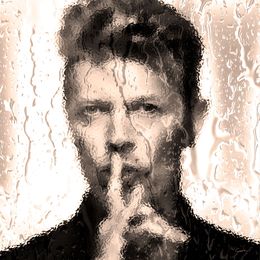

Brian Duffy
Photography . 101.6 x 101.6 x 2 cm Photography . 40 x 40 x 0.8 inch
$29,173
Recommended by Artsper

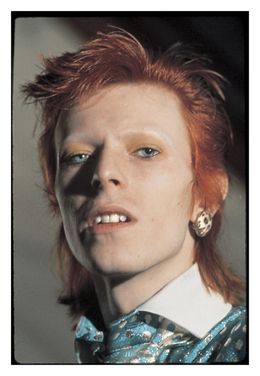
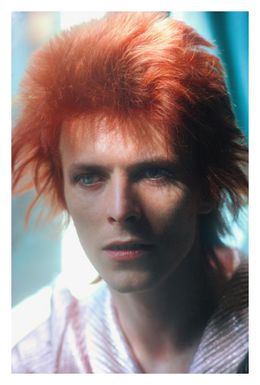
Mick Rock
Photography . 50 x 40 x 0.1 cm Photography . 19.7 x 15.7 x 0 inch
$2,871
Recommended by Artsper
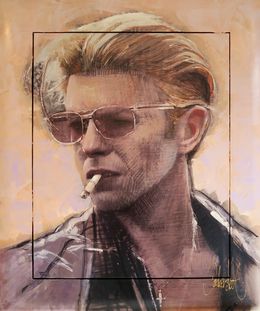
Brian Duffy
Photography . 41 x 61 x 0.01 cm Photography . 16.1 x 24 x 0 inch
$2,626
Mick Rock
Photography . 50 x 40 x 0.1 cm Photography . 19.7 x 15.7 x 0 inch
$2,871
Recommended by Artsper

Aiiroh
Print . 75 x 75 x 0.2 cm Print . 29.5 x 29.5 x 0.1 inch
$467
Recommended by Artsper

Franck Leclerc
Photography . 60 x 50 x 1 cm Photography . 23.6 x 19.7 x 0.4 inch
$805

Brian Duffy
Photography . 101 x 101 x 0.01 cm Photography . 39.8 x 39.8 x 0 inch
$12,253




Alberto Ricardo
Print . 80 x 60 x 5 cm Print . 31.5 x 23.6 x 2 inch
$268
Mick Rock
Photography . 40 x 50 x 0.1 cm Photography . 15.7 x 19.7 x 0 inch
$2,871


Jules Holland
Print . 73 x 57 x 0.2 cm Print . 28.7 x 22.4 x 0.1 inch
$344

Brian Duffy
Photography . 115 x 110 x 0.1 cm Photography . 45.3 x 43.3 x 0 inch
Price upon request