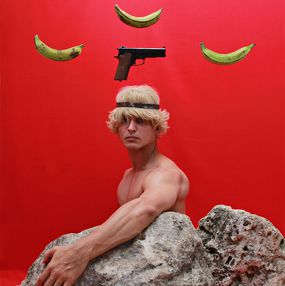
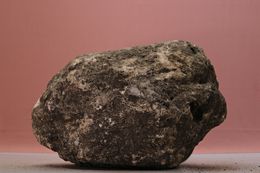
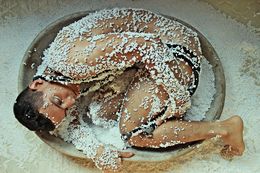
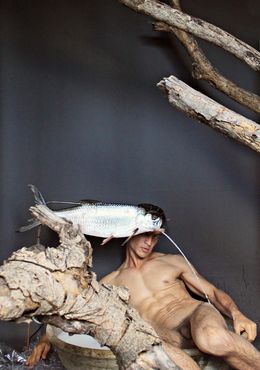
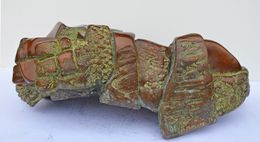
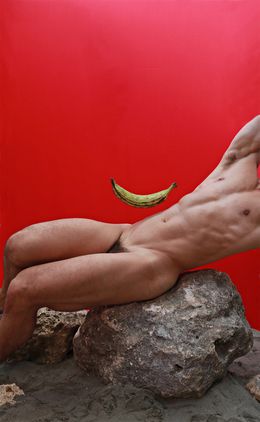
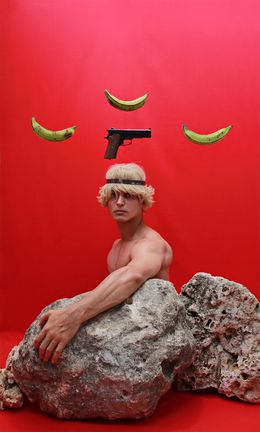
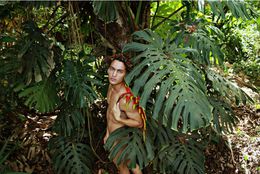
This artwork presents a striking diptych of human vulnerability and strength, juxtaposed against the raw, unyielding surface of a large stone. In both images, the stone is embraced by unclothed limbs, suggesting a fusion of human and nature in a struggle or symbiosis. The skin's delicate texture contrasts with the stone's rough exterior, highlighting themes of resilience and intimacy. The pinkish backdrop adds an unexpected warmth, further intensifying the visual tension. The positioning of the body is both protective and revealing, embodying a sense of entrapment and liberation. This paradox invites viewers to reflect on the duality of human existence—our innate fragility against the constant challenge of our environments. The work's minimalist composition magnifies its emotional depth, rendering it both visually and philosophically compelling.
Showing a body that is hidden is the aesthetic apology for the insane judgment that the artist himself has taken as an excuse for not being "pointed at" or rather as self-pointing. The stone is taken by the body that is unprotected as a metaphor for the weakness that seeks protection, and the body is taken by the stone as a consequence of an insecure state, how can a stone take a body? If this is the one that "institutionally" does it. Jose Sierra work is deeply influenced by themes of self-representation and a homoerotic gaze. Through his unique aesthetic, he creates abject staged environments that challenge traditional norms. His art often merges personal identity with broader cultural commentary, as seen in his notable works like "Anti-Personnel Grids" and "Self-Portrait." Sierra's pieces are a bold fusion of urban art and intimate self-exploration, reflecting his dynamic engagement with contemporary culture.
From La piedra sustituta I (The Substitute Stone I) Series. Archival Pigment Print Dimension: Overall size: 14.5 x 48 in. Individual Size: 14.5 x 24 in. Edition of 10 + 2AP Other sizes: 24.2 x 80 in. Edition of 10 + 2AP