





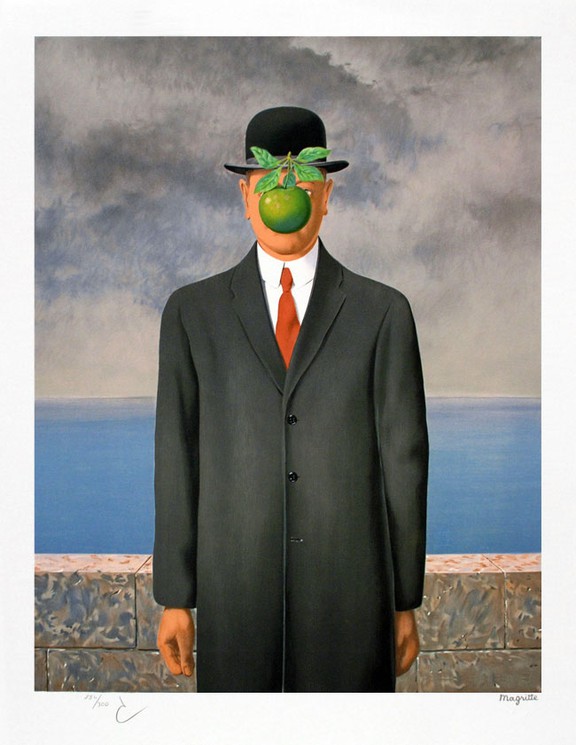


Duo, dit aussi les deux frangins, 1948
Print : lithography, etching · 57 x 37.5 cm 22.4 x 14.8 inch
Sold
Authenticity guaranteed
Invoice from the gallery Learn more
Secure payment • Card, Amex, PayPal...
We accept several payment methods:
Paypal
American Express
Visa
Mastercard
Apple Pay
Google Pay
- Credit cards (Visa, MasterCard)
- American Express
- PayPal
- Bank transfer
- Gift card
- Apple Pay / Google Pay
All payments are secured with 3D Secure validation to protect your confidential information.
Verified Reviews : 9.6/10
Similar works


About the artwork
Type
Print : numbered and limited to 50 copies
Condition
Artwork sold in perfect condition, not framed
Authenticity
Invoice from the gallery
Signature
Plate signed
Technique & Support
lithography , etching on paper
Dimensions ( cm • inch )
57 x 37.5 cm 22.4 x 14.8 inch Height x Width x Depth
Sold by
Art gallery
Credentials
Vetted seller since 2015 • Top Seller
Description
N°10/50 HC.

Presentation
Son of a Breton cabinetmaker, Alexandre François Joseph Rouault, and a Parisian fruit farmer, Marie-Louise Champdavoine, he was born in a cellar at No. 51 rue de la Villette during a bombardment of the Versaillais. It was his maternal grandfather who introduced him to art. In 1886, Georges Rouault became an apprentice with the stained glass painter Émile Hirsch and took evening classes at the École nationale supérieure des arts décoratifs in Paris. Employed by the same Hirsch from 1887 to 1890, then in 1891, he was admitted to the École des beaux-arts in Paris in the studio of Jules-Élie Delaunay and, on the latter's death, entered the studio. by Gustave Moreau where he rubbed shoulders with Matisse, Marquet, Manguin, Huyot and Léon Lehmann to whom he will remain very close. He participated twice in the Prix de Rome competition but without success, the first time in 1893 with Samson turning the grindstone, for which he obtained the Chenavard Prize in 1894 and, in 1895, with Jesus among the Holy Women, for which he obtains the Fortin d'Ivry prize.
In 1898 he was appointed, according to the master's wishes, curator of the Gustave Moreau museum in Paris, from its inauguration that year. It is a difficult period for him, his family leaves for Algeria, and his health obliges him to make two stays in Haute-Savoie. In 1901, he attended the Ligugé abbey and met Joris-Karl Huysmans there.
With the painters Henri Matisse and Albert Marquet, Georges Rouault founded the Salon d'Automne in 1903. Georges Rouault addresses themes linked to a critical observation of society: judges, lawyers, courtrooms, the poor, emigrants, fugitives, are as much the reflection of a revolt in the face of human misery as a pretext for research into shapes and colors1 It has an influence on the work of the Italian sculptor caricaturist César Giris.
In 1904, he met Léon Bloy, whose work touched him deeply and in a lasting way. A few years later, he saw the Catholic philosopher Jacques Maritain in Versailles. It was between 1906 and 1907 that he began to paint ceramics. On January 27, 1908, he married Marthe Le Sidaner (1873-1973, sister of the painter Henri Le Sidaner), who gave him four children.
Deeply Catholic, he recognized in this suffering humanity the face of Christ which he sought in numerous paintings evoking his Passion, such as the painting Christ scorned by the soldiers (1932). This recurring theme "loses its moralizing accent to take on a new dramatic tension, in a lyricism made of ascetic abandonment which sees in the splendor of the image a sort of celestial reflection ... 2"
As early as 1910, collectors and dealers recognized the great strength of his work, notably Maurice Girardin and Ambroise Vollard who, in 1917, bought all the canvases in his workshop from him, i.e. 770 works. It was in 1917 that he started engraving, and 4 years later, in 1921, Michel Puy made his first biography.
In 1938, the Museum of Modern Art in New York made an exhibition of his engraved work. It was the following year in September that he moved to Beaumont-sur-Sarthe, which he left in June 1940, to return there from 1943 to 1946.
In 1946, after Vollard's death, he found himself on trial with the heirs. The Tribunal recognizes him as the property of his works.
Georges Rouault burned 315 of his paintings in 1948 in the presence of a bailiff. He stopped painting in 1957. When he died in 1958, the French government decided to give him a national funeral at the Saint-Germain-des-Prés church in Paris.
His prestige as a colourist and engraver has continued to expand, especially in Japan and Korea. He is considered one of the most important religious painters of the twentieth century3.
His family donated a collection of his works to the state in 1963.
His last workshop, installed in an apartment near the Gare de Lyon, at 2 rue Émile-Gilbert in Paris 12th arrondissement, is kept by his family in the state in which he left it and serves as the head office of the Georges Foundation. -Rouault. Volume, orientation (south) and layout make it an unusual workshop.
Discover similar artists




Reviews from our customers
All our reviews are extracted from Verified Reviews
You may also like

Pablo Picasso
Print . 53 x 43 x 0.1 cm Print . 20.9 x 16.9 x 0 inch
€9,859

Amedeo Modigliani
Print . 48 x 35 cm Print . 18.9 x 13.8 inch
€900


Georges Dessouslavy
Painting . 41 x 33 x 2 cm Painting . 16.1 x 13 x 0.8 inch
€1,127


Zakhar Shevchuk
Painting . 46 x 40 x 2 cm Painting . 18.1 x 15.7 x 0.8 inch
€1,050

Henrik Diamant
Painting . 100 x 80 x 6 cm Painting . 39.4 x 31.5 x 2.4 inch
€2,000

Jean Lasnier
Fine Art Drawings . 30 x 24 x 0.4 cm Fine Art Drawings . 11.8 x 9.4 x 0.2 inch
€400


Sabine Louriac
Painting . 48 x 36 x 0.25 cm Painting . 18.9 x 14.2 x 0.1 inch
€460


Georges Rouault
Print . 51 x 33 x 0.1 cm Print . 20.1 x 13 x 0 inch
€2,680


