





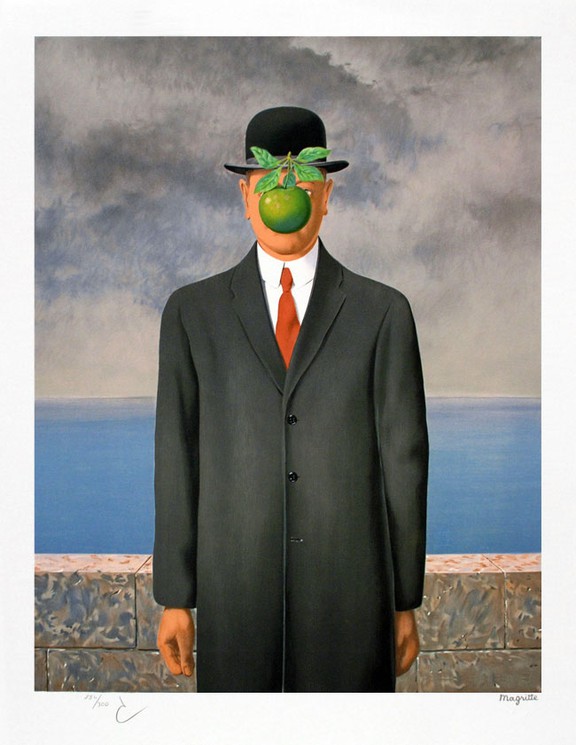


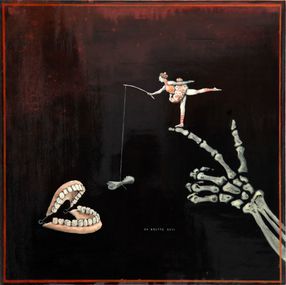
Untitled, CR1095 (after painting Number 22, CR344), 1951
Print : Screen Print, etching · 73.5 x 58.3 x 0.1 cm 28.9 x 23 x 0 inch
$54,845
54 845 $US
One of the last works available by this artist
Shipping & delivery
Shipped from: Italy
Delivery to: United States , $ 113
Estimated delivery: Two to three weeks
Free returns within 14 days, full refund
Authenticity guaranteed
Sold with certificate of Authenticity from the gallery
Invoice from the gallery Learn more
Secure payment • Card, Amex, PayPal...
We accept several payment methods:
Paypal
American Express
Visa
Mastercard
Apple Pay
Google Pay
- Credit cards (Visa, MasterCard)
- American Express
- PayPal
- Bank transfer
- Gift card
- Apple Pay / Google Pay
All payments are secured with 3D Secure validation to protect your confidential information.
Verified Reviews : 9.6/10
Similar works


About the artwork
Type
Print : numbered and limited to 50 copies
1 copy available
Condition
Artwork sold in perfect condition, not framed
Authenticity
Sold with certificate of Authenticity from the gallery
Invoice from the gallery
Signature
Stamped
Technique & Support
Screen Print , etching on paper
Dimensions ( cm • inch )
73.5 x 58.3 x 0.1 cm 28.9 x 23 x 0 inch Height x Width x Depth
Sold by
Art gallery
Credentials
Vetted seller since 2019 • Top Seller
Description
Jackson Pollock (American, 1912-1956)
Untitled, CR1095 (after painting Number 22, CR344), 1951, printed 1964.
Screenprint, on Strathmore wove paper, numbered 49/50 in pencil lower left, and with the Estate of Jackson Pollock 1964 blindstamp lower left.
From the posthumous printing of 50 authorized by his widow, Lee Krasner, in 1964 (there was also a lifetime edition of 25).
Published by Bernard Steffen.
The artwork is one of the most interesting and emblematic paintings of the artist. In the 1940s, Pollock invented his signature "drip painting". After 1951, Pollock's artworks became darker in color; they belong to a collection painted in black on white or unprimed canvases. These works have been referred to as his "Black Pourings"; he exhibited them at the Betty Parsons Gallery in NYC, but none of them was sold. Today these artworks are considered the most interesting exemplars of Pollock's gestural paintings. The abstract compositions in Pollock’s serigraphs (he made only 11 graphic works) demonstrate his capacity of absorbing parts of art history and reinventing them through a language that allows him to overtake the European figurative tradition. Yet, in moving forward Pollock never leaves anything behind, as confirmed by his colleague and companion Lee Krasner, to whom Pollock confided that he could not stop himself during the creative process, even when some forms began appearing in the painting, because his purpose was in fact to delete any figure.
Paul Jackson Pollock (Cody, 1912 – Long Island, 1956) has been one of the most important artists of the XX century. He was the leading force behind the “School of New York” and Abstract Expressionism. During his life, thanks to the professional relationship with Peggy Guggenheim, Pollock gained considerable fame and notoriety. His greatness lies in the development of a radical totally abstract style in the history of contemporary art. He absolutely redefined the painting and drawing techniques, and found new means to describe space. Pollock grew up in California, where he experienced the native American culture. In 1929, he studied at the Students’ League in New York City and worked in the Regionalist style. In the first years of his career, he was influenced also by Mexican muralist painters such as Diego Rivera and José Clemente Orozco, as well as by some Surrealist artworks realized by Joan Miró and Max Ernst. During an important art exhibition held in 1939 at the Museum of Modern Art in New York, he saw for the first time artworks by Pablo Picasso, including the famous “Guernica” of 1937. Through this exhibition, he understood the importance and the expressive power of European Modernism. He began realizing compositions with semi-abstract and totemic figures, with ritualistic and obsessive reworking. After his premature death in 1957 in Long Island, Jackson Pollock became one of the most important artists in the world.
“Painting is self-discovery. Every good artist paints what he is." - Jackson Pollock.
Reference:
"J. Pollock, Black and White", Marlborough Gallery, New York, March 1969.

Presentation
Jackson Pollock is one of the most iconic figures of twentieth-century American art. His techniques influenced an entire school of artists who were then part of the abstract expressionism movement.
Born in 1912 in Wyoming, Pollock grew up in California and Arizona. He was influenced by Navajo ritual dances and sandpainting, which he had observed in Indian reservations in Arizona. Pollock's older brother, Charles, a student at the Otis Art Institute in Los Angeles, gave him a taste for the arts! So much so that Pollock enrolled at Manual Arts High School in 1927. Three years later, the brothers moved to New York together, where Charles introduced Pollock to the work of Mexican muralists such as José Clemente Orozco, David Siqueiros, and Diego Rivera. Pollock also discovered cubism and surrealism. He admired the great European painters such as Pablo Picasso, Joan Miró, and André Masson. Pollock's European influences inspired him to explore mythological themes.
Unfortunately, Pollock's alcohol addiction forced him to seek treatment. There, he was encouraged to use drawing as a form of therapy. Drawing was a method that helped Pollock understand himself and to materialize abstract thoughts like humanity's deepest fears.
Like many surrealists, Pollock practiced automatic writing and tackled much more sizeable formats. In 1943, he met Peggy Guggenheim, who helped him exhibit his work in a gallery in New York. One imposing mural in particular seduced visitors, marking the beginning of Pollock's success...
In 1945, Pollock moved in with his wife and set up his studio in a barn, where his most prominent works were born. His monumental paintings were designed according to his unique techniques: drips, splatters, and splashes that flooded the surface of the canvas. The method was dubbed “all-over" painting. Pollock painted without his brush ever touching the canvas, which earned him the nickname “Jack the Dripper".
Art also lies in the gestures and energy of the artist painter; Pollock used it as a means of external expression and a form of cleansing. This was later called “action painting". After 1952, Pollock reintroduced figurative elements in his paintings and began using the brush again. He was very prolific during his last years of life before a fatal car accident put an end to his artistic momentum in 1956.
The abstract expressionist left behind more than 700 works of art that influenced the greatest painters and changed artistic creation forever.
Discover similar artists




Reviews from our customers
All our reviews are extracted from Verified Reviews
You may also like

Jackson Pollock
Print . 58.5 x 74 x 0.2 cm Print . 23 x 29.1 x 0.1 inch
$51,344
Recommended by Artsper


Jackson Pollock
Print . 58.5 x 74 x 0.2 cm Print . 23 x 29.1 x 0.1 inch
$44,343


Jackson Pollock
Print . 74 x 58.5 x 0.2 cm Print . 29.1 x 23 x 0.1 inch
$51,344

Ossip Zadkine
Print . 69 x 53 x 0.2 cm Print . 27.2 x 20.9 x 0.1 inch
$408

Simon Findlay
Painting . 144 x 347 x 2 cm Painting . 56.7 x 136.6 x 0.8 inch
$3,151


Zakhar Shevchuk
Fine Art Drawings . 28 x 20 x 0.1 cm Fine Art Drawings . 11 x 7.9 x 0 inch
$350


Ossip Zadkine
Print . 53 x 69 x 0.2 cm Print . 20.9 x 27.2 x 0.1 inch
$408


Alisa Gorelova
Print . 38 x 27 x 0.5 cm Print . 15 x 10.6 x 0.2 inch
$992

Maisara Baroud
Fine Art Drawings . 70 x 25 cm Fine Art Drawings . 27.6 x 9.8 inch
$2,470

