








Ship of fools, 2025
Painting : acrylic · 61 x 76.2 x 2 cm 24 x 30 x 0.8 inch · Ready to hang
$1,950
1 950 $US
Shipping & delivery
Shipped from: Canada
Delivery to: United States , $ 109
Estimated delivery: One to two weeks
Free returns within 14 days, full refund
Authenticity guaranteed
Sold with certificate of Authenticity from the gallery
Invoice from the gallery Learn more
Secure payment • Card, Amex, PayPal...
We accept several payment methods:
Paypal
American Express
Visa
Mastercard
Apple Pay
Google Pay
- Credit cards (Visa, MasterCard)
- American Express
- PayPal
- Bank transfer
- Gift card
- Apple Pay / Google Pay
All payments are secured with 3D Secure validation to protect your confidential information.
Verified Reviews : 9.6/10
Similar works


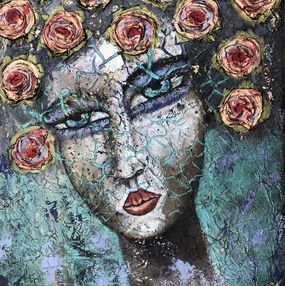
Jason Lincoln Jeffers
Painting . 76.2 x 61 x 3.8 cm Painting . 30 x 24 x 1.5 inch
$1,350
Recommended by Artsper
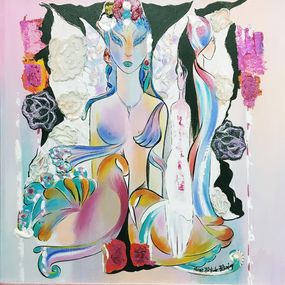
Marie-Paskale Perrin
Painting . 40 x 40 x 1 cm Painting . 15.7 x 15.7 x 0.4 inch
$1,285
Recommended by Artsper


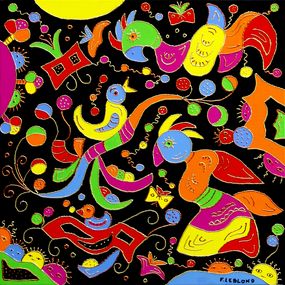
Françoise Leblond
Painting . 30 x 30 x 2.5 cm Painting . 11.8 x 11.8 x 1 inch
$1,822
Recommended by Artsper


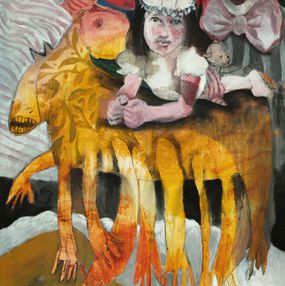
Makenol Profil
Painting . 50 x 40 x 4 cm Painting . 19.7 x 15.7 x 1.6 inch
$2,455
Recommended by Artsper




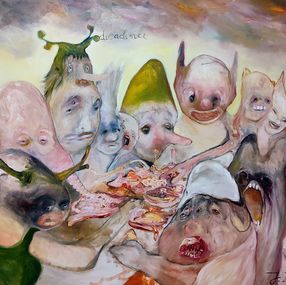


About the artwork
Type
Painting : Unique artwork
Condition
Artwork sold in perfect condition, framed, ready to hang
with stretcher frame
Authenticity
Sold with certificate of Authenticity from the gallery
Invoice from the gallery
Signature
Hand-signed by artist
Dimensions ( cm • inch )
61 x 76.2 x 2 cm 24 x 30 x 0.8 inch Height x Width x Depth
Artwork dimensions including frame
71.1 x 86.4 x 3.2 cm 28 x 34 x 1.25 inch
Sold by
Art gallery
Credentials
Vetted seller since 2020
Discount
This seller offers discount when you purchase multiple artworks.
Description
"Ship of fools" is a fascinating and densely symbolic surrealist painting.
This work clearly draws from the lineage of Bosch and Bruegel. using dreamlike distortions, fantastical hybrid forms, and theatrical figures to explore human folly, instability, and the collapse of rational order. The “ship," while nominally a vessel, is instead a fleshy, lumbering creature—part elephant, part eroded monument—barely afloat in an ambiguous, watery expanse. The painting radiates a sense of absurdity mixed with melancholy.
They are the key elements:
The 'Ship' Creature: formed like a sagging, eroded elephant. (The elephant is the symbol of the Republican Party of the US and the elephant on this painting is nothing but the flipped map of the US). Its body carries humanoid embryonic shapes—suggesting history, memories, or the burdens of past generations. The animal is half-sinking, half-walking in shallow water, conveying instability and futility. Represents civilization or society carrying its own decayed, inherited absurdities.
The Fools: Small jester-like characters with multicoloured hats. They sit perched precariously atop the creature, oblivious to its disintegration. In medieval allegory, fools are those guided by impulse, obliviousness, or corrupted wisdom. Here they appear to be the “crew," steering nothing, simply enjoying the ride.
Drifting Constructs: Strange skeletal and organic forms hover or dangle on strings, like marionettes. They reflect illusions, false beliefs, and the strings of manipulation that guide society.
The Distorted Sky creates a specific atmosphere, echoing uncertainty and psychological turbulence.
This painting reminds us that Human Folly and Collective Delusion are very captivative for masses who cannot think "out of the box" and follow the common sense.
The title “Ship of Fools" references a medieval and Renaissance allegory: a vessel populated entirely by the foolish, lacking destination, drifting aimlessly. Here, the ship is not even seaworthy - it is a suffering creature.
The embedded fetal shapes, fossils, and worn body suggest that the “ship" bears the accumulated weight of ignorance and folly passed down through time.
The jester-like characters add theatricality. Their bright faces contrast with the dark background, emphasizing the absurd, carnival-like surface of human behaviour.
The creature barely stands, with thin stilts or legs sinking into water. Society's foundation is depicted as unstable, veering toward collapse.
This "Ship of Fools" is not simply a representation of folly, but a commentary on how society—laden with inherited errors and guided by distractions—moves forward without direction. The painting merges humour with foreboding, creating a surreal tableau where absurdity is both playful and tragic.
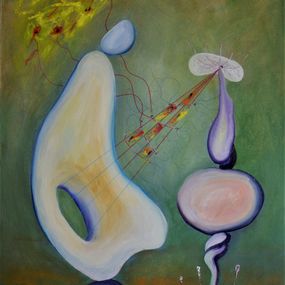
Presentation
Vladimir Kolosov is a Canadian painter born in 1962, renowned for his multidisciplinary approach and distinctive neo-surrealist style. Originally from the USSR, he emigrated to Canada in 2006 and currently resides in Maple Ridge, British Columbia. From a young age, Kolosov was immersed in visual arts and music, developing an artistic sensibility that is reflected in his works. His academic background is extensive, including studies in fine arts, music, mathematics, physics, psychology, and business management, giving him a unique perspective on his artistic practice.
His work is characterized by an exploration of inner and outer worlds, using a variety of mediums such as oil, acrylic, watercolor, and pastels . Kolosov is recognized as a skilled colorist, creating compositions where colors play a central role in expressing emotions, contradictions, and contrasts. His paintings, often imbued with symbolism and metaphors, invite the viewer to reflect deeply on themes such as memory, time, identity, and the human condition.
Notable works include "Melancholic Observations of the Echoes from the Past," "Landscape with Levitating Metaphysical Still Life and Its Shadows," and "Hidden Thoughts Are Leaking Out." These pieces illustrate his ability to merge figurative and abstract elements to create enigmatic and evocative scenes. His style is influenced by artistic movements such as surrealism, metaphysical art, and abstract expressionism.
Kolosov has exhibited his work in various countries, including Canada, the United States, France, Germany, Italy, the United Kingdom, Slovakia, and Switzerland. He has also participated in interdisciplinary projects, such as the VOYZX Exhibition of Contemporary Surrealism in Vancouver in 2019 and 2021, and the international project Colours of My Ice-Dreams in collaboration with Carpigiani Gelato University and the Gelato Museum in Italy.
In addition to his artistic practice, Kolosov is an active art critic and curator. He has published essays on contemporary surrealism in international journals such as VOYZX Art, Surrealismo International (Spain), and Agulha Revista de Cultura (Brazil). His most recent book, “Vladimir Kolosov Through the Looking Glass" (VOYZX Press, 2022), offers an in-depth retrospective of his work.
A member of the AICA/IAAC (International Association of Art Critics) and the Vancouver Queer Art Festival, Kolosov continues to influence the contemporary art scene with his introspective approach and commitment to exploring the complexities of human experience through art.
Discover similar artists




Reviews from our customers
All our reviews are extracted from Verified Reviews
You may also like

Ella Jensen
Painting . 91 x 73 x 2 cm Painting . 35.8 x 28.7 x 0.8 inch
$860


Vladimir Kolosov
Painting . 91.4 x 61 x 2 cm Painting . 36 x 24 x 0.8 inch
$2,100

Vladimir Kolosov
Fine Art Drawings . 50.8 x 40.6 x 0.6 cm Fine Art Drawings . 20 x 16 x 0.25 inch
$900

Vladimir Kolosov
Painting . 61 x 76.2 x 0.6 cm Painting . 24 x 30 x 0.25 inch
$1,990 $1,393
Teppei Ikehila
Painting . 41 x 41 x 3 cm Painting . 16.1 x 16.1 x 1.2 inch
$1,869
Recommended by Artsper


Vladimir Kolosov
Fine Art Drawings . 104.1 x 78.7 x 0 cm Fine Art Drawings . 41 x 31 x 0.01 inch
$900
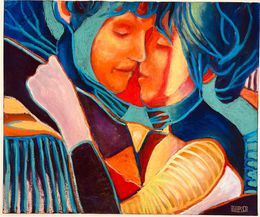
Clémence Dupuch
Painting . 50 x 60 x 2 cm Painting . 19.7 x 23.6 x 0.8 inch
$1,402
Recommended by Artsper


Vladimir Kolosov
Painting . 53.3 x 41.3 x 0.6 cm Painting . 21 x 16.25 x 0.25 inch
$990


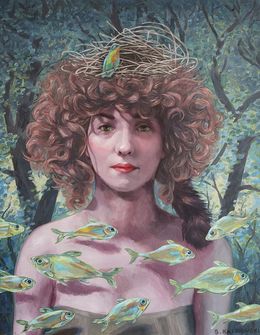
Serge Kalinowski
Painting . 81 x 65 x 5 cm Painting . 31.9 x 25.6 x 2 inch
$1,869 $1,682

Vladimir Kolosov
Painting . 61 x 91.4 x 2 cm Painting . 24 x 36 x 0.8 inch
$2,160

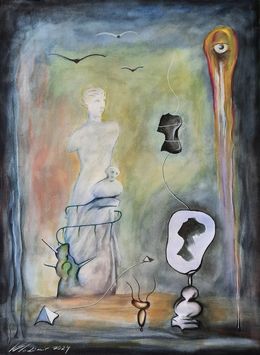
Vladimir Kolosov
Painting . 61 x 45.7 x 0.5 cm Painting . 24 x 18 x 0.2 inch
$1,260
Recommended by Artsper
Goncharenko Sergiy & Vira
Painting . 50 x 130 x 2 cm Painting . 19.7 x 51.2 x 0.8 inch
$1,402
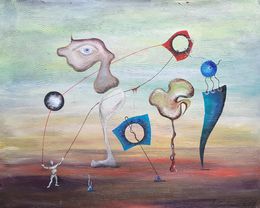
Vladimir Kolosov
Painting . 40.6 x 50.8 x 0.6 cm Painting . 16 x 20 x 0.25 inch
$930
Recommended by Artsper
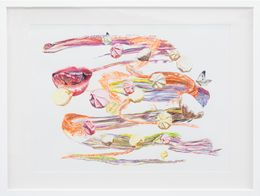
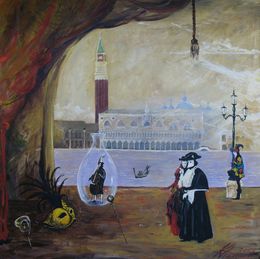

Christos Kalfas
Painting . 40 x 40 cm Painting . 15.7 x 15.7 inch
$2,102

Vladimir Kolosov
Painting . 71.1 x 55.9 x 3.8 cm Painting . 28 x 22 x 1.5 inch
$990
Recommended by Artsper
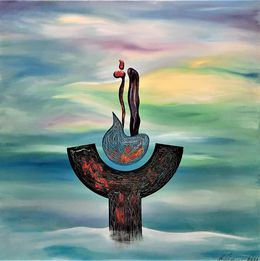
Vladimir Kolosov
Painting . 61 x 61 x 1.9 cm Painting . 24 x 24 x 0.75 inch
$1,440
Recommended by Artsper

Carole Framezelle - Acmiya
Painting . 30 x 30 x 1 cm Painting . 11.8 x 11.8 x 0.4 inch
$2,453

Vladimir Kolosov
Painting . 91.4 x 121.9 x 1.9 cm Painting . 36 x 48 x 0.75 inch
$1,800
Recommended by Artsper
Need help?
How do I showcase my work?
Have you purchased a painting, sculpture or work on paper?
Find our expert advice for the conservation and promotion of your works in the articles below:
Protect your purchase with Artsper: Buy with confidence
At Artsper, our mission is to allow you to collect works of art with complete peace of mind. Discover the protections we offer at every stage of your shopping experience.
Buy works from top galleries
We work in close collaboration with carefully selected art galleries. Each seller on Artsper is carefully examined and approved by our team, thus ensuring compliance with our code of ethics. You therefore have the assurance of purchasing authentic, high-quality works.
Total transparency: you know what you are buying
Before being posted online, all artwork on Artsper is reviewed and validated by our moderation team. You can browse with complete peace of mind, knowing that each piece meets our criteria of excellence.
Personalized support: our experts at your service
Our team of contemporary art experts is available by phone or email to answer all your questions. Whether you want advice on a work or a tailor-made selection to enrich your collection, we are here to support you.
Resell your works with ease
If you have purchased a work on Artsper and wish to resell it, we offer you a dedicated platform to relist it. To find out more, click here.
Make offers with Artsper: negotiate like in a gallery
You have the possibility to propose a price for certain works, just like in a gallery. This feature allows you to initiate discussions and potentially acquire your coins at advantageous prices.
Get help with your negotiations
Our team will negotiate for you and inform you as soon as the best offer is obtained. Do not hesitate to call on our expertise to ensure a transaction at the best price.
Order securely
Artsper satisfaction assurance
We want you to be completely satisfied with your purchase. If the work you receive is not to your liking, you have 14 days to return it free of charge, and you will be refunded in full, whatever the reason.
Secure payment with Artsper partners
All credit card payments are processed by Paybox, the world leader in payment solutions. Thanks to their strict security standards, you can transact with confidence.
Problem Support
In the rare event that an artwork arrives damaged or not as described, we are here to help. Whether for a return, refund, restoration or exchange, our team will support you throughout the process and will ensure that we find the solution best suited to your situation.
Conditions to benefit from Artsper protections:
Use one of the payment methods available on Artsper for your order.
Report any problems within one week of receiving the work.
Provide required photographic evidence (including original artwork and packaging).
Artsper guarantees cover the following cases:
The received work lacks a described characteristic (for example, a signature or frame).
The artwork has significant differences from its description (e.g. color variation).
The work is damaged upon receipt.
The work is lost or damaged by the carrier.
Delivery is significantly delayed.
With Artsper, you collect with complete peace of mind.
Why choose Artsper for your art purchases
Artsper offers you access to more than 200,000 works of contemporary art from 2,000 partner galleries. Our team of experts carefully selects galleries to guarantee the quality and originality of the works.
You benefit from:
Works at gallery price
Return within 14 days, regardless of your location
Easy resale of the work purchased on Artsper
Personalized research tools (selection and tailor-made universe)
Our customer service is available for any assistance.
Where can I be delivered?
Artsper delivers internationally. The list of countries is available in the first step of your cart.
If your country is not listed contact us at [email protected] and we will see what we can do.
Note that Customs fees may apply for works shipped internationally. This is indicated in the first step of the shopping cart.
You can choose a delivery address different from the billing address. Make sure that a trusted person is present to receive the work if you cannot be there.