







Caught red handed - with Keith Haring, 2022
Painting : acrylic, Stencil, mixed media · 55.9 x 55.9 cm 22 x 22 inch
$11,083
11 083 $US
Shipping & delivery
Shipped from: Germany
Delivery to: United States , $ 113
Estimated delivery: Less than one week
Free returns within 14 days, full refund
Authenticity guaranteed
Sold with certificate of Authenticity from the artist
Invoice from the gallery Learn more
Secure payment • Card, Amex, PayPal...
We accept several payment methods:
Paypal
American Express
Visa
Mastercard
Apple Pay
Google Pay
- Credit cards (Visa, MasterCard)
- American Express
- PayPal
- Bank transfer
- Gift card
- Apple Pay / Google Pay
All payments are secured with 3D Secure validation to protect your confidential information.
Verified Reviews : 9.6/10
Similar works


Benjamin SPaRK
Painting . 162 x 130 x 3 cm Painting . 63.8 x 51.2 x 1.2 inch
$10,616
Recommended by Artsper
Monika Nowak
Painting . 147 x 98 x 3.5 cm Painting . 57.9 x 38.6 x 1.4 inch
$10,150
Recommended by Artsper
Ghost Art
Painting . 150 x 150 x 3 cm Painting . 59.1 x 59.1 x 1.2 inch
$8,750
Recommended by Artsper


Aiiroh
Painting . 150 x 100 x 0.5 cm Painting . 59.1 x 39.4 x 0.2 inch
$7,583
Recommended by Artsper
Jean-Marc Calvet
Painting . 89 x 116 x 3 cm Painting . 35 x 45.7 x 1.2 inch
$9,100
Recommended by Artsper

Rémy Aillaud
Painting . 80 x 80 x 10 cm Painting . 31.5 x 31.5 x 3.9 inch
$6,941
Recommended by Artsper



Patricia Gadisseur
Painting . 100 x 120 x 2.5 cm Painting . 39.4 x 47.2 x 1 inch
$1,517
Recommended by Artsper


About the artwork
Type
Painting : Unique artwork
Condition
Artwork sold in perfect condition, not framed
Authenticity
Sold with certificate of Authenticity from the artist
Invoice from the gallery
Signature
Hand-signed by artist
Technique & Support
acrylic , Stencil , mixed media on Arches paper
Dimensions ( cm • inch )
55.9 x 55.9 cm 22 x 22 inch Height x Width x Depth
Sold by
Art gallery
Credentials
Vetted seller since 2014 • Top Seller
Discount
This seller offers discount when you purchase multiple artworks.
Description
Caught Red Handed is a unique Spray Paint and Stencil artwork by Mr. Brainwash. Like much of his work, Mr. Brainwash’s Caught Red-Handed motif is based on vintage illustrations from the Saturday Evening Post, often designed by Norman Rockwell or Steven Dohanos.. An older gentleman in a suit catches a little girl doing something. The child innocently holds her hands up. In Normal Rockwell’s original, of course, we don’t know what the little girl has done. In Mr. Brainwash, the motif has been alienated in its own unique way, in that the girl has hands smeared with paint and has a paint bucket standing next to her. So the girl has obviously painted some wall in a street art manner.
Caught Red Handed is a unique Spray Paint and Stencil artwork by Mr. Brainwash which is available at FRANK FLUEGEL GALERIE. Like much of his work, Mr. Brainwash’s Caught Red-Handed motif is based on vintage illustrations from the Saturday Evening Post, often designed by Norman Rockwell or Steven Dohanos.. An older gentleman in a suit catches a little girl doing something. The child innocently holds her hands up. In Normal Rockwell’s original, of course, we don’t know what the little girl has done. In Mr. Brainwash, the motif has been alienated in its own unique way, in that the girl has hands smeared with paint and has a paint bucket standing next to her. So the girl has obviously painted some wall in a street art manner.
Mr. Brainwash is known for finding his inspiration in classics of US culture. The French-born artist represents the American way of life like no other. He managed in a short time to work his way up to a successful artist with his unique pieces and originals. The work series “Caught Red Handed” is based on illustrations for the Saturday Evening Post by Stevan Dohanos. Specifically, the work “The Hardware Store” which appeared as a cover illustration on November 10, 1951 on the Saturday Evening Post. The original painting that accompanied it was later sold for $28,125.
Stevan Dohanos born May 18, 1907 in Lorain, Ohio, grew up a great admirer of Norman Rockwell and went so far as to copy his Saturday Evening Post cover illustrations in colored pencil to sell to friends, relatives and associates. Little did Stevan know that he would develop a close personal friendship with Rockwell, as his own art graced the cover of the Post 123 times during his lifetime.
While inspired by Rockwell’s talent, Dohanos became an “American realist” who depicted everyday life as it was. He was most influenced by the work of Edward Hopper and chose not to idealize American life as Rockwell did.
During and after art school, the young Dohanos worked at an advertising agency in Cleveland, then traveled the country painting murals before moving to New York City to work as a commercial artist. Eventually, he moved to the artist colony of Westport, Connecticut, where he drew inspiration from the daily lives of his neighbors.
While working in the city, Dohanos took advertising work from clients such as Four Roses Whiskey, Maxwell House Coffee, Pan Am Airlines, Cannon Towels, Olin Industries, and John Hancock Insurance. His work was featured in Esquire, Medical Times, McCall’s and Colliers before he successfully advertised for the first time in The Saturday Evening Post.
His first cover of the Post, the March 7, 1942 issue, was a wartime, well-captured image of air raid lights on an artillery battery. In the 1940s and 1950s, the artist’s workload for The Post increased, and he was contracted for about a dozen covers a year.
As magazine covers turned to photography and away from illustration, Dohanos quickly changed careers. He did film art for classics like White Christmas and was chairman of the National Stamp Advisory Committee, where he oversaw art design for more than 300 stamps. He held this position in the administrations of 7 presidents and 9 postmaster generals.
Stevan Dohanos found beauty in everyday life by focusing on “the place and trappings of the American dream, not those who populated it.” Dohanos’ artwork, which became known as the famous Saturday Evening Post illustrations, now adorns the walls, halls, and galleries of the Cleveland Museum, the New Britain Museum of American Art, the Pennsylvania Academy of the Fine Arts, Dartmouth College, the Whitney Museum of American Art, and various federal post offices throughout the United States. He died on July 4, 1994, at the age of 87.

Presentation
Mr Brainwash, the pseudonym for Thierry Guetta was born near Paris, in Sarcelles in 1966. At the age of 15, he moved to Los Angeles with his father, brothers, and sisters after their mother passed away. A video maker and pop art artist, his works are mostly in stencil or graffiti.
He took lessons at Fairfax High school for about a year but dropped out of high school to organize Hollywood events. The artist began selling vintage clothes in Los Angeles, New York, and Miami.
Mr Brainwash had a ticking in 1999 for street art, during a trip to France to visit his cousin, Space Invader, a Parisian street artist. He has a passion for video and therefore began filming all the breaks, accompanied by other street artists, like Shepard Fairey or Wevs. At this moment, the videos weren't meant to be seen. He began graffiti and became Mr Brainwash. His universe is made up of Banksy's stencils and images of Andy Warhol.
In 2009, he met the British artist Banksy and helps him launch his exhibition: Barely Legal in Los Angeles, this event attracted celebrities and art dealers. The two artists decided to realize a documentary on the world of street artists, which was a mystery up till now. The images which were shot before were then shown along with Invader, Banksy, and Mr Brainwash.
Due to this collaboration, the doc-fiction “Exit Through the Gift Shop" (ou Faites le Mur !) was born, nominated for an Oscar, presented in 2010 at the Sundance Film Festival. The film presents the meteoric rise of Mr. Brainwash on the street art scene, and his works being sold for phenomenal sums, like his Jim Morrison portrait sold for 100 000 $ or Charlie Chaplin for 50 000 $. After the movie's success, Mr Brainwash's work becomes much more popular.
But the story can be seen the other way around. It was shown that Mr Brainwash isn't a fictitious character, he did put together the movie. The fiction caught up with reality, making Mr Brainwash a true actor in the art industry.
In 2024, French-American street artist Mr. Brainwash continued to captivate audiences worldwide with his dynamic and vibrant artworks. His "Life Is Beautiful" exhibition, held at the Mr. Brainwash Art Museum in Beverly Hills, California, showcased a diverse collection of his iconic pieces, attracting art enthusiasts and collectors alike.
Looking ahead to 2025, Mr. Brainwash is set to participate in the London Art Fair, scheduled from January 22 to 26, 2025. This prestigious event will feature a curated selection of contemporary artworks, providing a platform for artists to present their latest creations to an international audience. Attendees can anticipate engaging with Mr. Brainwash's innovative pieces, reflecting his unique style and artistic vision.
Discover similar artists


Reviews from our customers
All our reviews are extracted from Verified Reviews
You may also like


Mr Brainwash
Painting . 76.2 x 55.9 x 0.3 cm Painting . 30 x 22 x 0.1 inch
$12,000

Mr Brainwash
Print . 44.5 x 61 x 0.3 cm Print . 17.5 x 24 x 0.1 inch
$3,000

Mr Brainwash
Painting . 55.9 x 55.9 cm Painting . 22 x 22 inch
$11,550
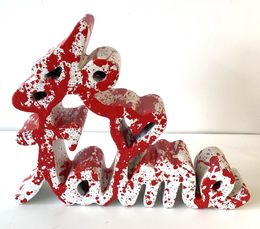
Mr Brainwash
Sculpture . 17 x 22.5 x 4.5 cm Sculpture . 6.7 x 8.9 x 1.8 inch
$3,267

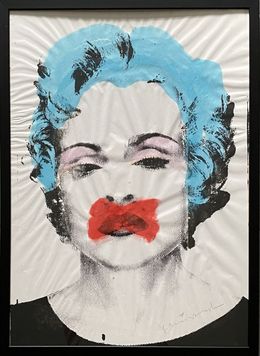


Mr Brainwash
Print . 76.5 x 57 x 0.1 cm Print . 30.1 x 22.4 x 0 inch
$4,060
Recommended by Artsper
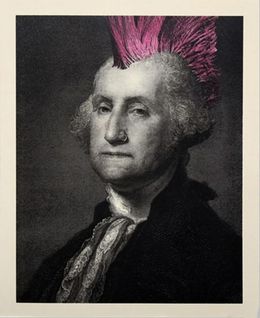
Mr Brainwash
Print . 55.88 x 45.72 x 0.2 cm Print . 22 x 18 x 0.1 inch
$2,450


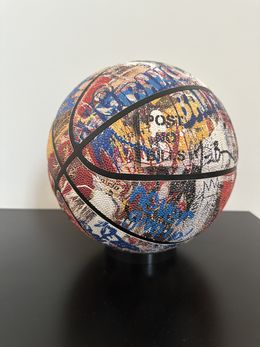


Mr Brainwash
Sculpture . 17.7 x 30.4 x 5 cm Sculpture . 7 x 12 x 2 inch
$3,675
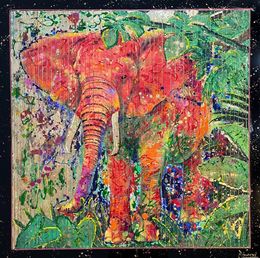
Bram Reijnders
Painting . 108 x 126 x 5 cm Painting . 42.5 x 49.6 x 2 inch
$7,583
Recommended by Artsper

Mr Brainwash
Print . 105.4 x 74.2 x 0.3 cm Print . 41.5 x 29.2 x 0.1 inch
$1,950

Mr Brainwash
Painting . 127 x 96.5 cm Painting . 50 x 38 inch
$24,499

Mr Brainwash
Sculpture . 27 x 13 x 13 cm Sculpture . 10.6 x 5.1 x 5.1 inch
$2,333


Mr Brainwash
Sculpture . 111.7 x 177 x 27.5 cm Sculpture . 44 x 69.7 x 10.8 inch
$104,500
Need help?
How do I showcase my work?
Have you purchased a painting, sculpture or work on paper?
Find our expert advice for the conservation and promotion of your works in the articles below:
Protect your purchase with Artsper: Buy with confidence
At Artsper, our mission is to allow you to collect works of art with complete peace of mind. Discover the protections we offer at every stage of your shopping experience.
Buy works from top galleries
We work in close collaboration with carefully selected art galleries. Each seller on Artsper is carefully examined and approved by our team, thus ensuring compliance with our code of ethics. You therefore have the assurance of purchasing authentic, high-quality works.
Total transparency: you know what you are buying
Before being posted online, all artwork on Artsper is reviewed and validated by our moderation team. You can browse with complete peace of mind, knowing that each piece meets our criteria of excellence.
Personalized support: our experts at your service
Our team of contemporary art experts is available by phone or email to answer all your questions. Whether you want advice on a work or a tailor-made selection to enrich your collection, we are here to support you.
Resell your works with ease
If you have purchased a work on Artsper and wish to resell it, we offer you a dedicated platform to relist it. To find out more, click here.
Make offers with Artsper: negotiate like in a gallery
You have the possibility to propose a price for certain works, just like in a gallery. This feature allows you to initiate discussions and potentially acquire your coins at advantageous prices.
Get help with your negotiations
Our team will negotiate for you and inform you as soon as the best offer is obtained. Do not hesitate to call on our expertise to ensure a transaction at the best price.
Order securely
Artsper satisfaction assurance
We want you to be completely satisfied with your purchase. If the work you receive is not to your liking, you have 14 days to return it free of charge, and you will be refunded in full, whatever the reason.
Secure payment with Artsper partners
All credit card payments are processed by Paybox, the world leader in payment solutions. Thanks to their strict security standards, you can transact with confidence.
Problem Support
In the rare event that an artwork arrives damaged or not as described, we are here to help. Whether for a return, refund, restoration or exchange, our team will support you throughout the process and will ensure that we find the solution best suited to your situation.
Conditions to benefit from Artsper protections:
Use one of the payment methods available on Artsper for your order.
Report any problems within one week of receiving the work.
Provide required photographic evidence (including original artwork and packaging).
Artsper guarantees cover the following cases:
The received work lacks a described characteristic (for example, a signature or frame).
The artwork has significant differences from its description (e.g. color variation).
The work is damaged upon receipt.
The work is lost or damaged by the carrier.
Delivery is significantly delayed.
With Artsper, you collect with complete peace of mind.
Why choose Artsper for your art purchases
Artsper offers you access to more than 200,000 works of contemporary art from 2,000 partner galleries. Our team of experts carefully selects galleries to guarantee the quality and originality of the works.
You benefit from:
Works at gallery price
Return within 14 days, regardless of your location
Easy resale of the work purchased on Artsper
Personalized research tools (selection and tailor-made universe)
Our customer service is available for any assistance.
Where can I be delivered?
Artsper delivers internationally. The list of countries is available in the first step of your cart.
If your country is not listed contact us at [email protected] and we will see what we can do.
Note that Customs fees may apply for works shipped internationally. This is indicated in the first step of the shopping cart.
You can choose a delivery address different from the billing address. Make sure that a trusted person is present to receive the work if you cannot be there.