Businesses, buy your work through a lease-purchase agreement
A lease-purchase agreement lets you spread the cost of the work over 13 to 48 months and reduce your corporate tax by deducting each of the monthly payments from your taxable income. Please note, the 14-day cooling-off period does not apply in the case of a lease-purchase agreement.
13 months
Monthly installments
excl. tax
Residual value
Tax Savings
Total cost
24 months
Monthly installments
excl. tax
Residual value
Tax Savings
Total cost
36 months
Monthly installments
excl. tax
Residual value
Tax Savings
Total cost
48 months
Monthly installments
excl. tax
Residual value
Tax Savings
Total cost
How does it work?
1
Choose an artwork you like and the desired duration of the lease-purchase agreement
2
Fill out your profile to be contacted by a member of our team
3
Once the contract is signed, you will be debited every month for the duration of the agreement
Shipping & delivery
Shipped from: United Kingdom
Delivery to: France
, € 224
Estimated delivery: One to two weeks
Free returns within 14 days, full refund
Authenticity guaranteed
Sold with certificate of Authenticity from the gallery
This seller offers discount when you purchase multiple artworks.
Description
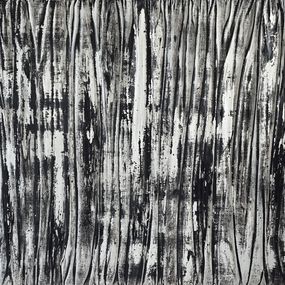
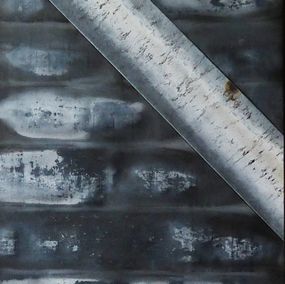
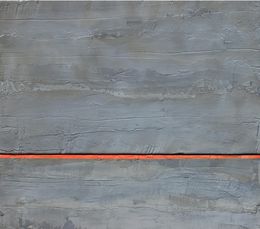
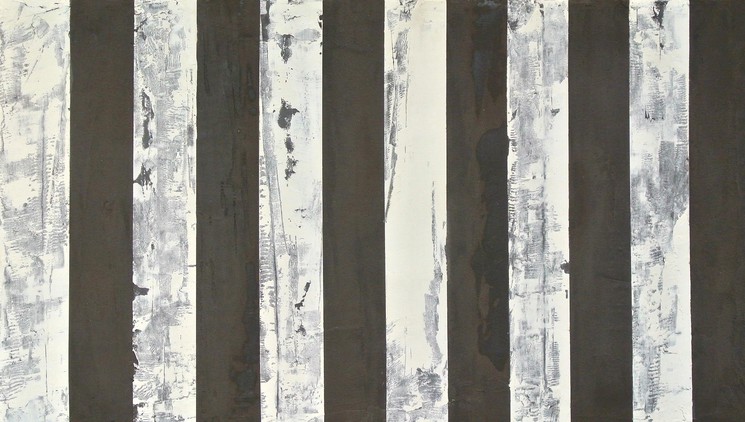
Pigmented cement on foam panel.
Auville works with construction cement. Applying techniques used in the construction and ship building industries, he spreads the cement over Ursalite (high-density foam panels), creating pieces ranging in size from one to eight square meters.
In this work, straight lines are not colours but materials. Side by side, off-black and off-white becomes purer, more intense than when seen separately. Both appear below or above the other, but at the end each one is has its own identity.
Pierre Auville is a French artist, born in 1968. He likes to explore the aesthetic qualities and conceptual potential of construction materials like cement, concrete and steel. He was born in Le Havre but lives and works in the suburbs of Paris.
Auville studied political science and art history. He learned art as he went along, by painting sail boats and boat hulls, followed by urban spaces. He prefers tormented mediums which were exposed to wear and tear, elements and human activities. He then took visual art lessons during the evening and in artist studios for about ten years.
Auville explored various fields before devoting himself to visual creations. He was a journalist for a short time, he also worked in the national navy, emergency services in the hospital and as a director in several industries. Working in an environment with materials, surfaces and extremely radical surroundings nourishes his inspiration. His artistic work progressed towards the quest for various materials, exploring every single possibility, for example cement for its mineral aspect and multi-functional use. His work is based on the moment where color and materials merge and therefore get back their original mineral essence. This approach is nourished by observing cave painters like Lascaux, concrete roads in hot regions just like in the South West of USA, abandoned blockhouses of the Atlantic wall. Pierre Auville's artistic vocabulary is mainly based on geometric abstraction, Art Povera and Street Art.
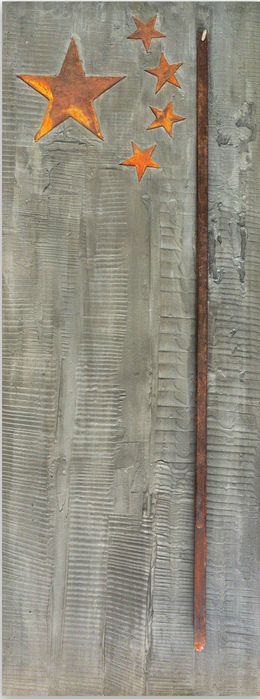
Auville basically works with construction cement like in "Portland" made up of limestone and clay. He uses techniques derived from construction and yachting. He applies cement on foam panels with high density to create works from 1 to 8 meters square.
The faint colors of his creations derive from cement itself, and he doesn't use any chemical resin to conserve the mineral characteristics. He manages to achieve a large range of off-whites, beige, green, gray depending on the place and the season of cement production but also by adding mineral pigments like slate powder or graphite.
Auville's bright colors are usually acrylic or pigments while the cement is drying up, or spray paint which is then eroded. Her creations are often eroded, dug up, scarred or polished with the help of various abrasive techniques (steel wool, glass paper, sand paper etc...) and by intensive washing. A thin layer of varnish is then applied to protect the material, without changing the look of his work.